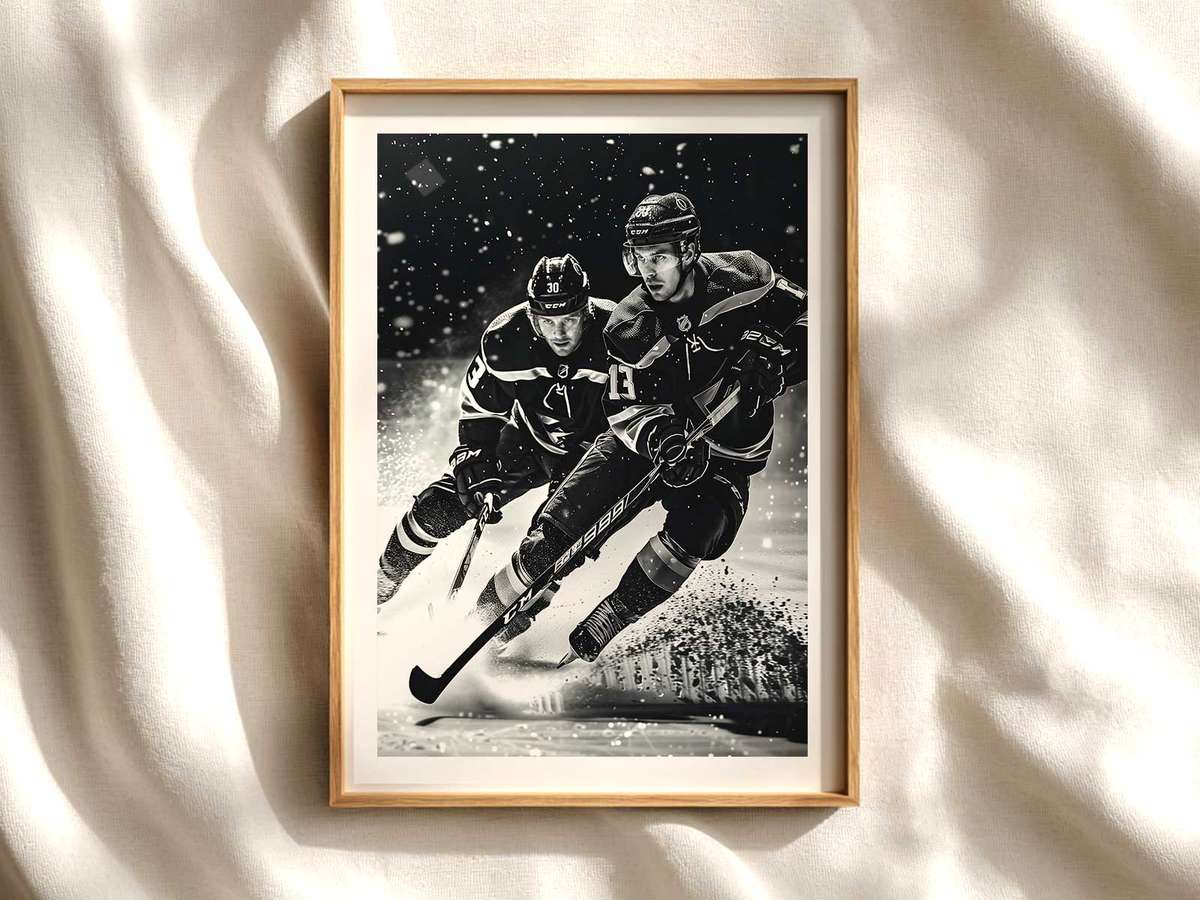
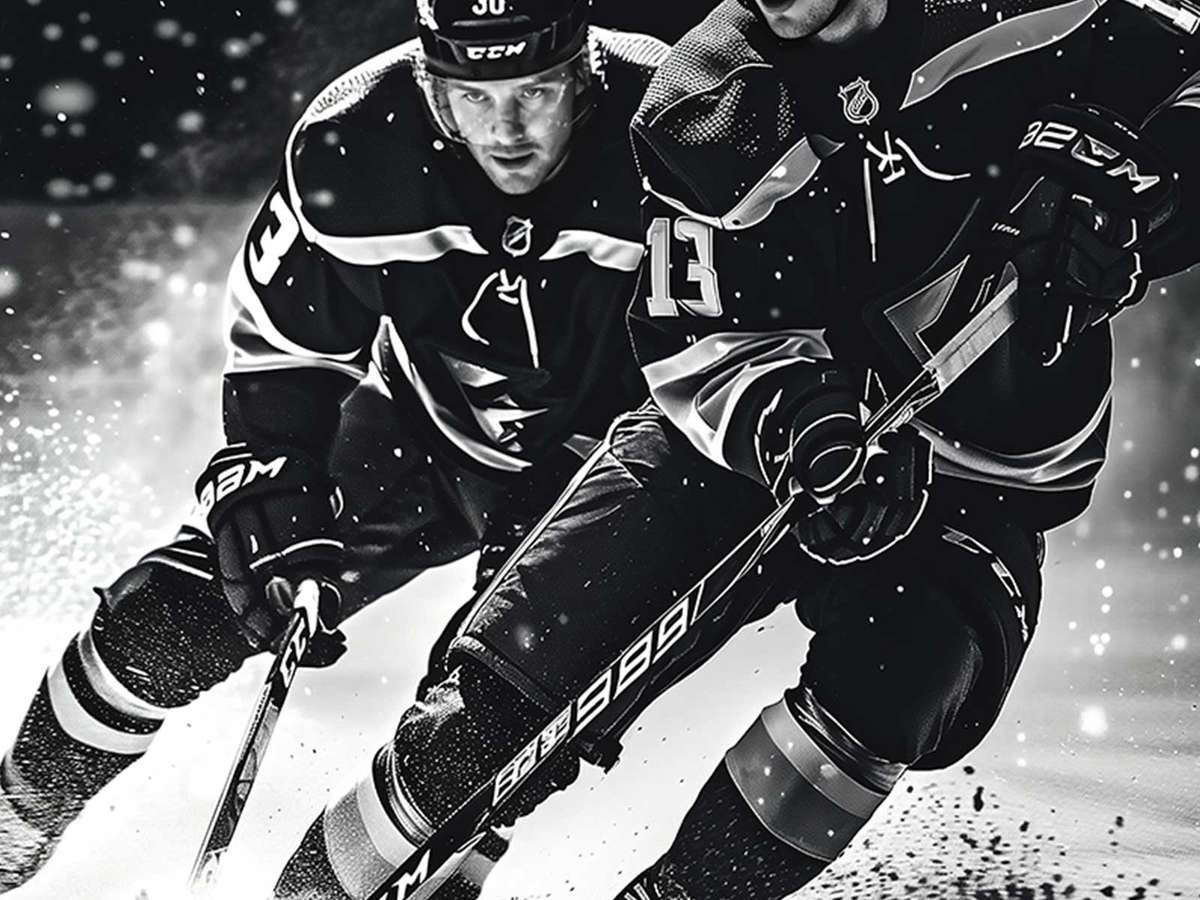
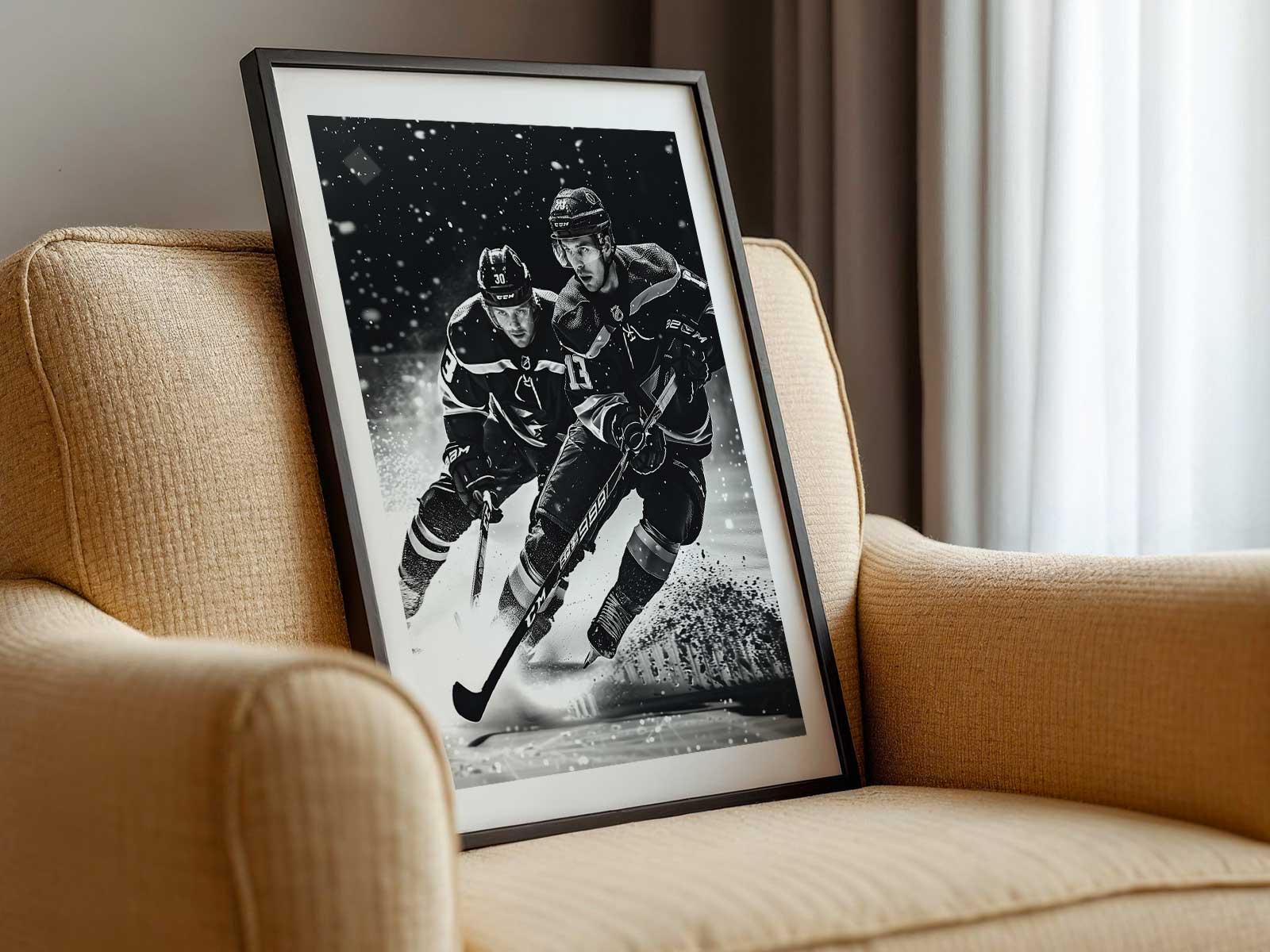
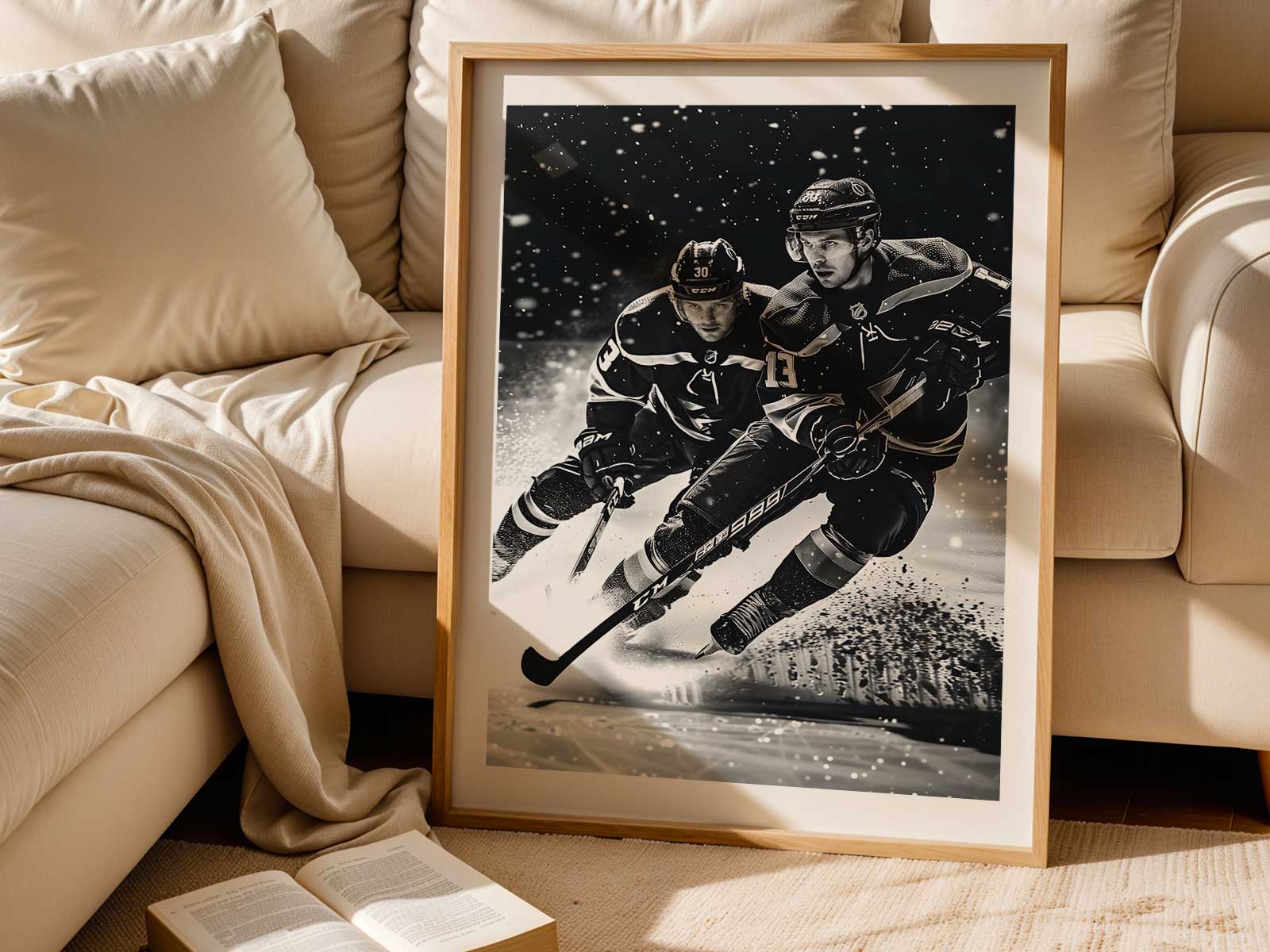
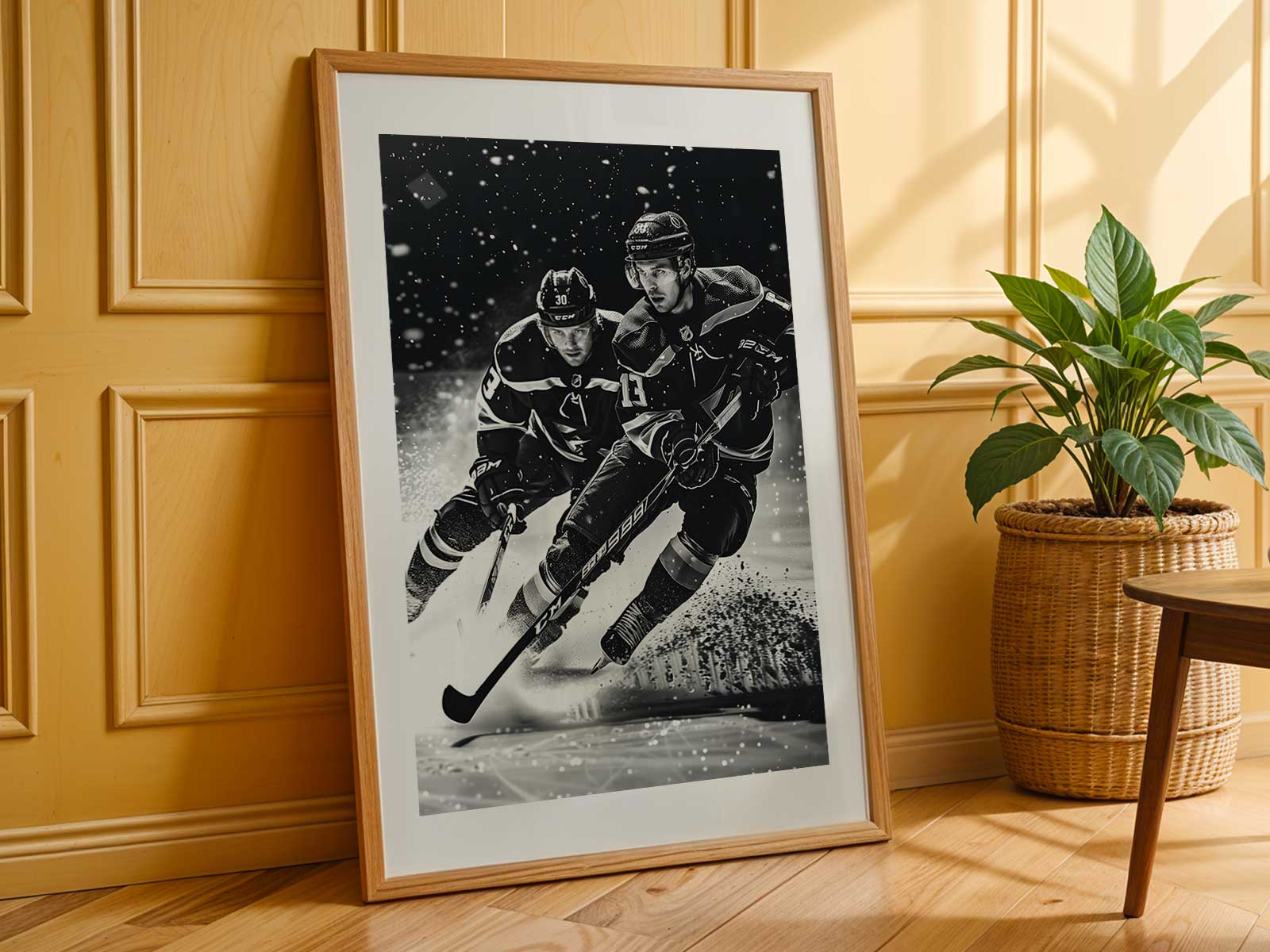
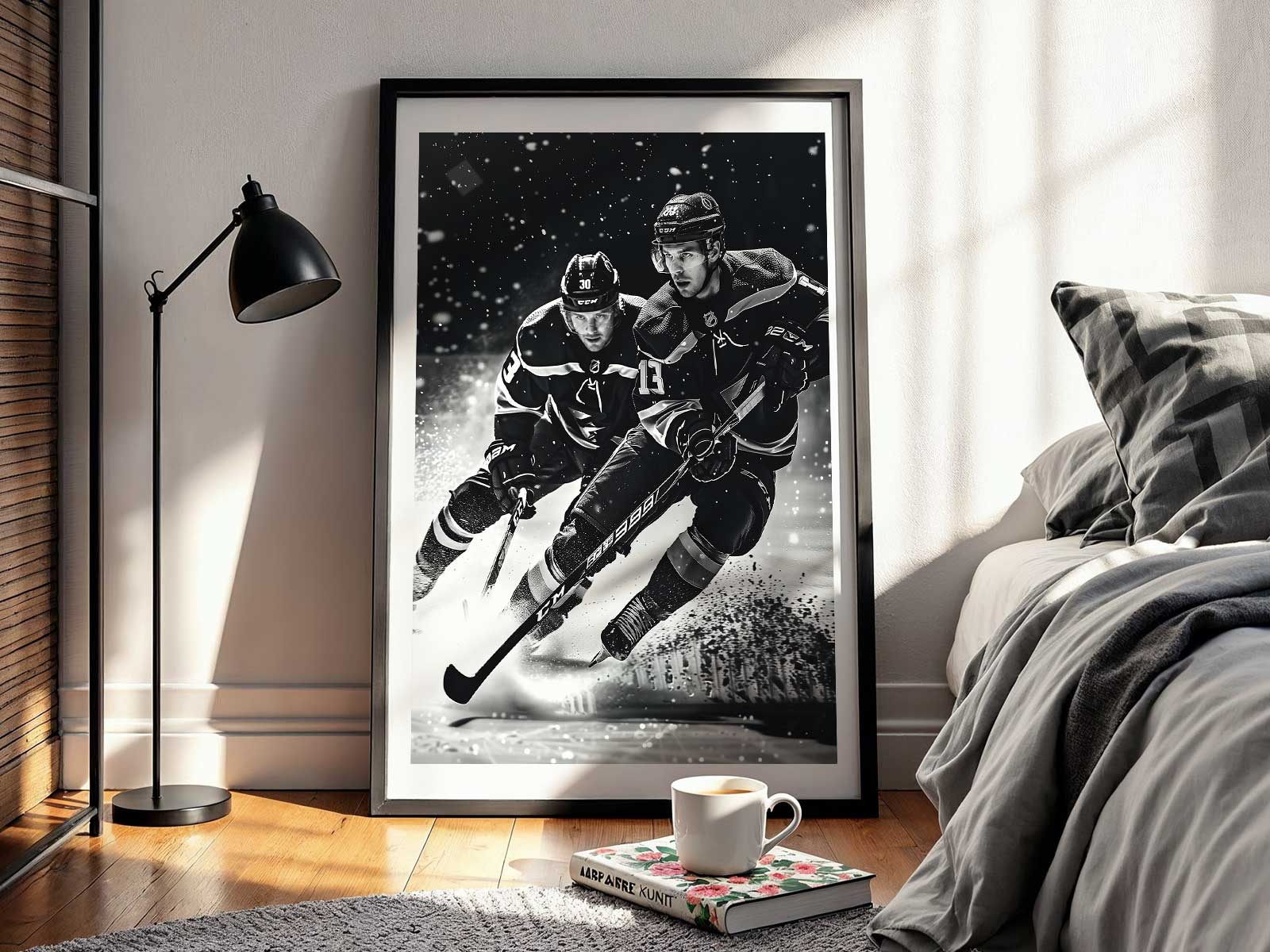
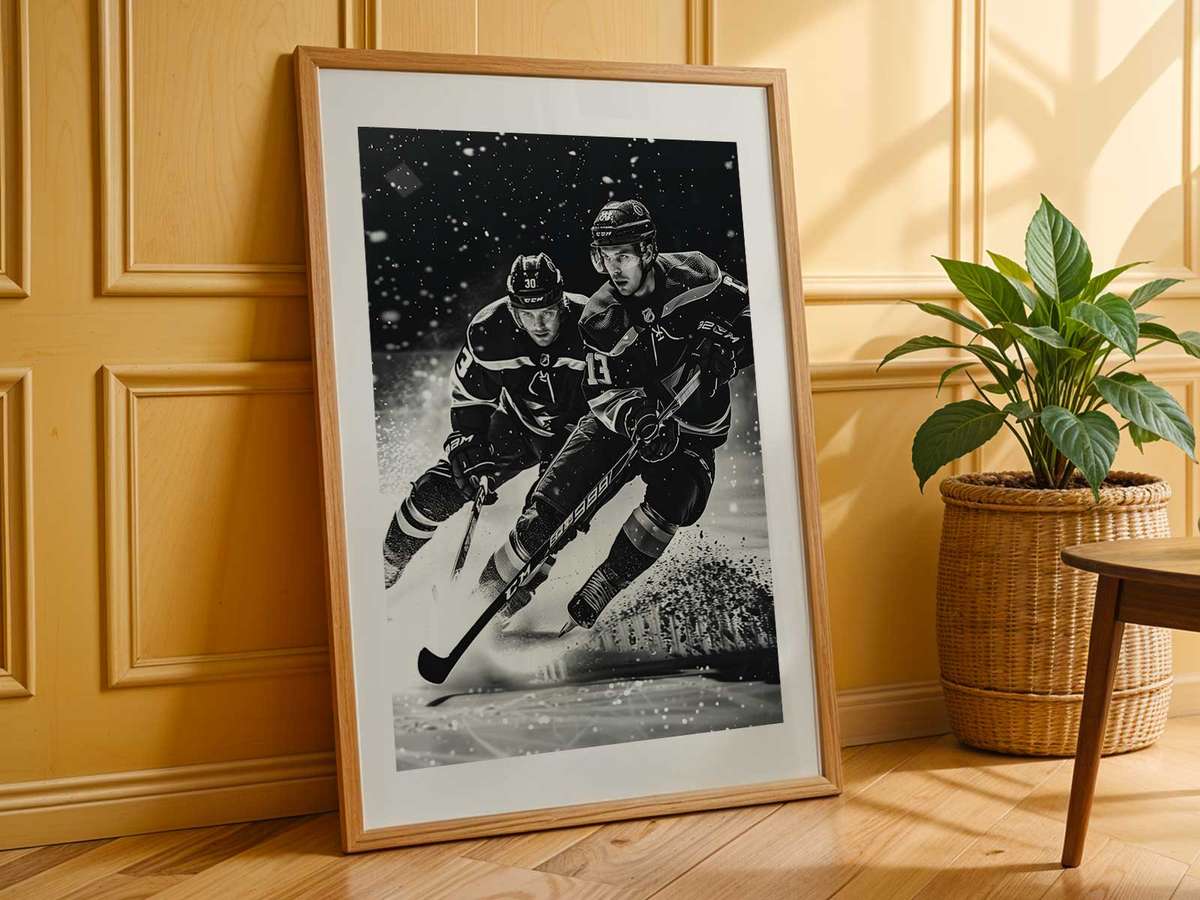
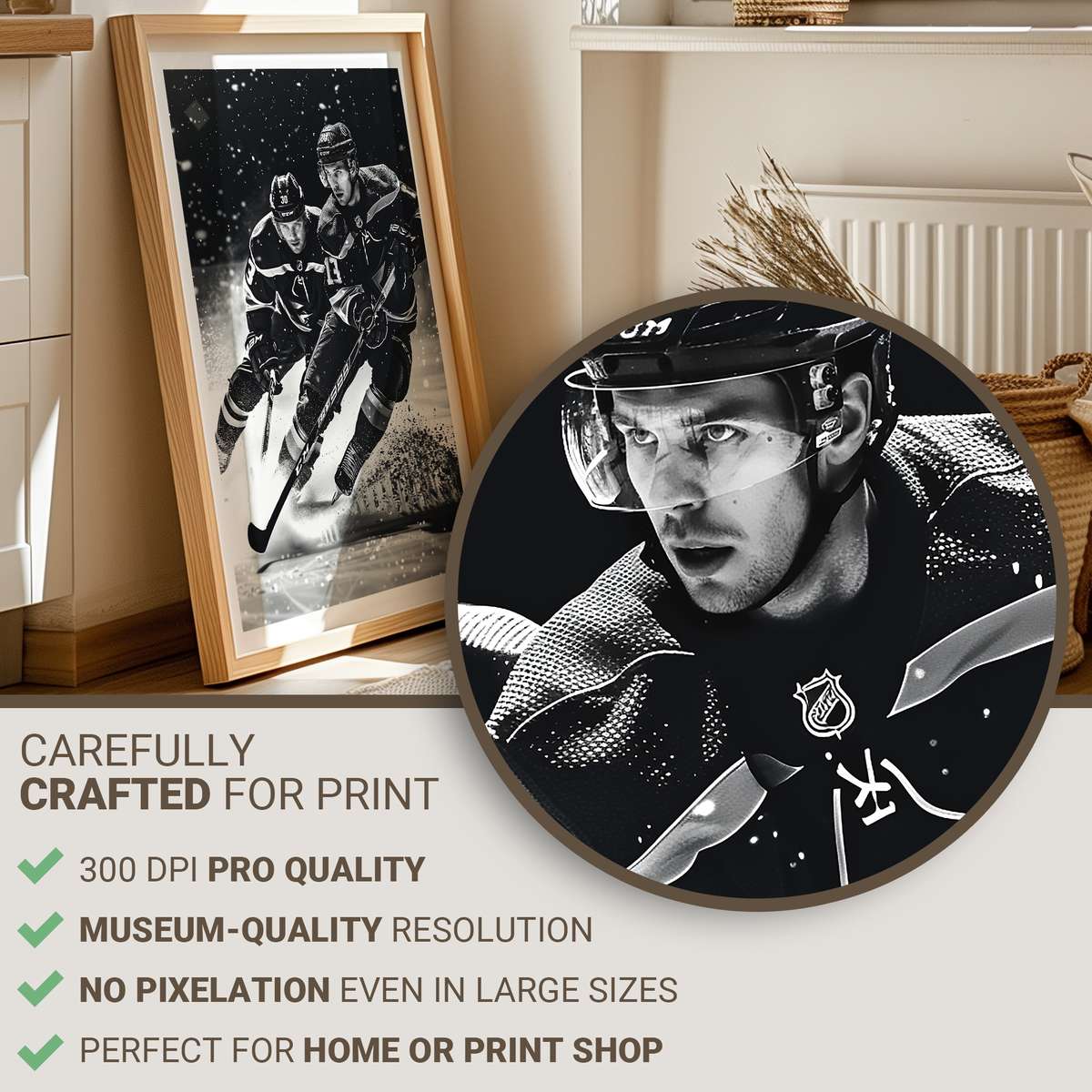
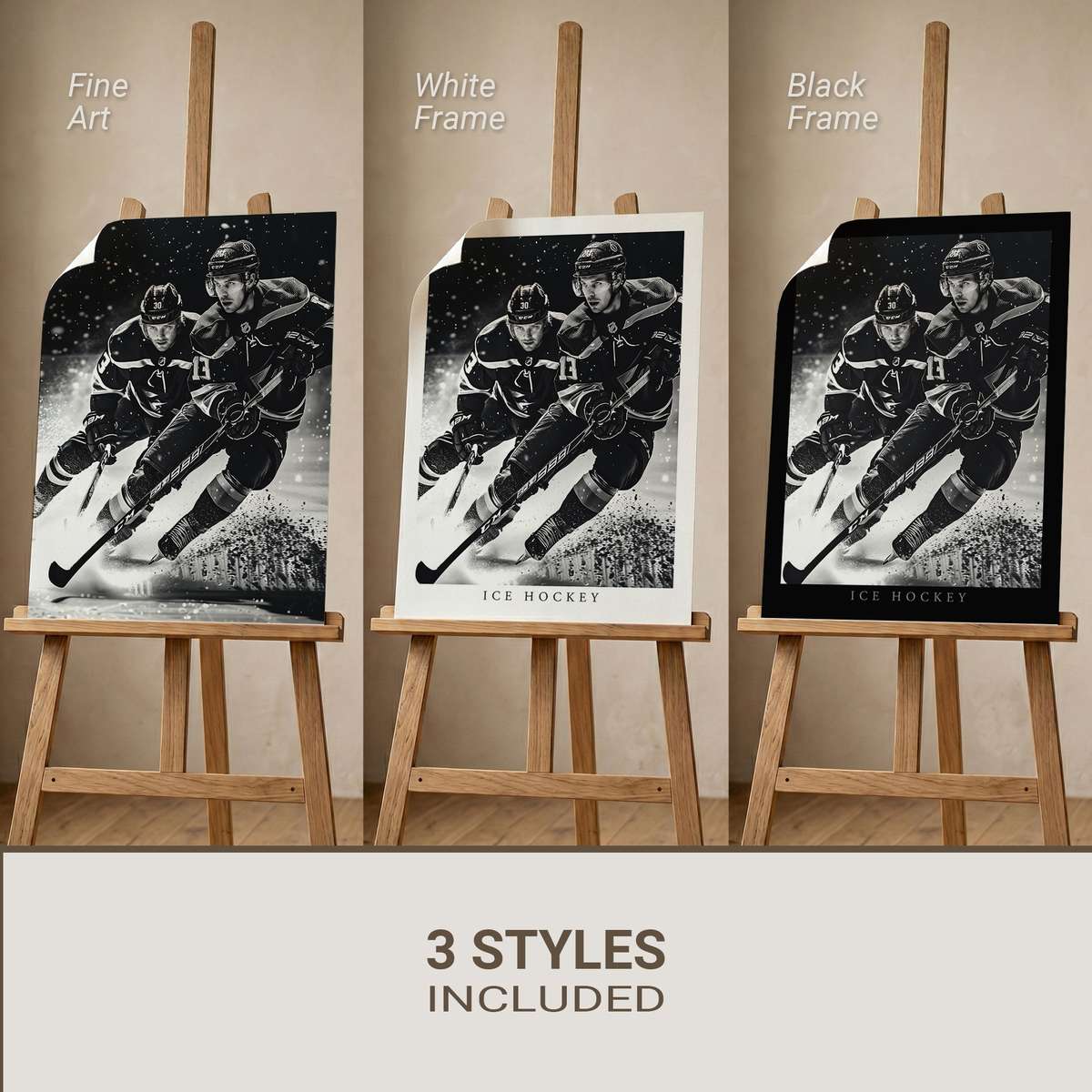
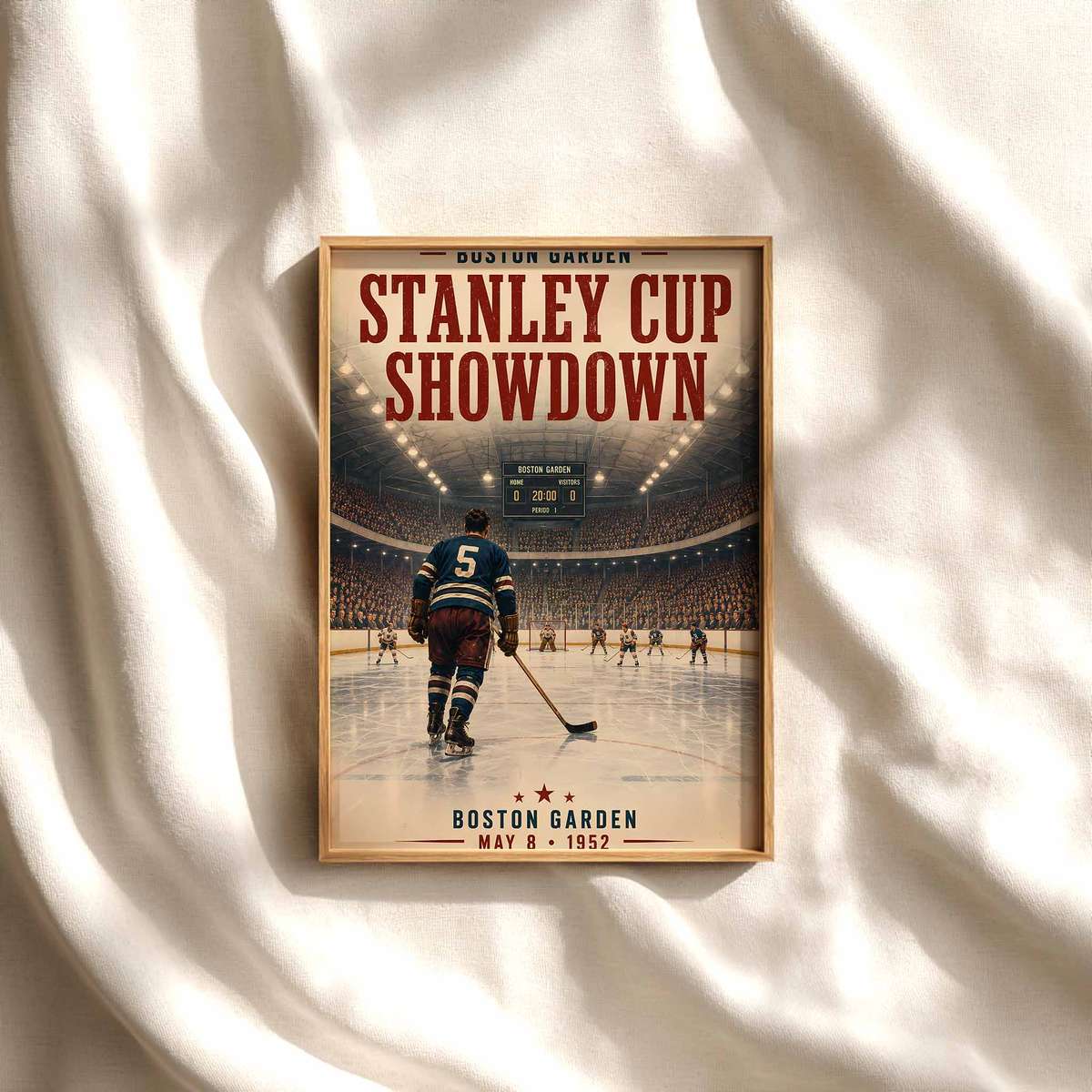
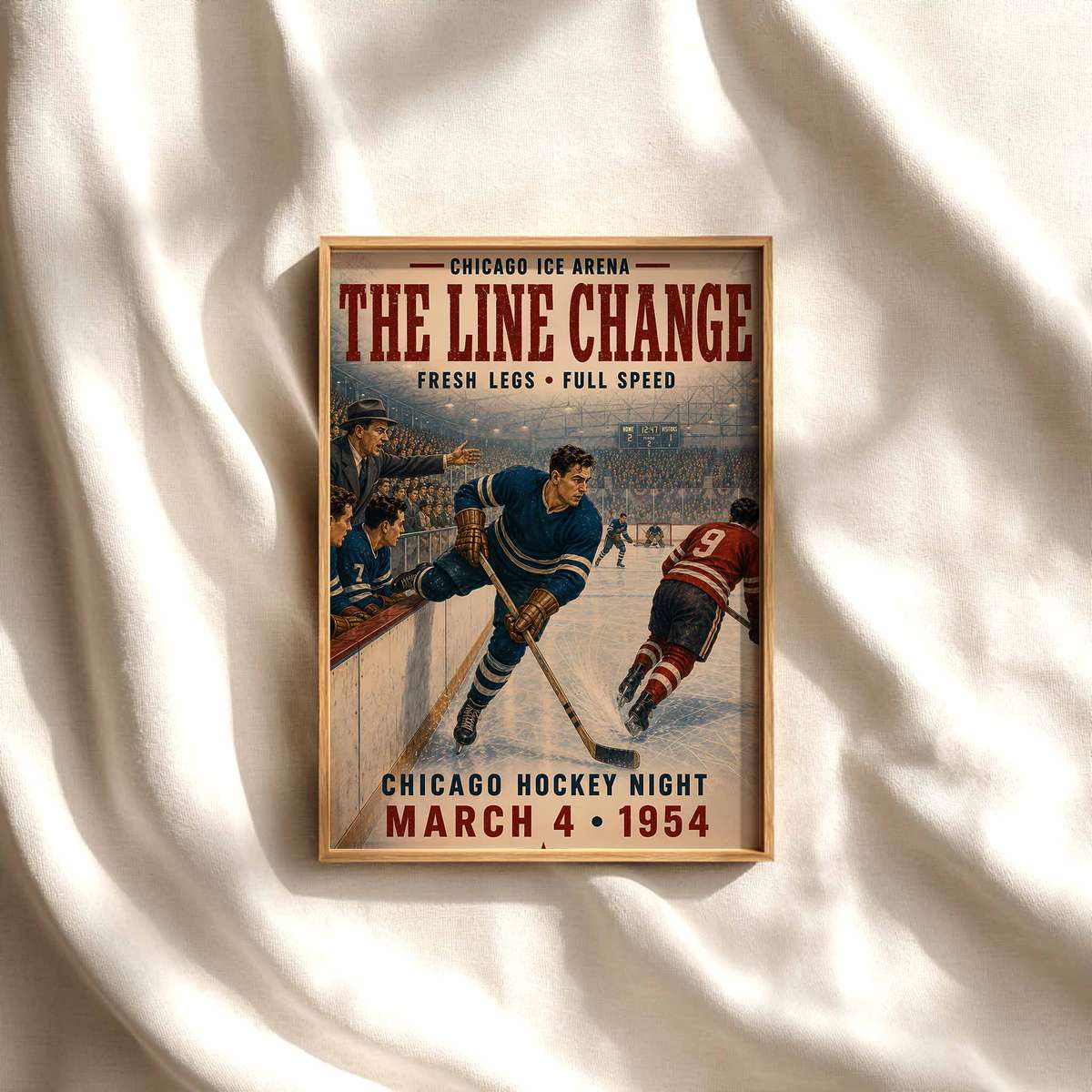
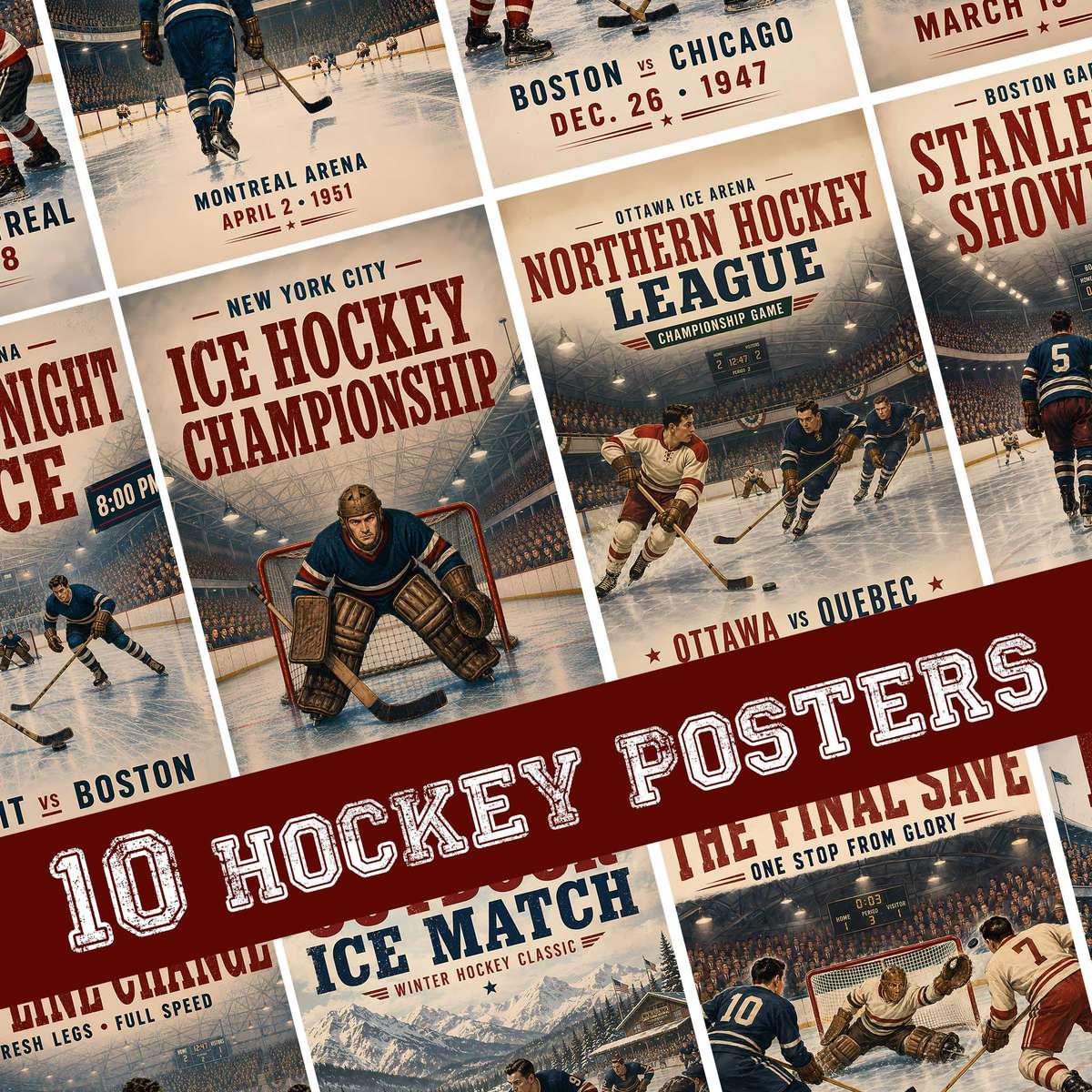
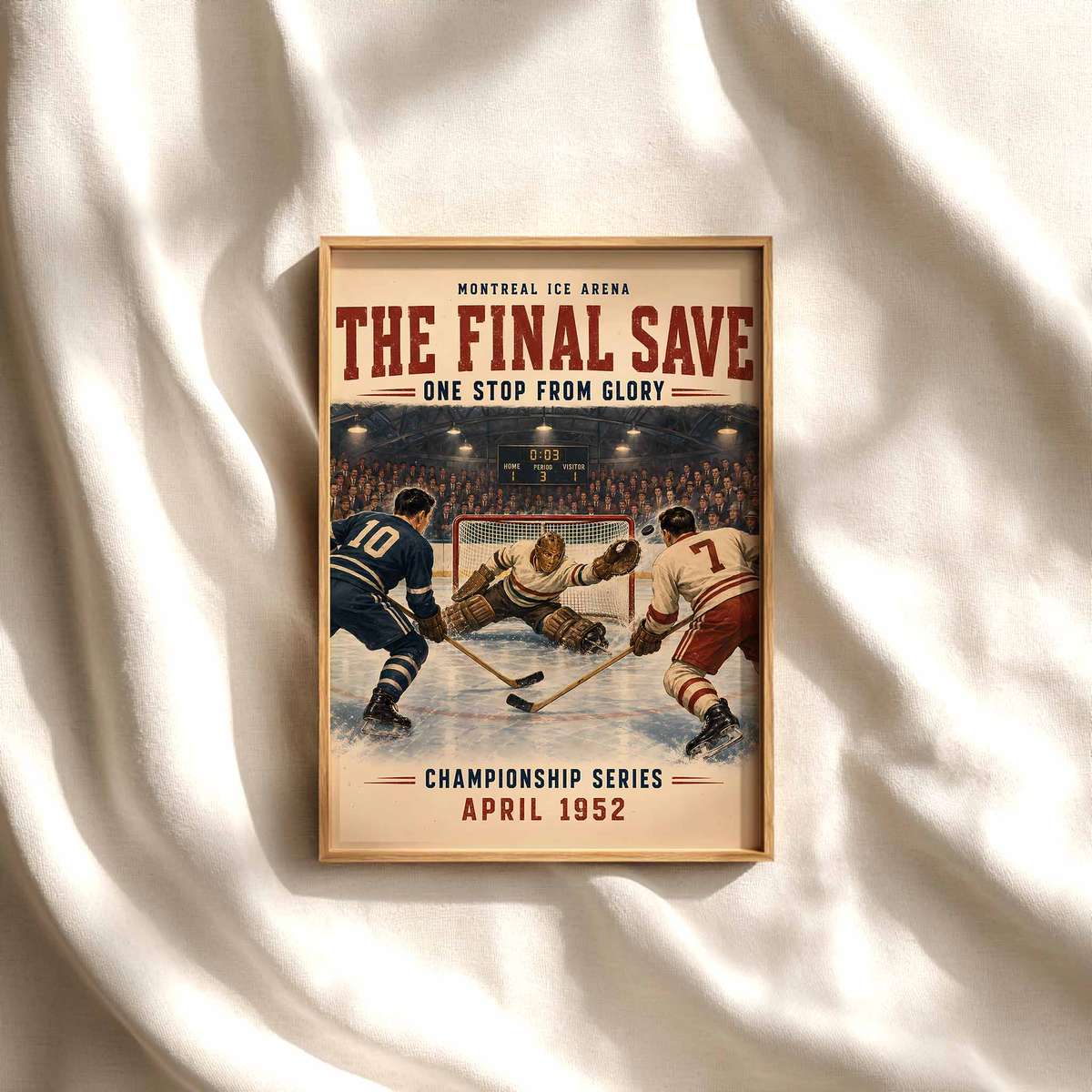
A vintage Wayne Gretzky poster does more than celebrate a player: it condenses an era. The piece functions at once as a visual anchor and a time capsule, where the silhouette of a legendary skater, the worn texture of ink, and the suggestion of crowded arenas combine to trigger memory and emotion. That blend of recognisable form and period detail is what makes such posters powerful in a living room, office, or collector wall.
First, there is silhouette and posture. Gretzky’s stance—head up, knees bent, stick poised—reads instantly even when reduced to a two-tone print or a grainy photograph rendered for lithography. That immediate legibility matters: you do not need to be a historian to recognise greatness. A simple, readable outline lets the poster function visually at a distance, anchoring a room without shouting. Close up, the figure resolves into familiar uniform lines, numbers, and helmet shape that confirm identity and invite a longer look.
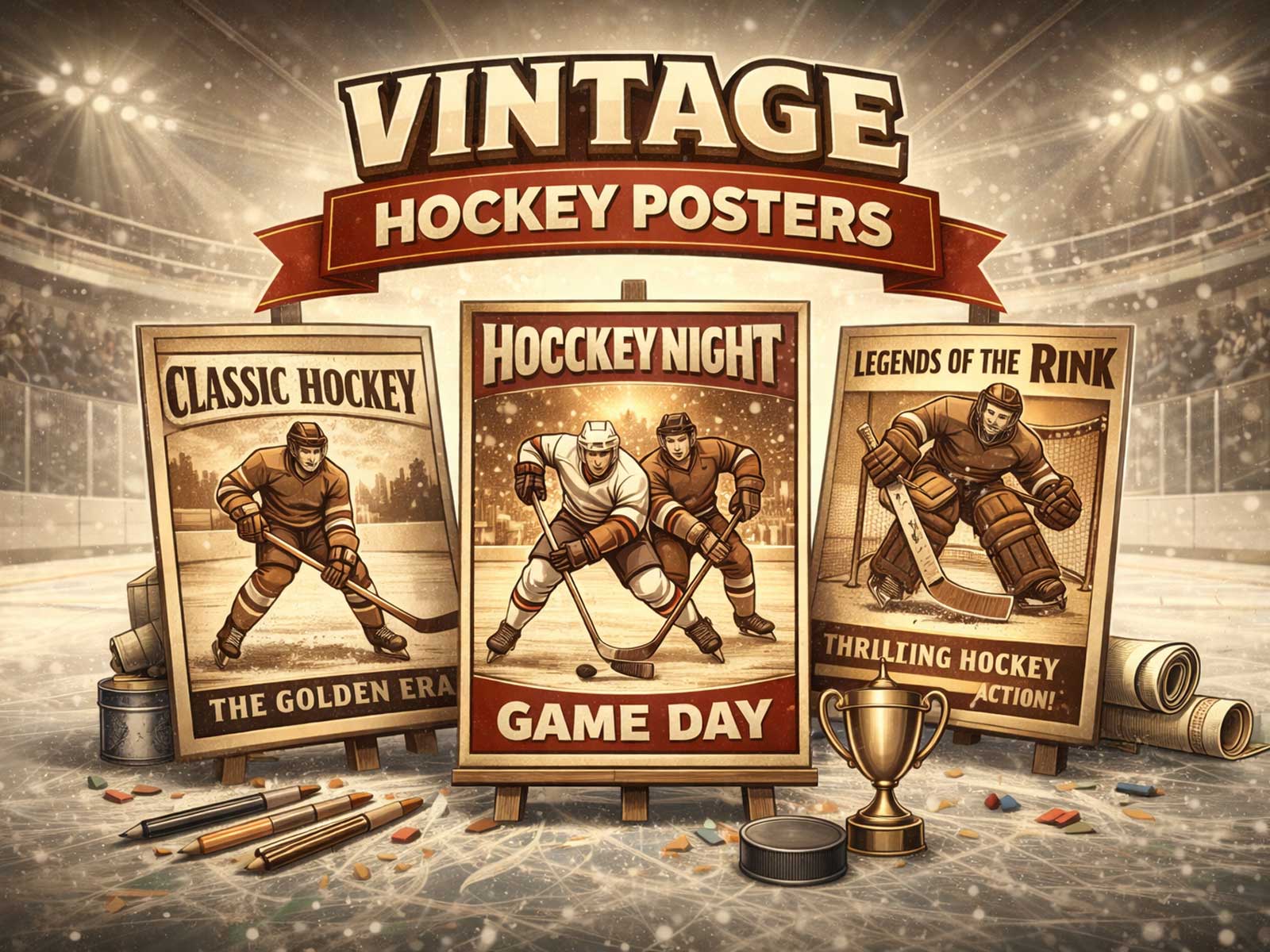
Second, the visual language of vintage hockey posters is rooted in old uniforms, crests, and rink atmosphere. Classic sweaters and bold crests have a graphic clarity that translates beautifully to poster format: broad color blocks, strong diagonals, and emblematic badges survive decades without losing meaning. When printed with an intentionally limited palette—muted reds, deep navy, cream, and desaturated gold—the image evokes fluorescent arena lights and the particular warmth of old photographic paper. That palette is not mere fashion; it is memory encoded in color.
Texture and print character play a quiet but essential role. The slight grain of halftone dots, soft edge printing, or the uneven saturation of aged posters suggests handling and history. These tactile cues simulate the way posters hung in dorms, garages, and rink lobbies: they accumulated folds, softened corners, and a subtle patina from years of being loved. For a collector eye, such details are proof of life—signs that the artwork has already been part of someone’s story. Even reproduction pieces that mimic this print age deliberately use texture to tap into that authenticity.
[IMAGE_INSERT_ARTICLE_01]
Nostalgia in vintage sports art is layered: it draws on personal memories of games and on a shared cultural memory of a team’s golden years. A Wayne Gretzky poster, because of the player’s stature, acts as shorthand for an era of style and spectacle. It invites stories—about buzzer-beaters, long bus trips to away games, or the smell of hotdogs in the stands—without spelling them out. That open-endedness is crucial: the poster becomes a trigger for the viewer’s own recollections, making the piece intimate and communal at once.
Finally, there is room identity. Unlike generic retro decor that borrows vintage motifs without context, an authentic-era hockey poster anchors a space with specificity. It signals taste—an appreciation for the sport’s visual history—and it organizes surrounding decor: warm woods, leather seating, subdued lighting, and trophy-case silhouettes all harmonize with the poster’s aesthetic. In a game room or an office, a Gretzky poster doesn’t merely fill wall space; it sets a tone, inviting conversation and anchoring a collection of memories and objects.
In short, a vintage Wayne Gretzky poster works because it combines immediate visual recognition with the slow, convincing language of age: the clear lines of a legendary silhouette, the evocative palette of old rinks, the print textures that suggest wear, and the emotional architecture of nostalgia. Whether framed above a desk or placed amid a curated collector wall, it remains at once a piece of design and a portable memory of hockey’s cultural heights.