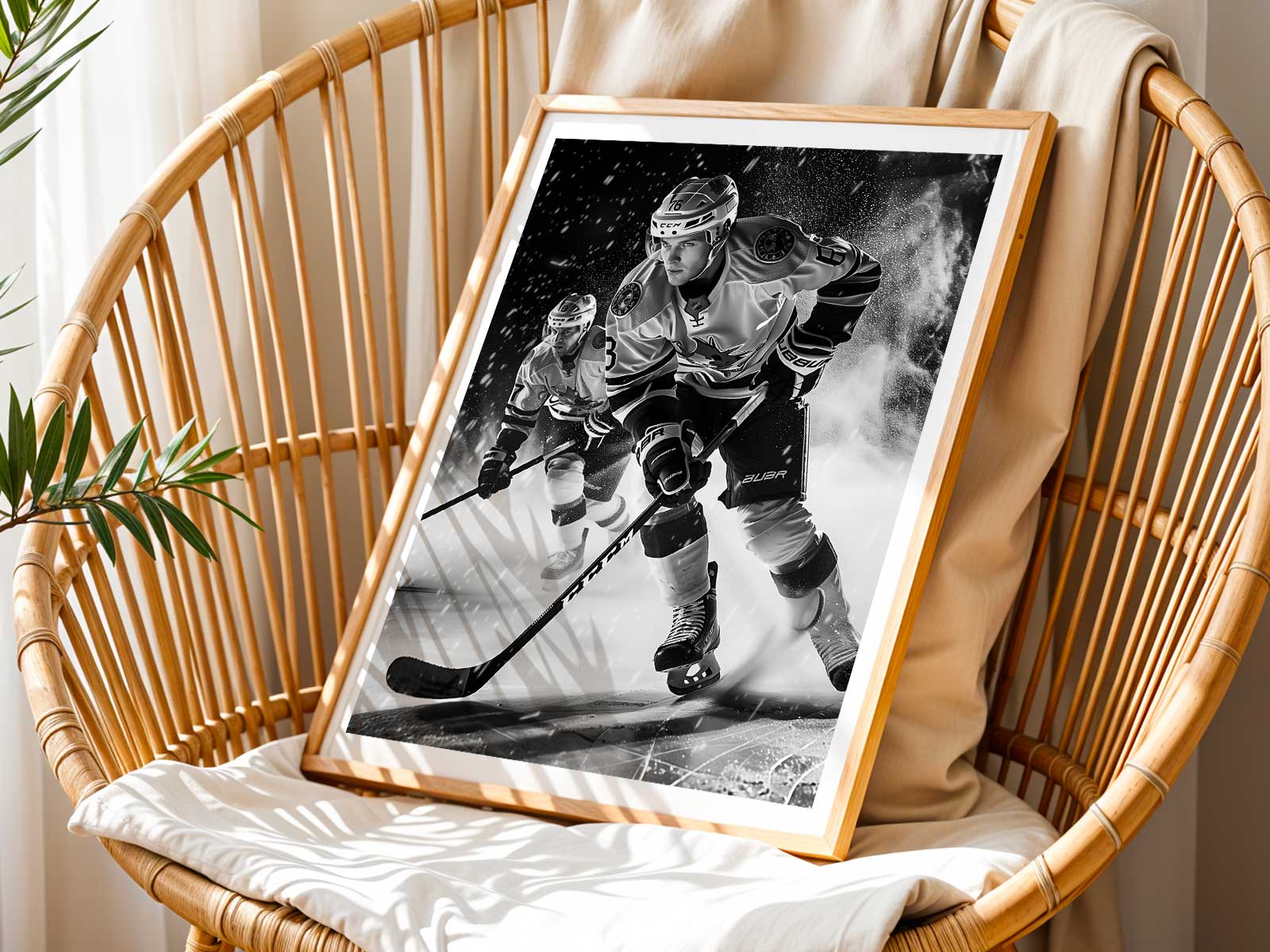
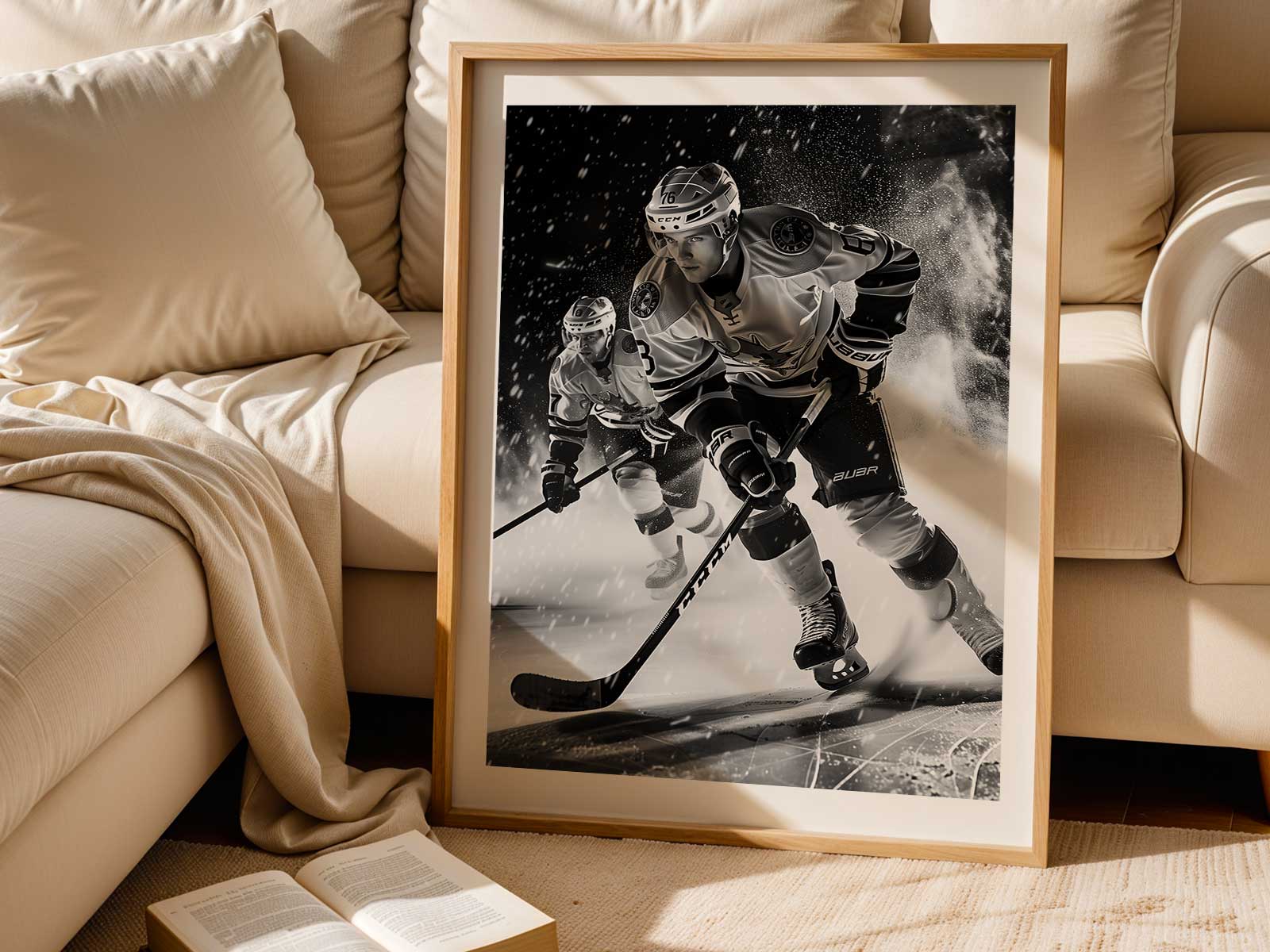
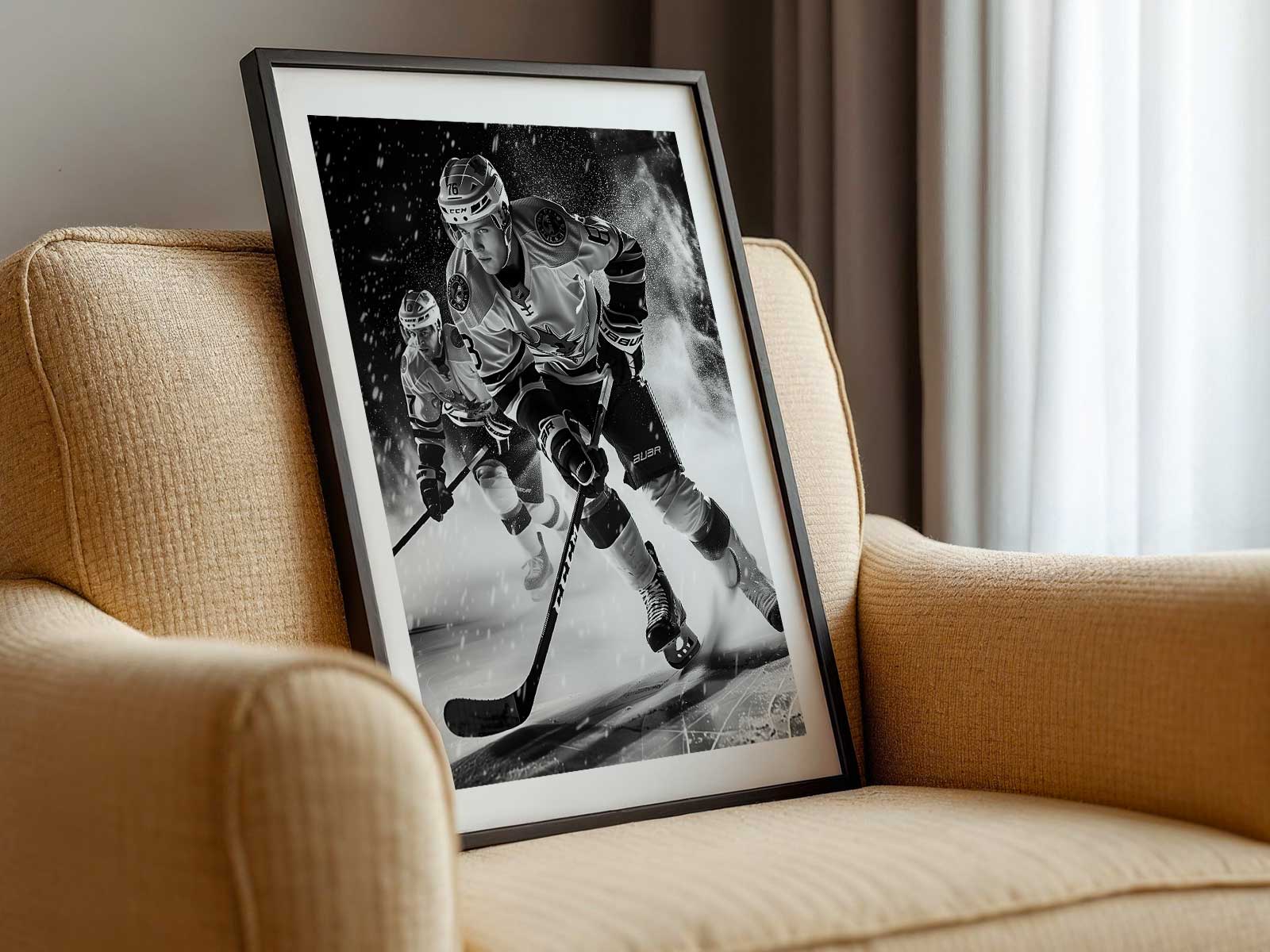
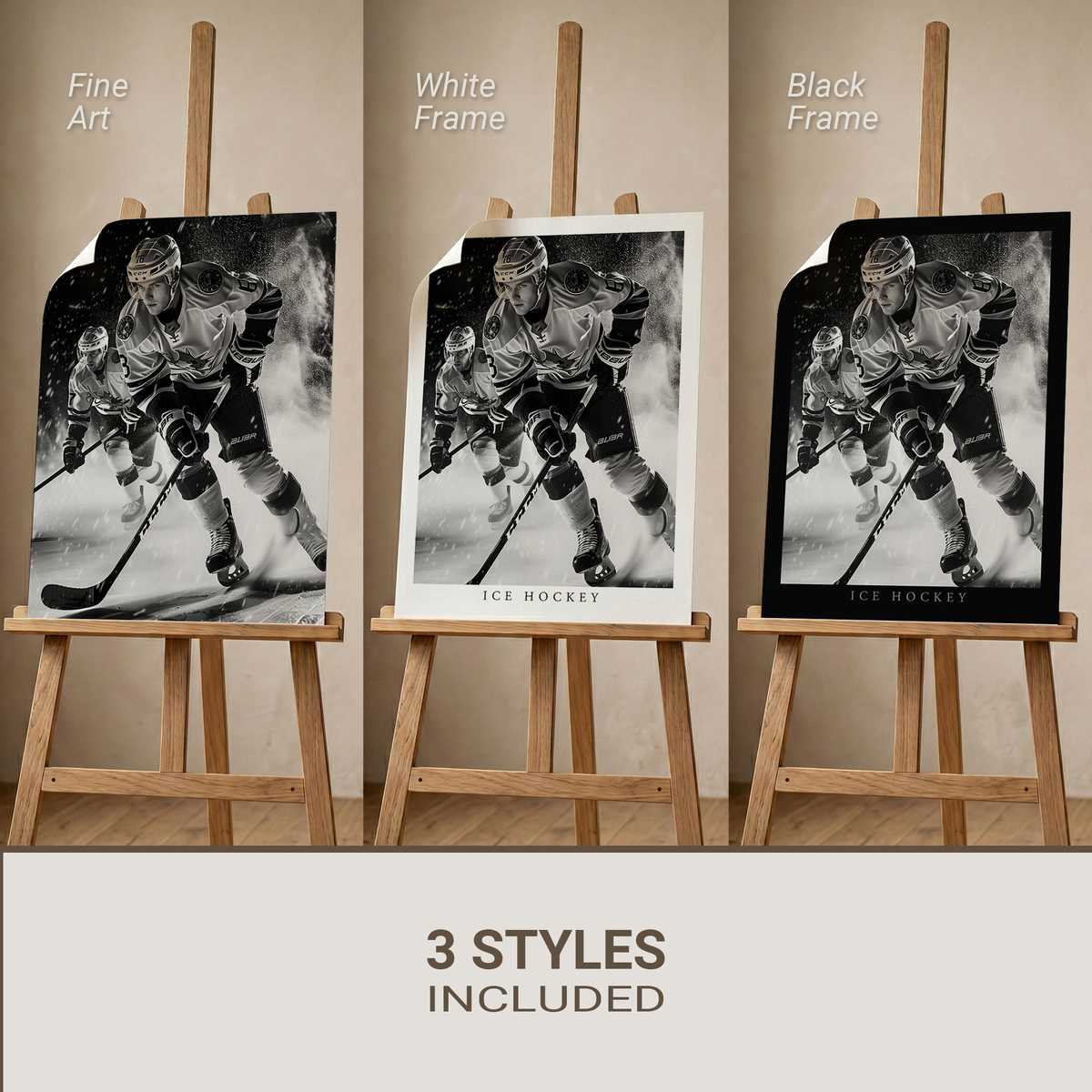
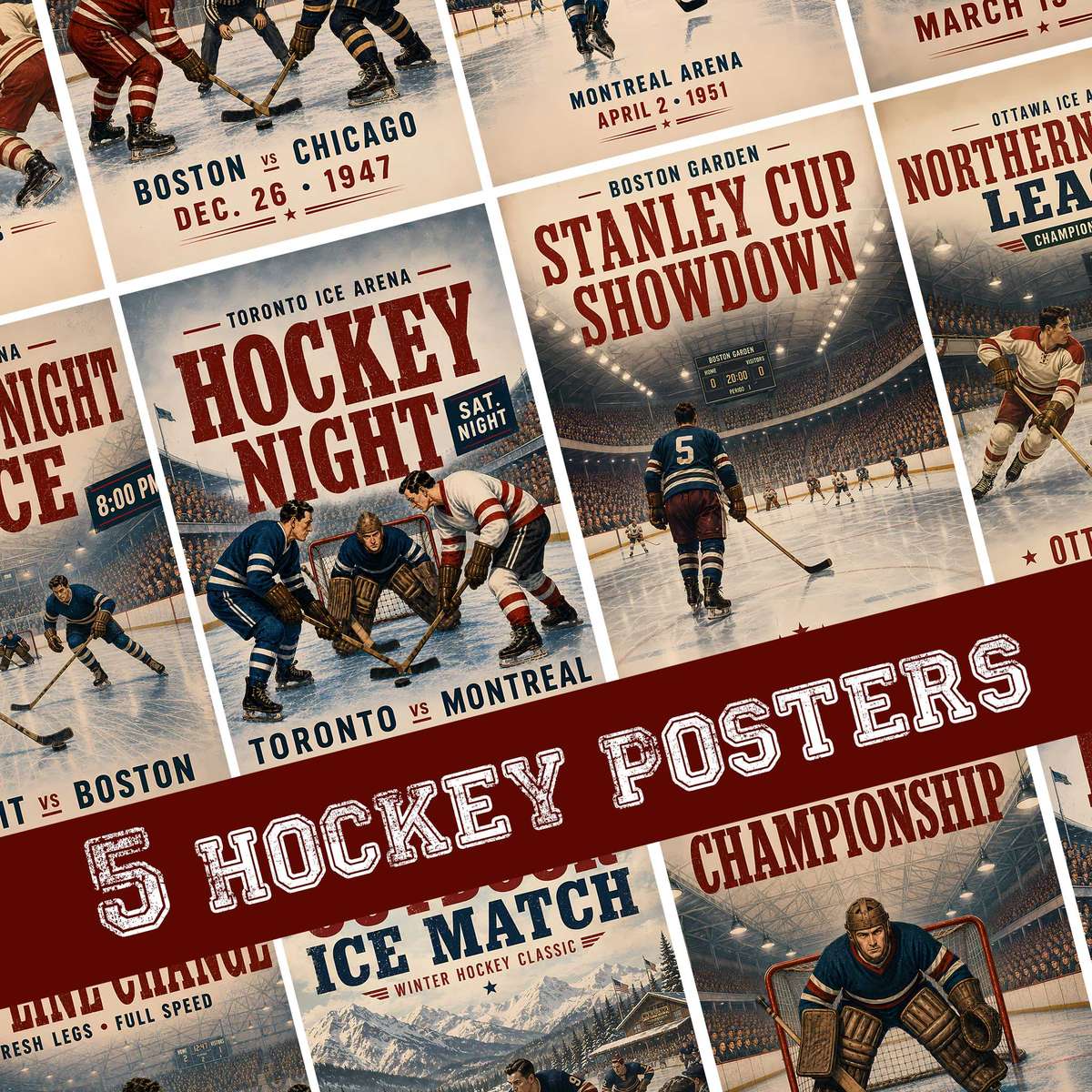
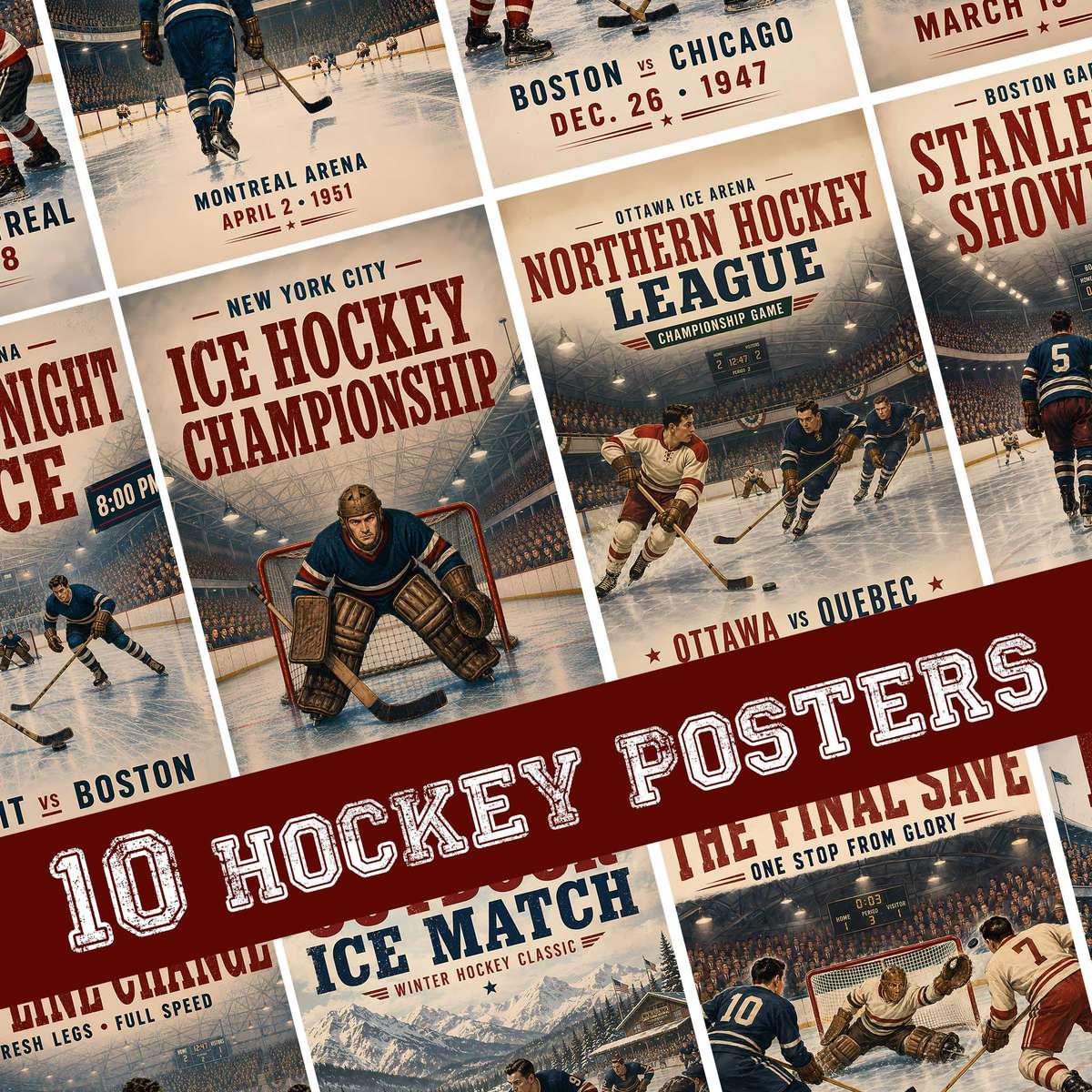
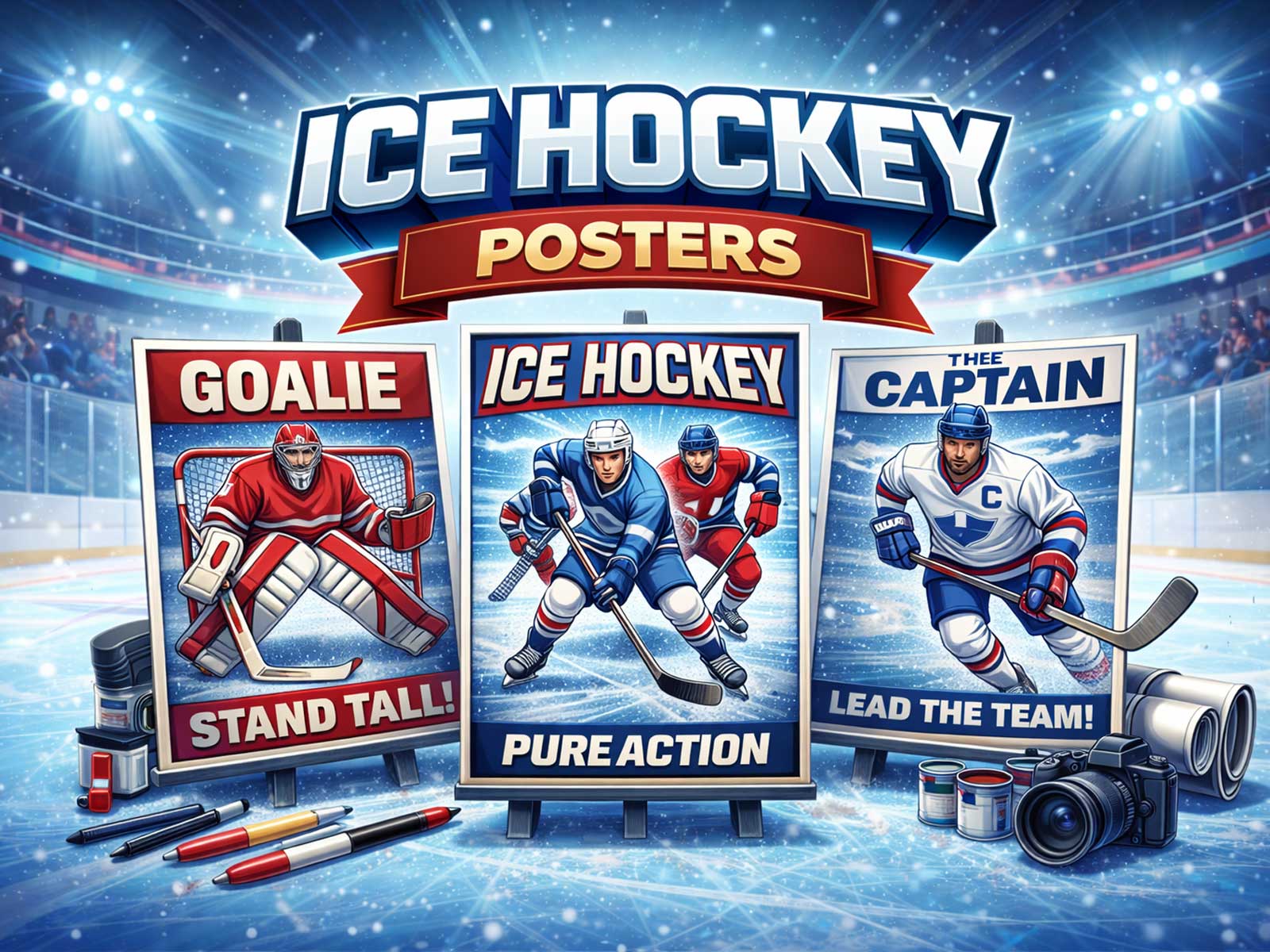
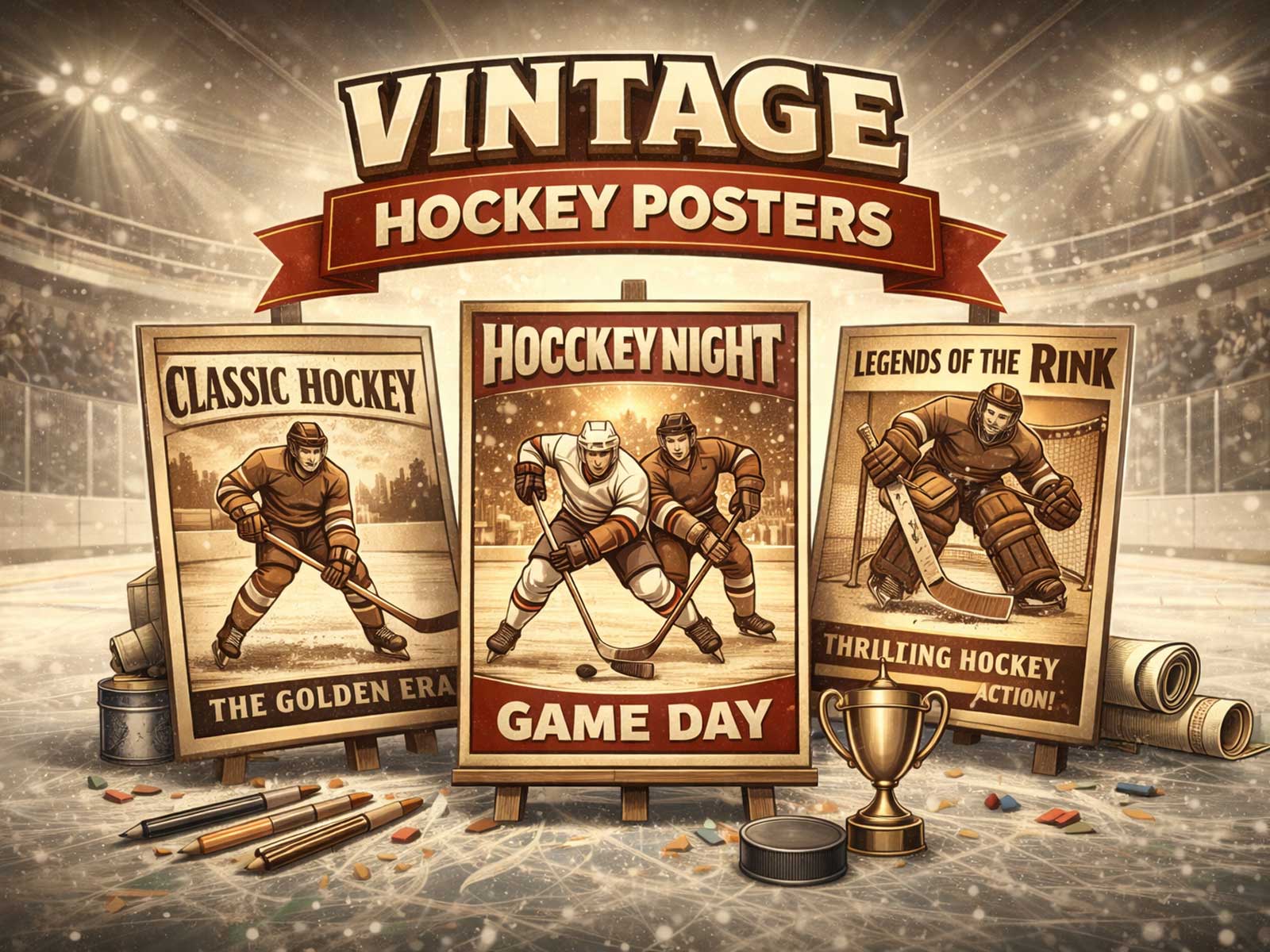
A goalie-centred hockey poster works like a visual shorthand for the game's drama. Reduce the rink to one figure and a frame of netting, and you get a composition that reads instantly: threat, focus, and frozen motion. The enlarged silhouette of the goaltender—pads and stance exaggerated against the bright, sterile band of the crease—turns a single moment into a narrative. From a distance it reads as a symbol; up close it rewards attention with texture: scuff marks on leather, frost on the ice, and the coarse weave of the mesh.
What makes this subject so effective on a wall is contrast—literal and conceptual. Hockey is about speed and impact, but the goalie imposes a controlled resistance. That opposition creates a striking binary for an image: explosive color and blur of a shooter versus the cold geometry of the goal and the unwavering, almost sculptural repose of the netminder. Designers lean into this by amplifying the silhouette, deepening shadows and isolating the figure so the eye reads danger immediately. The net, normally utilitarian, becomes stage set: a visual anchor that gives the poster tension and scale.
There is a distinct tactile language to goalie imagery that translates well to interiors. Ice textures—microfissures, skate-scrape trails, and the reflective sheen under arena lights—act like subtle horizontals that ground the composition on the wall. Jerseys and crests supply instant identity, while the pads and mask offer sculptural shapes that pop against both dark and light-painted rooms. In a modern loft, a large-format goalie poster reads minimal and graphic; in a fan cave it reads emblematic and heroic. The same piece can satisfy a design-minded viewer who prizes form and contrast as well as a devoted fan who responds to team color and crest.
[IMAGE_INSERT_ARTICLE_01]
Motion and implied movement are essential. Even in a still image the goalie invites the viewer into the play: the slight lean, the angle of the glove, the frozen halo of ice spray suggest an instant before or after impact. That implied action makes the poster alive on the wall, pulling attention without shouting. Lighting choices—cold, blue-tinted highlights versus warm, stadium tungsten—shift the mood from documentary grit to cinematic spectacle. Retro treatments with muted palettes and grain emphasize nostalgia and collectability; high-contrast, modern renditions emphasize performance and immediacy.
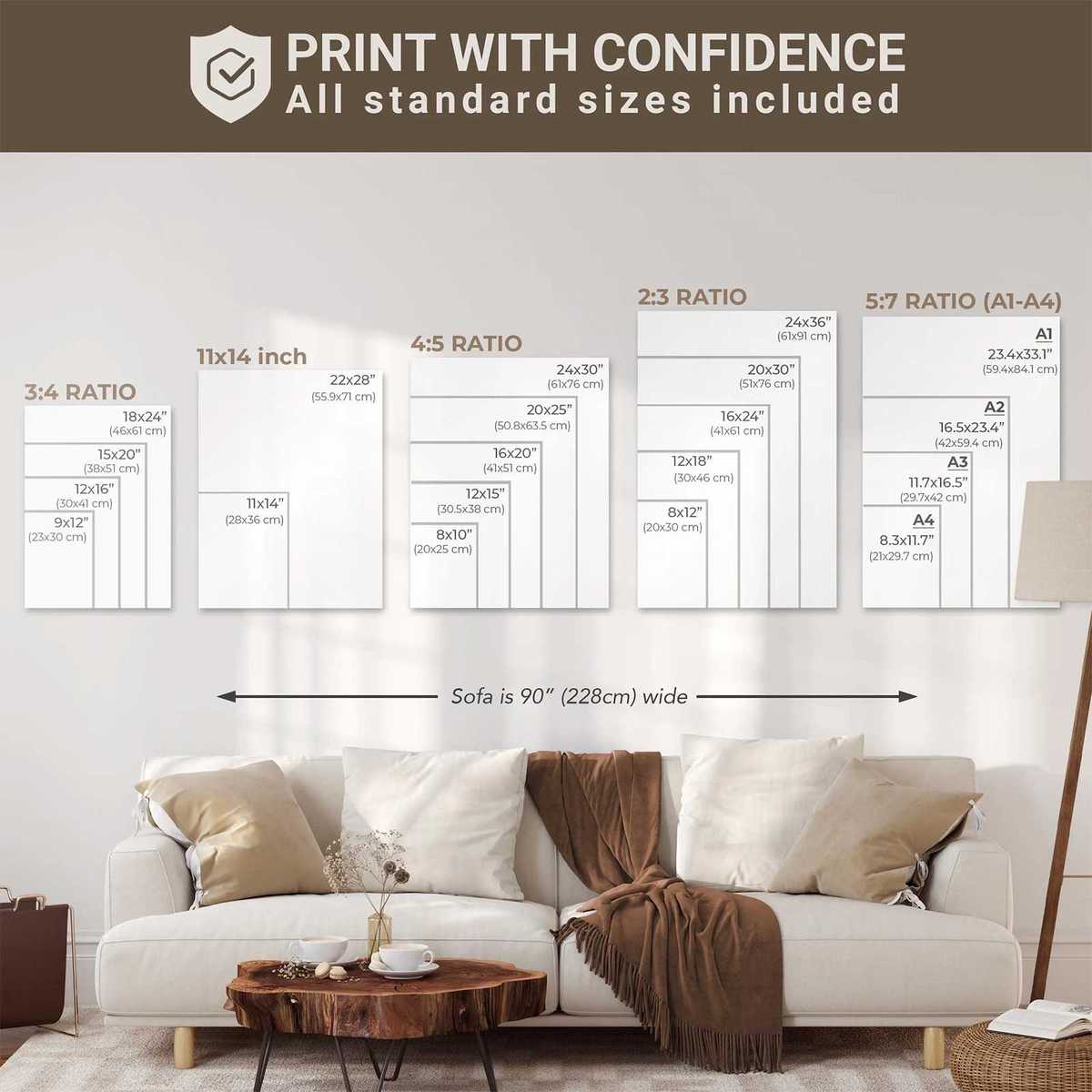
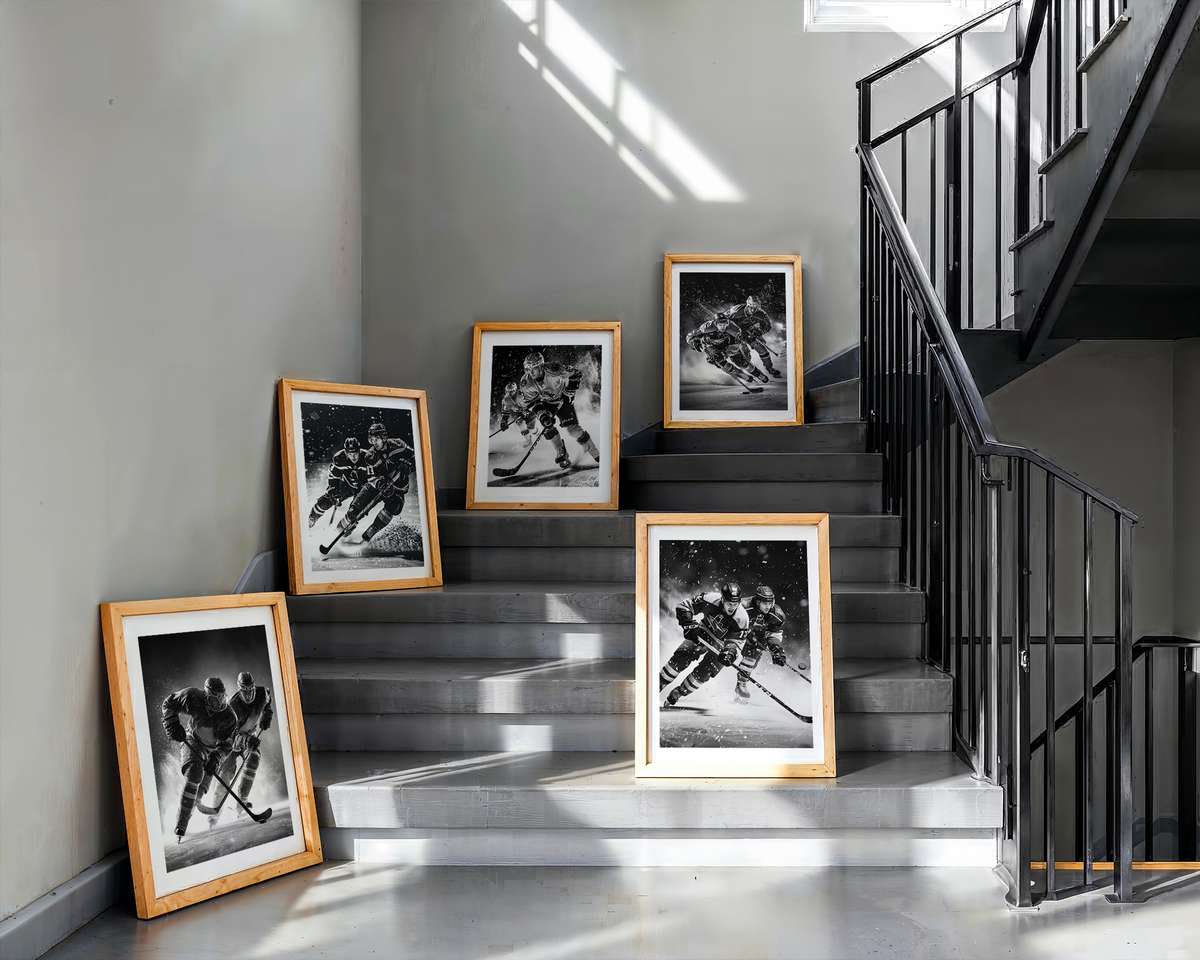
Beyond aesthetics, a goalie poster works for room atmosphere because it occupies psychological space. It encourages steadiness and focus; as wall art it reads like a guardian of the room, an emblem of resilience. Small rooms benefit from a vertical, figure-heavy composition that draws the eye upward, whereas wide living areas take advantage of panoramic scenes that include the crease, the post, and hints of the crowd beyond. Consider scale: oversized prints become immersive, almost like a mural, while smaller framed pieces function as curated accents grouped with other memorabilia.
Ultimately, the success of a goalie-centred poster rests on balance—between motion and stillness, between the chilly geometry of the rink and the human warmth of identity. It’s a natural fit for anyone who loves hockey’s kinetic energy but also cares about how an image shapes a space. Whether you want a bold focal point in a game room or a refined piece for a study, a well-composed goalie poster turns the cold, urgent moments of the ice into a memorable piece of wall theatre.