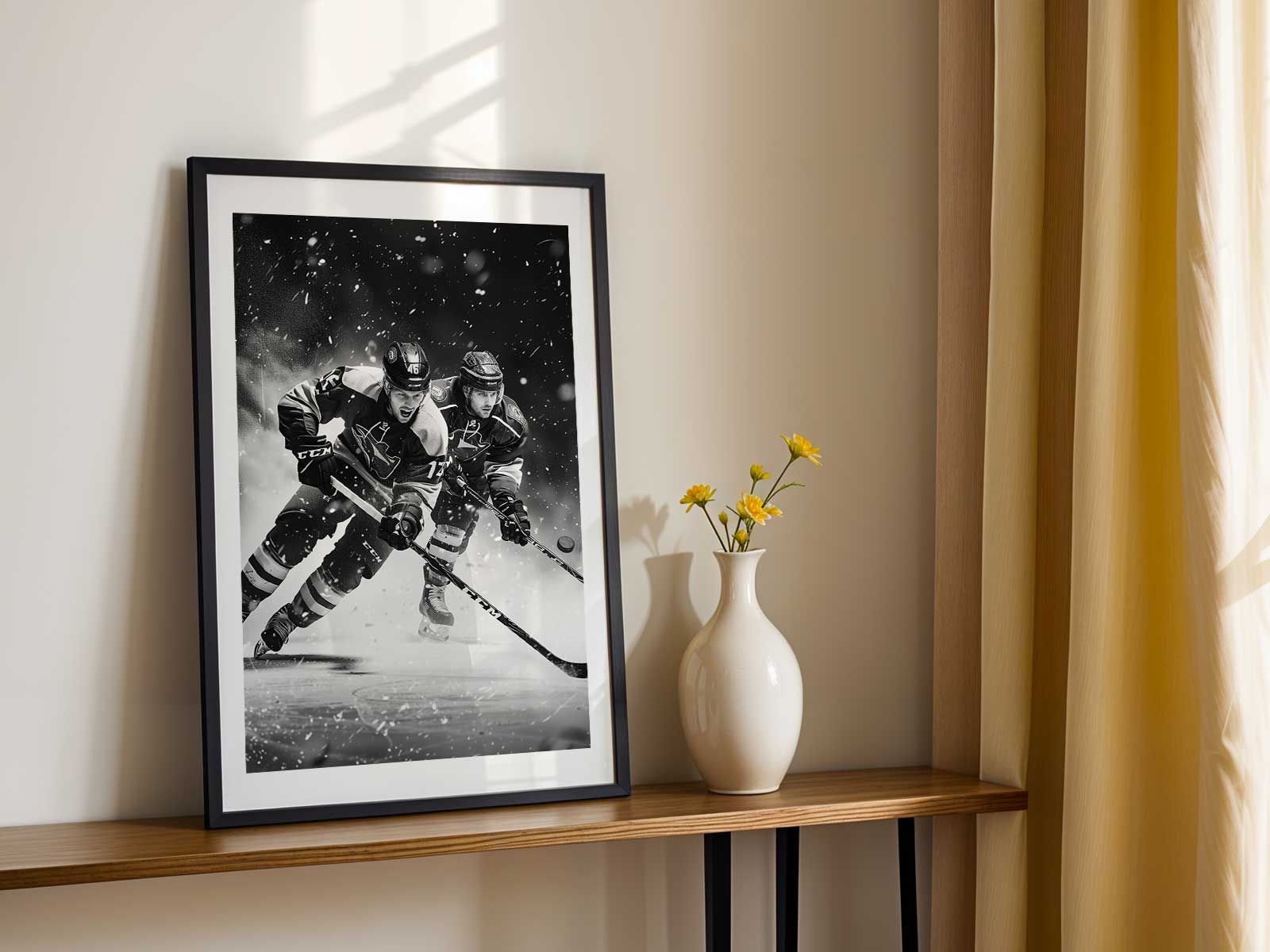
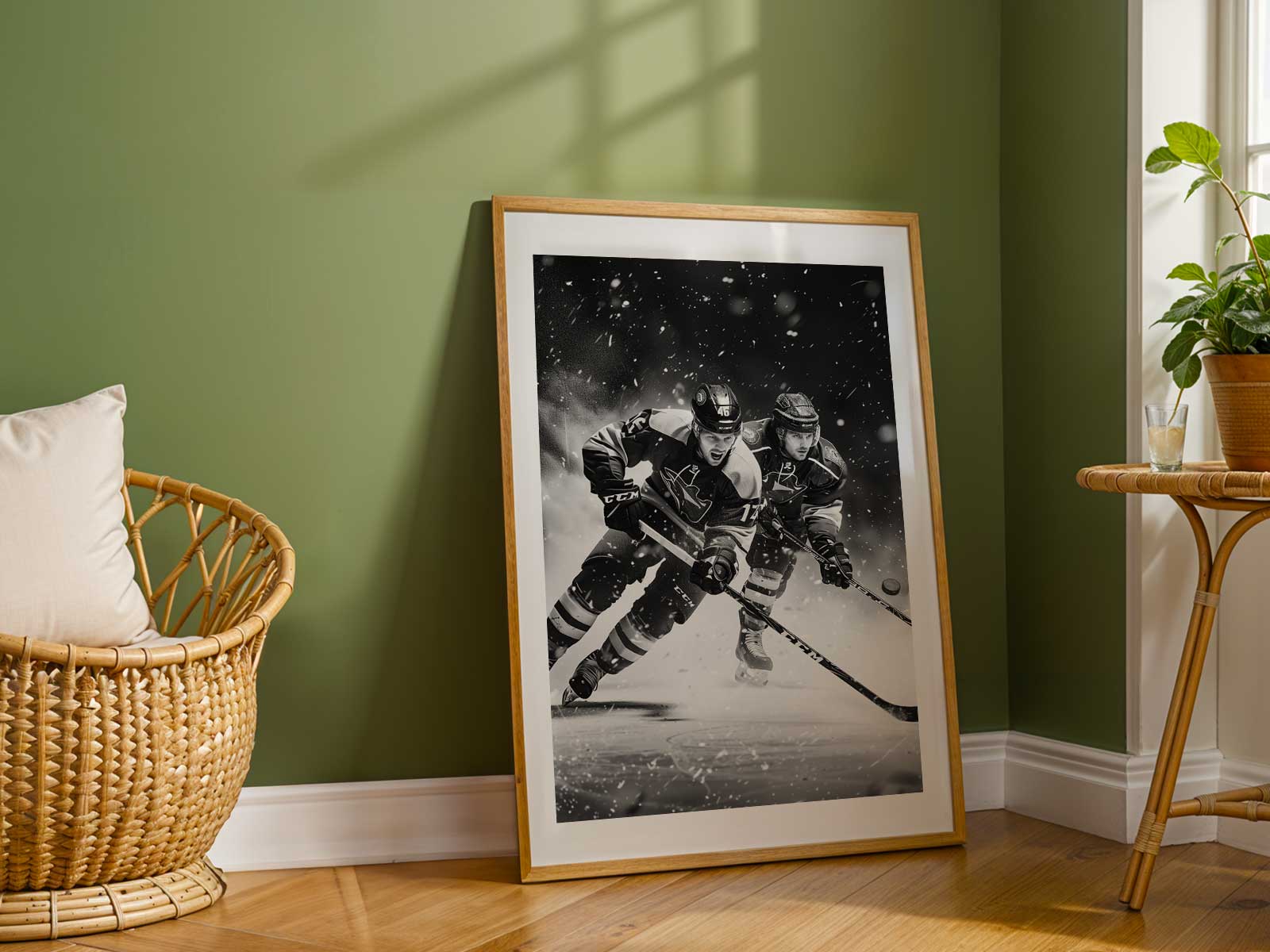
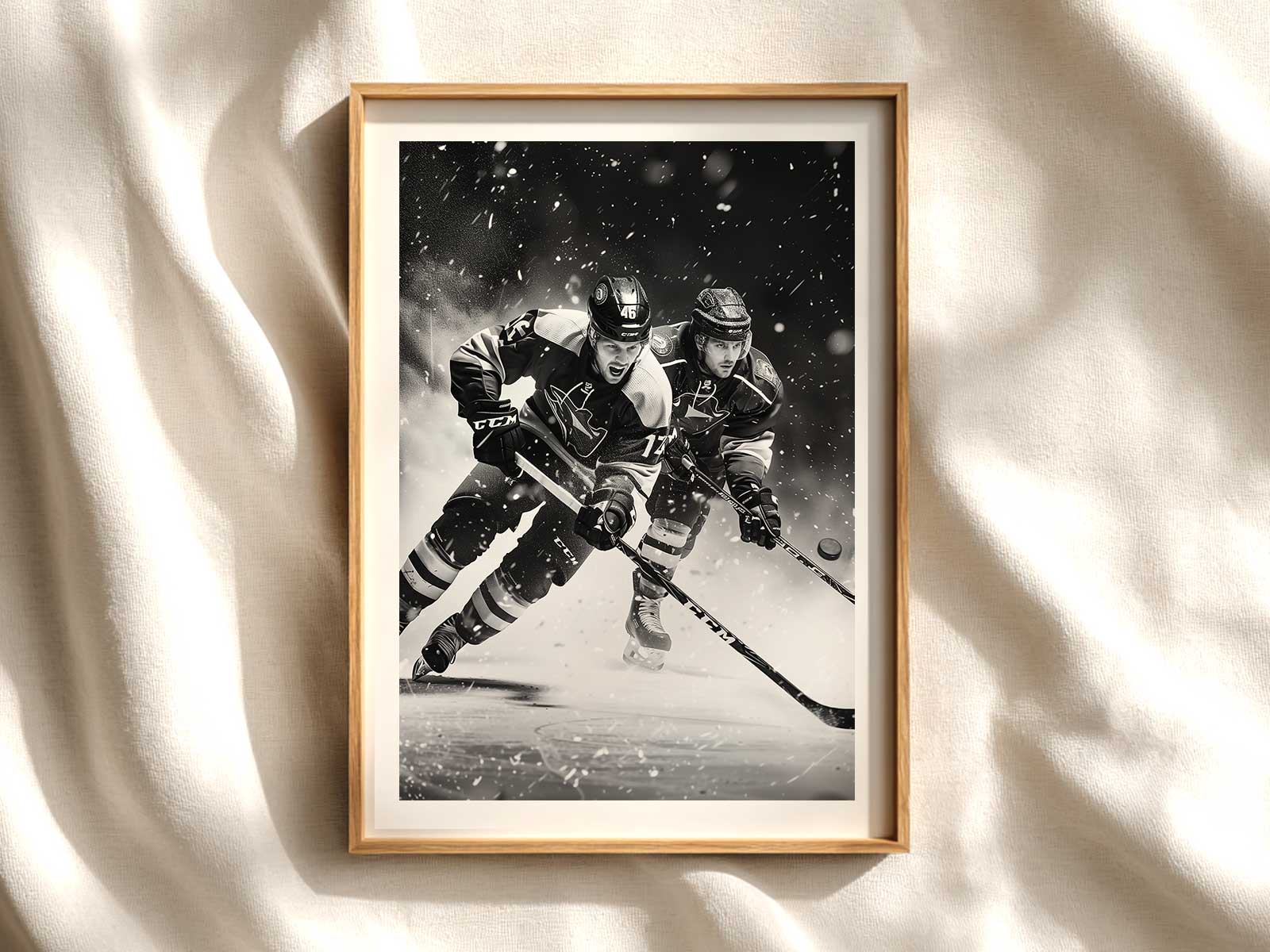
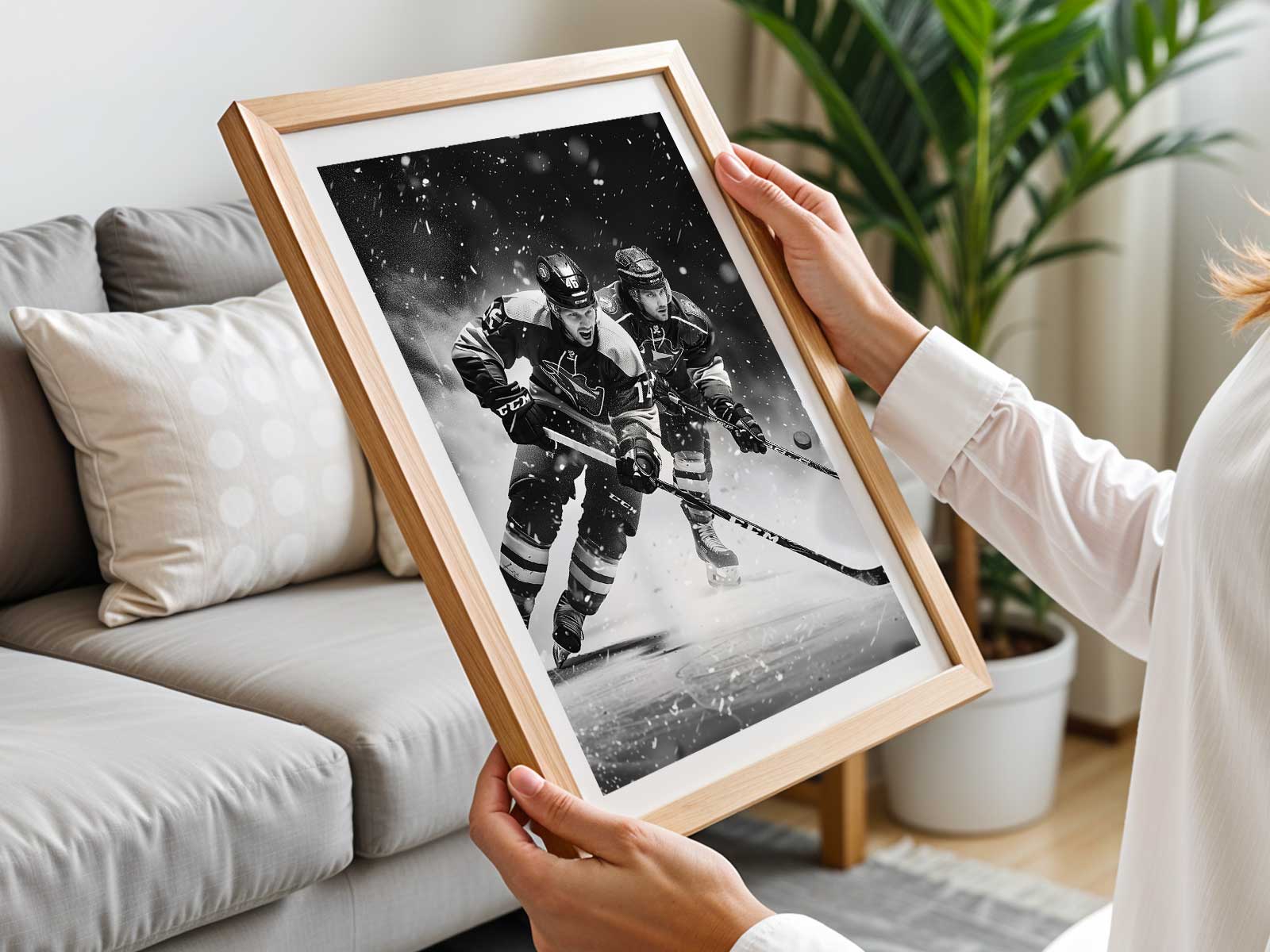
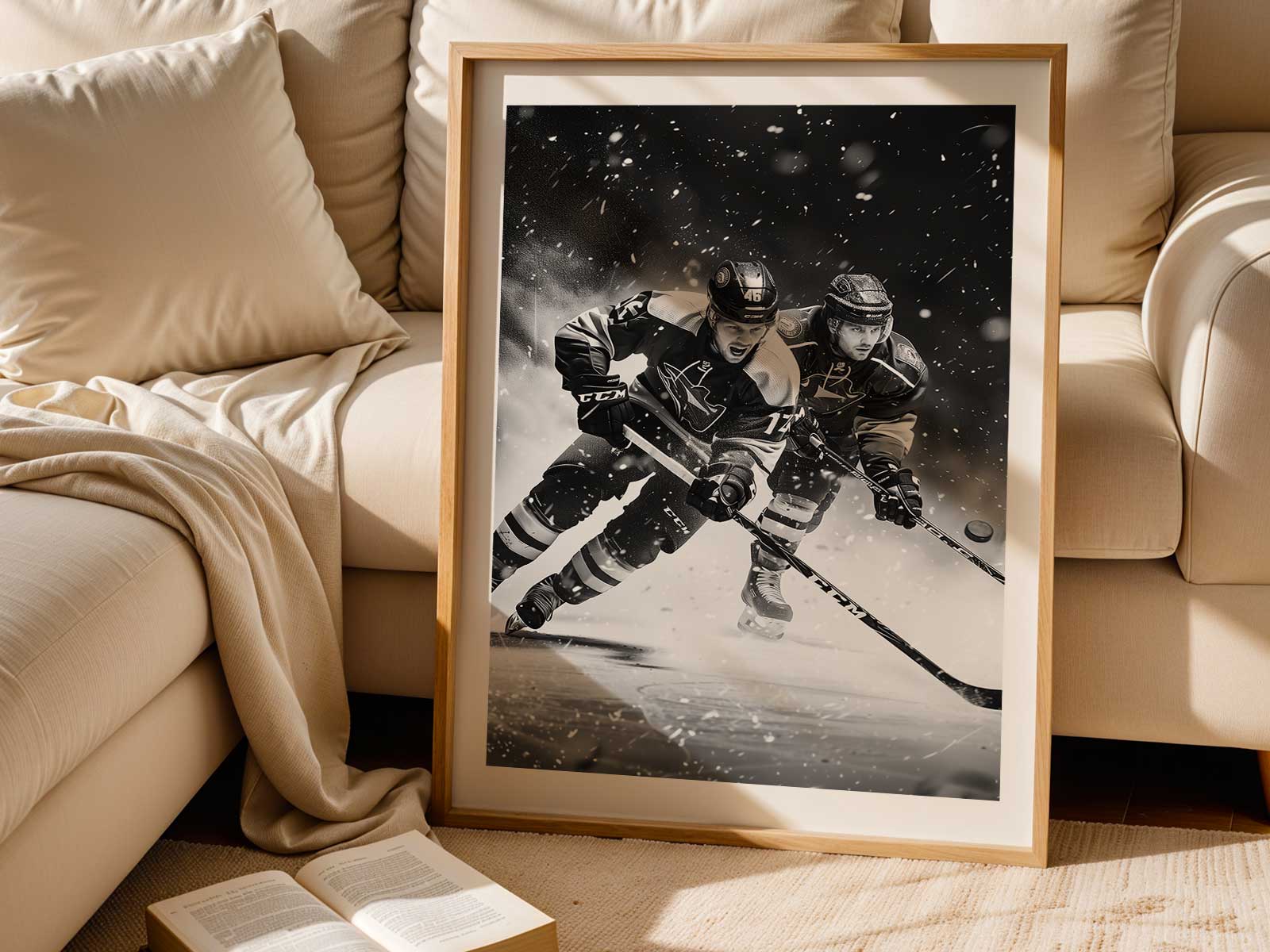
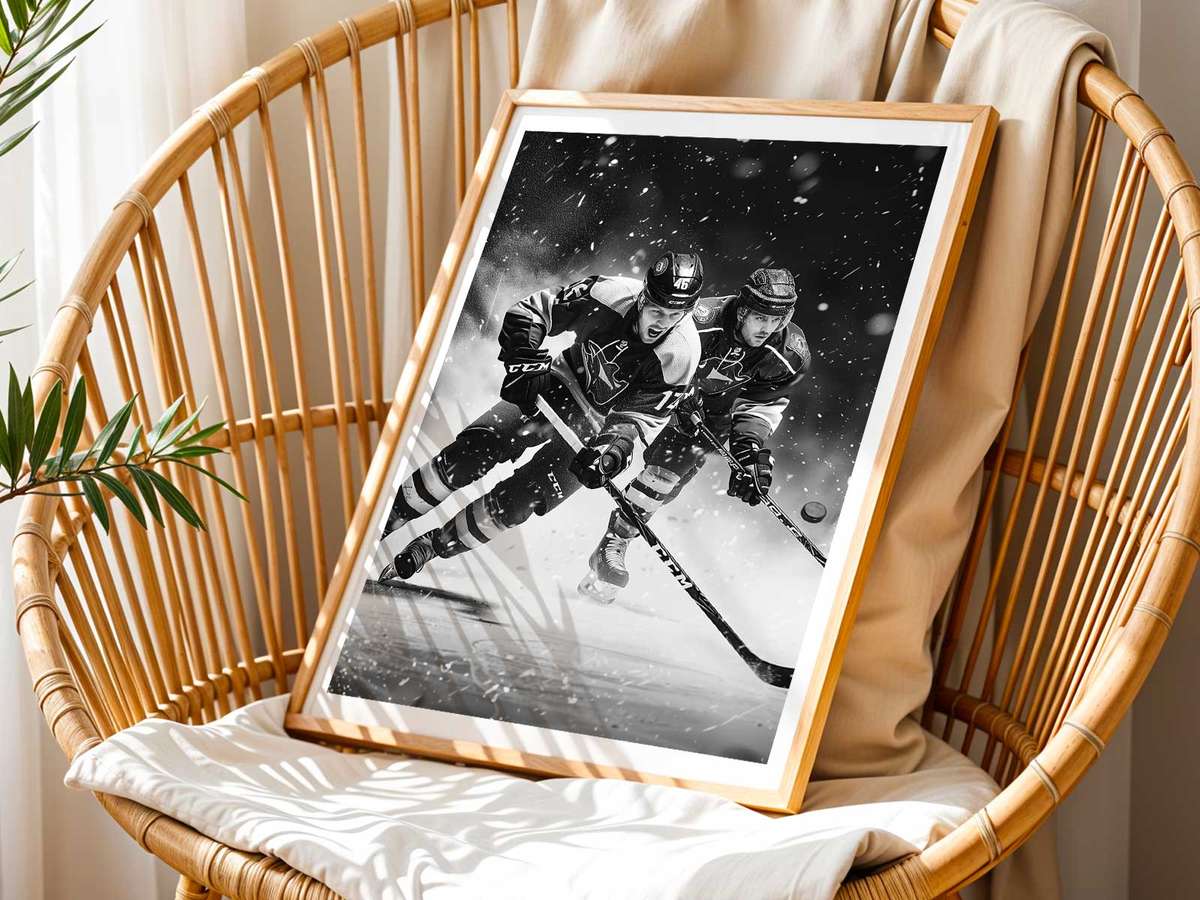
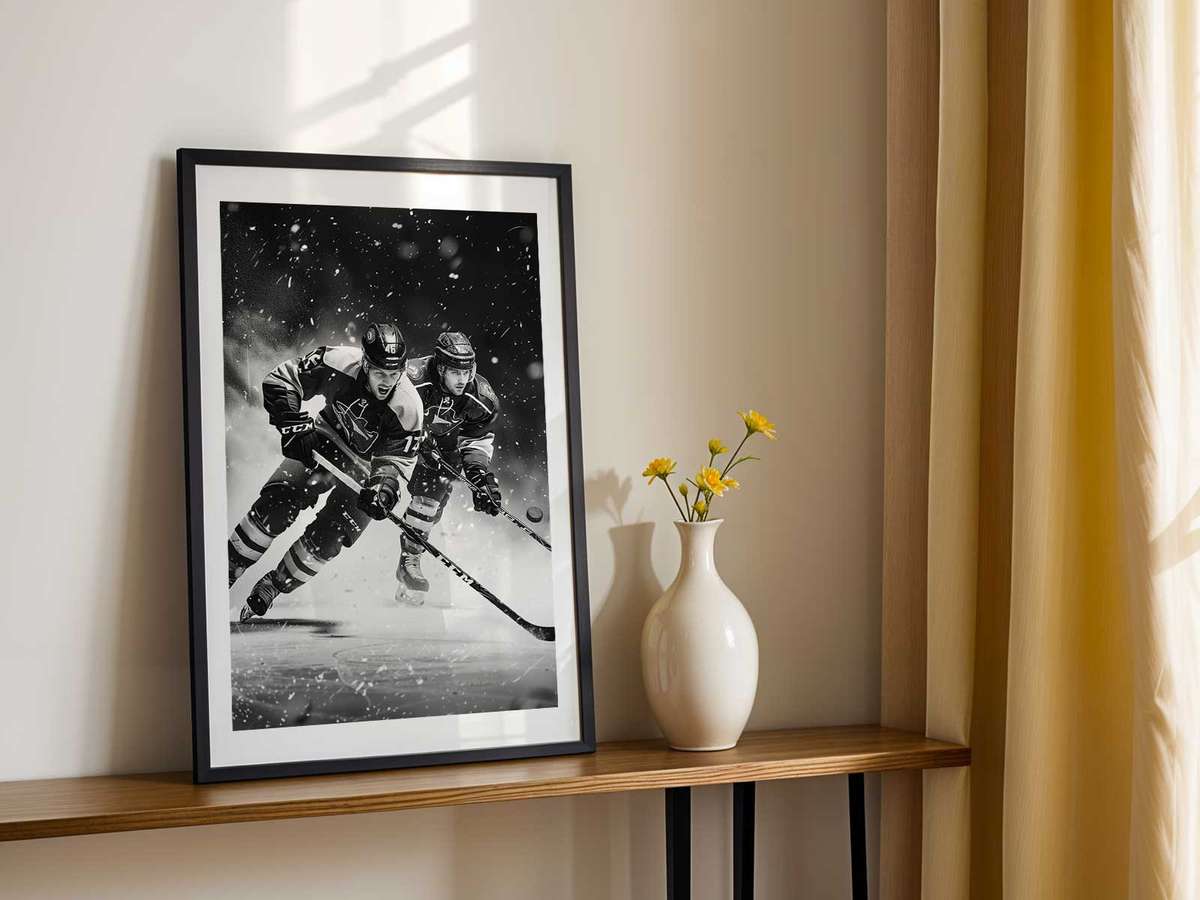
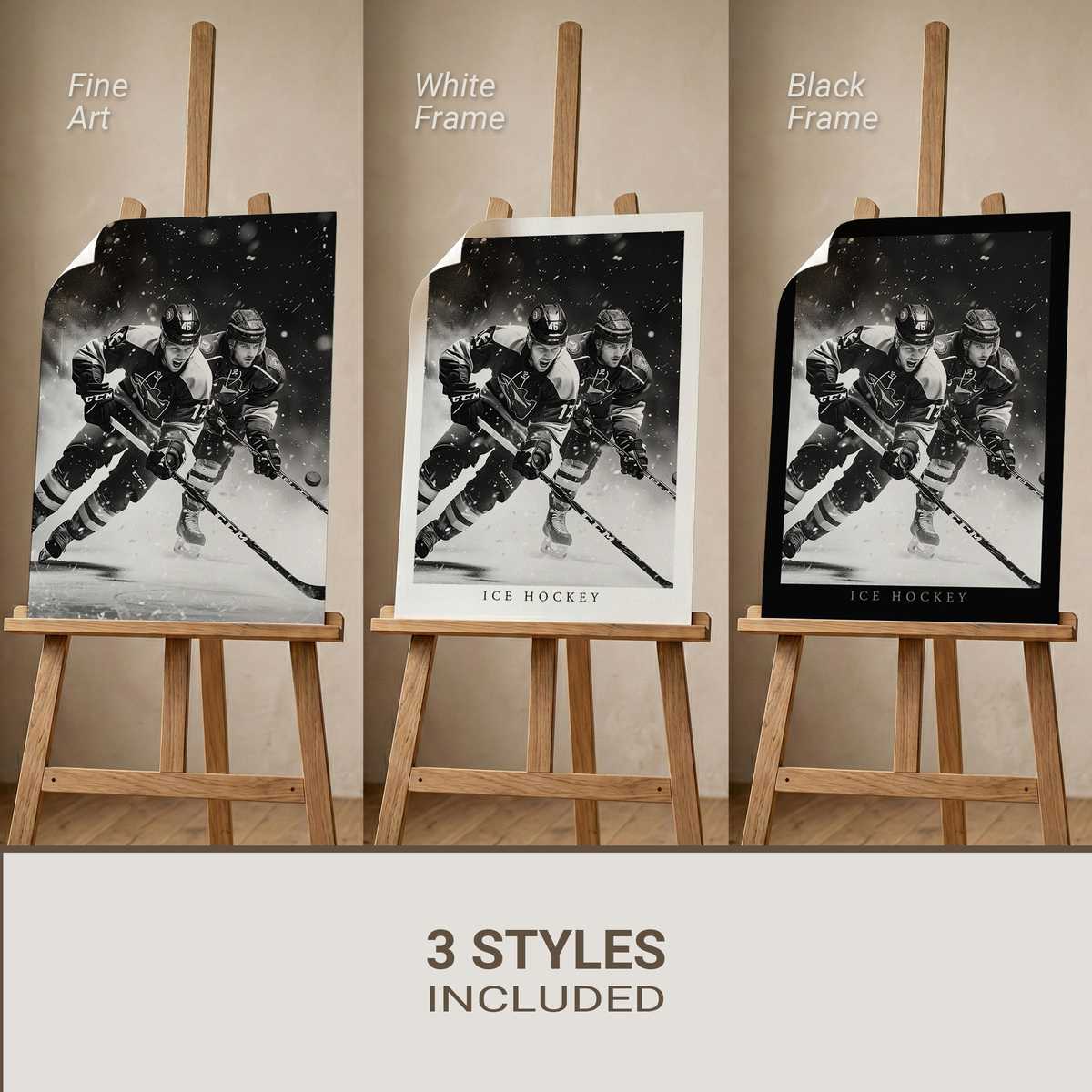
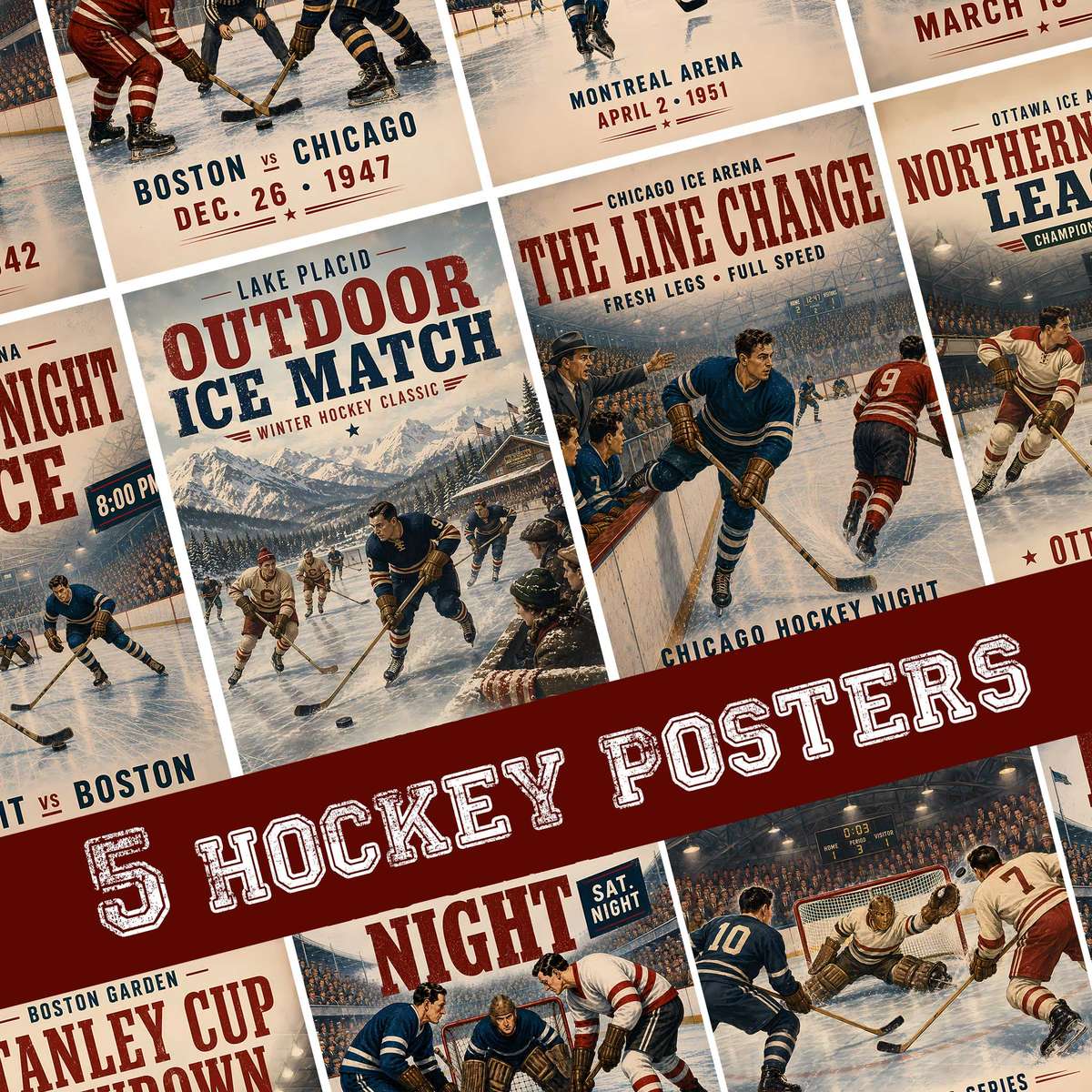
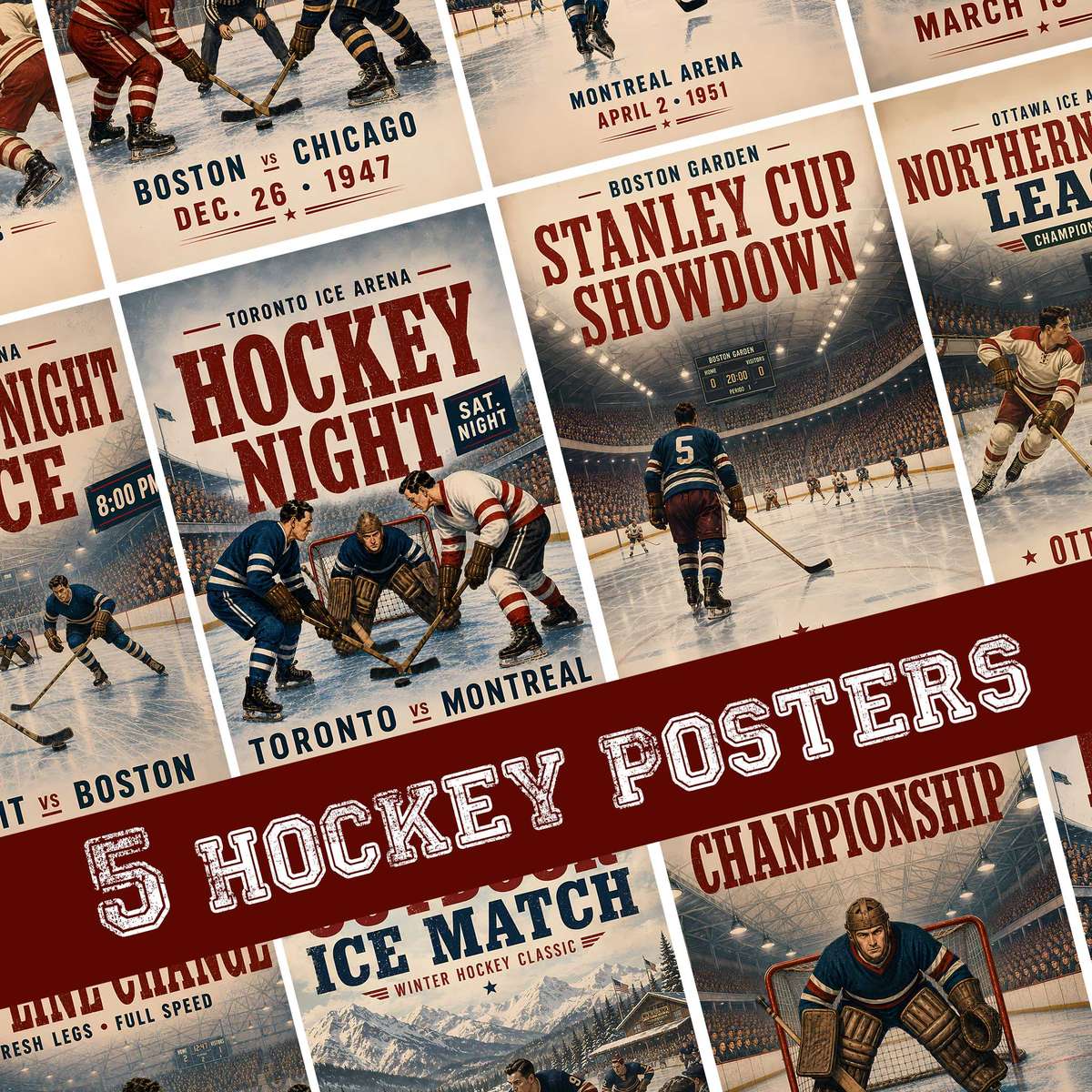
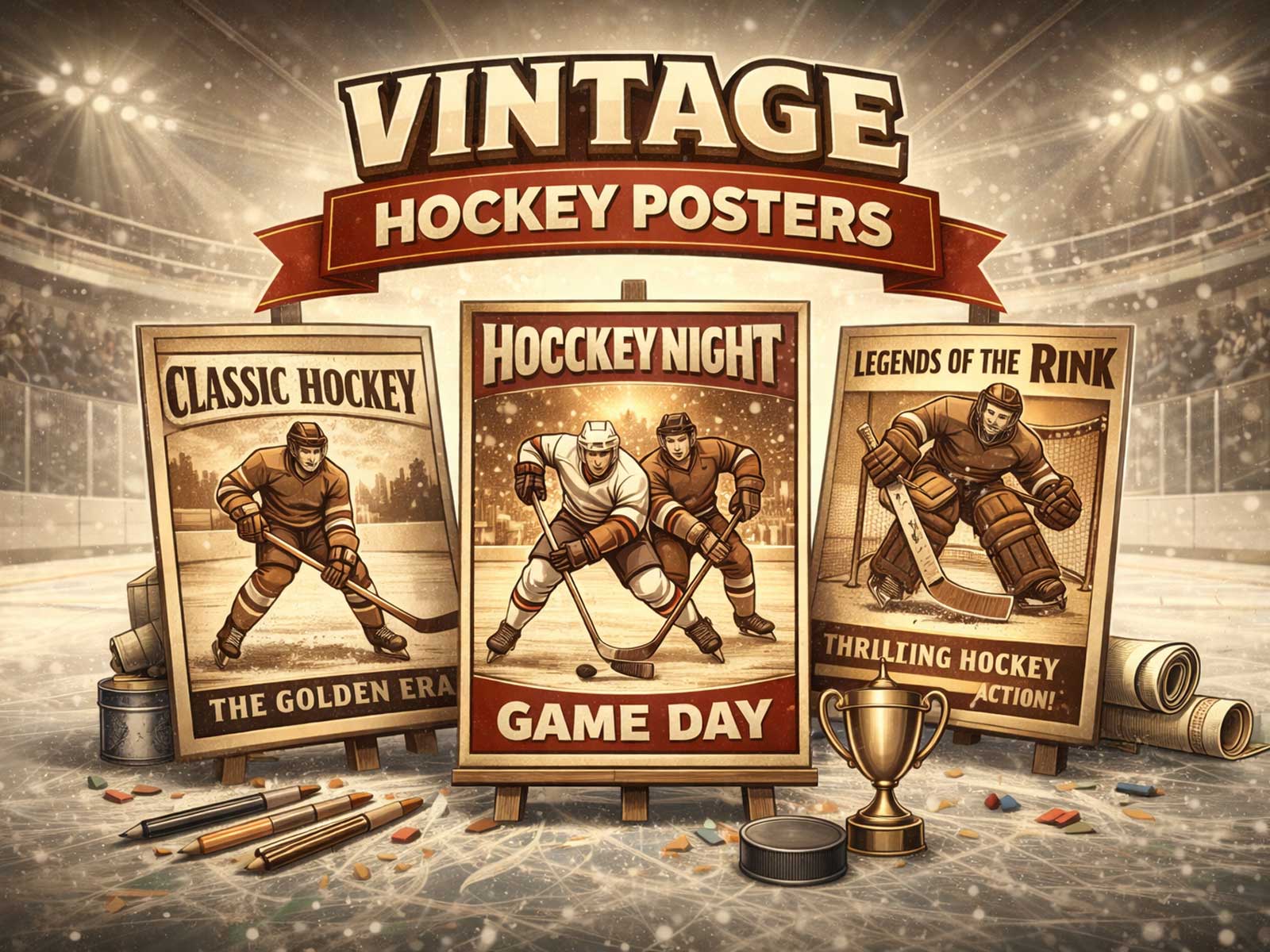
Ice hockey translates to wall art with a clarity few sports can match. At the heart of that translation is the ice itself: a bright, reflective surface that photographers and designers exploit to make players read crisply against a clean background. That luminous plane simplifies visual information, turning motion and color into bold shapes that a viewer can grasp at a glance—exactly the quality that makes a poster or canvas hang confidently above a sofa, in a den, or on a collector wall.
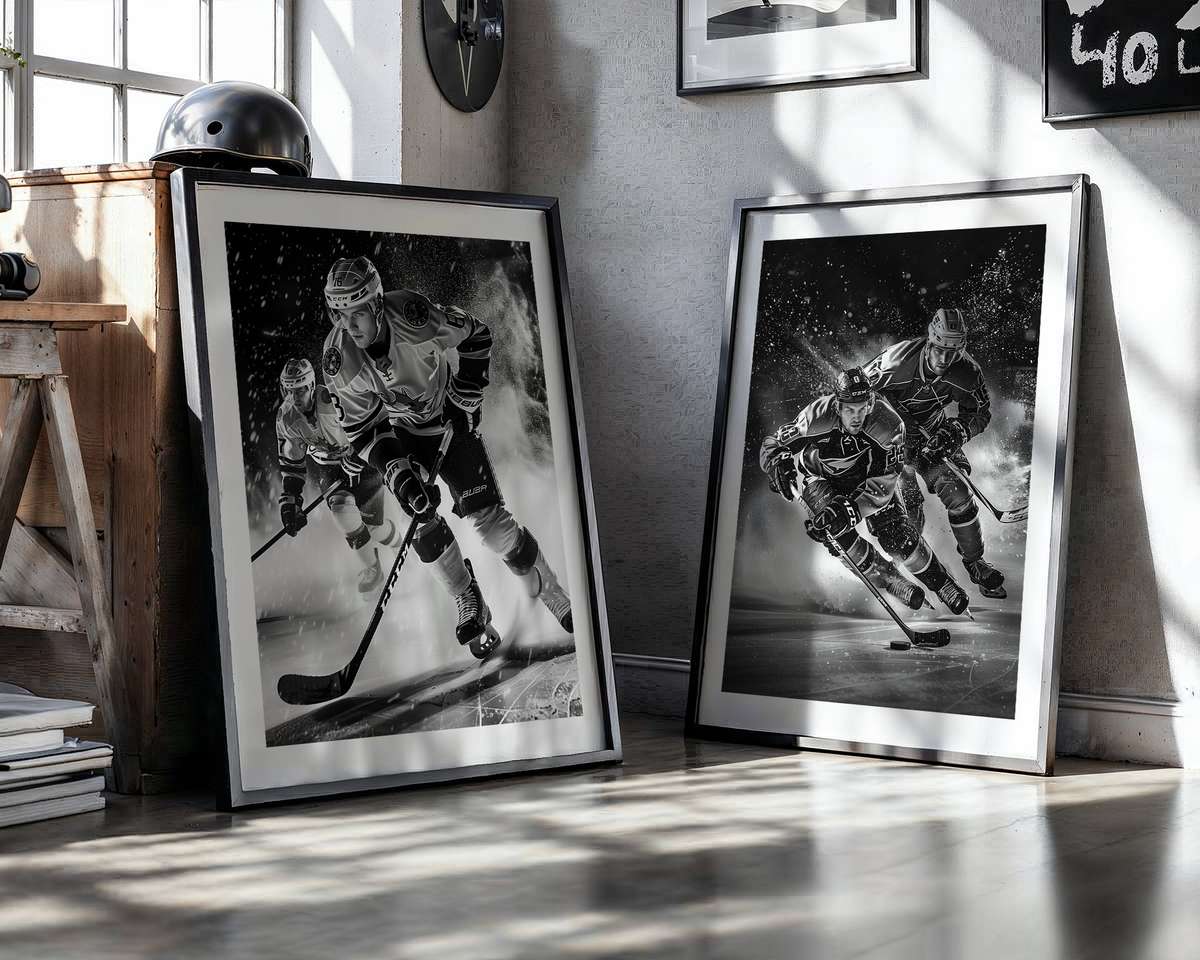
The compact, visually distinctive postures of hockey—skating strides, shots, checks and a goalie’s stance—carry built-in tension. Those moments are compressed, muscular and graphic, and they survive the jump from moving game to still image intact. Photographers rely on these compressed gestures to convey motion and intent in a single frame, so a poster becomes a freeze-frame of conflict rather than a fuzzy suggestion of play. That immediate readability is crucial for wall art: the image must communicate energy and narrative across a room without explanation.
Composition and lighting are the technical hand behind the drama. Sports photographers use leading lines, low angles, rim light and selective focus to emphasize conflict and direction; in hockey, the rink’s geometry—boards, blue lines and face-off circles—provides ready-made conduits for those compositional devices. Arena lighting and white-balance challenges force deliberate exposure and processing choices: keeping the ice luminous or pushing it toward dramatic contrast changes the mood of a print. These choices let creators decide whether a piece feels modern and clinical or moody and cinematic, helping buyers match a poster to a sleek office or a warm, retro-themed fan cave.
[IMAGE_INSERT_ARTICLE_01]
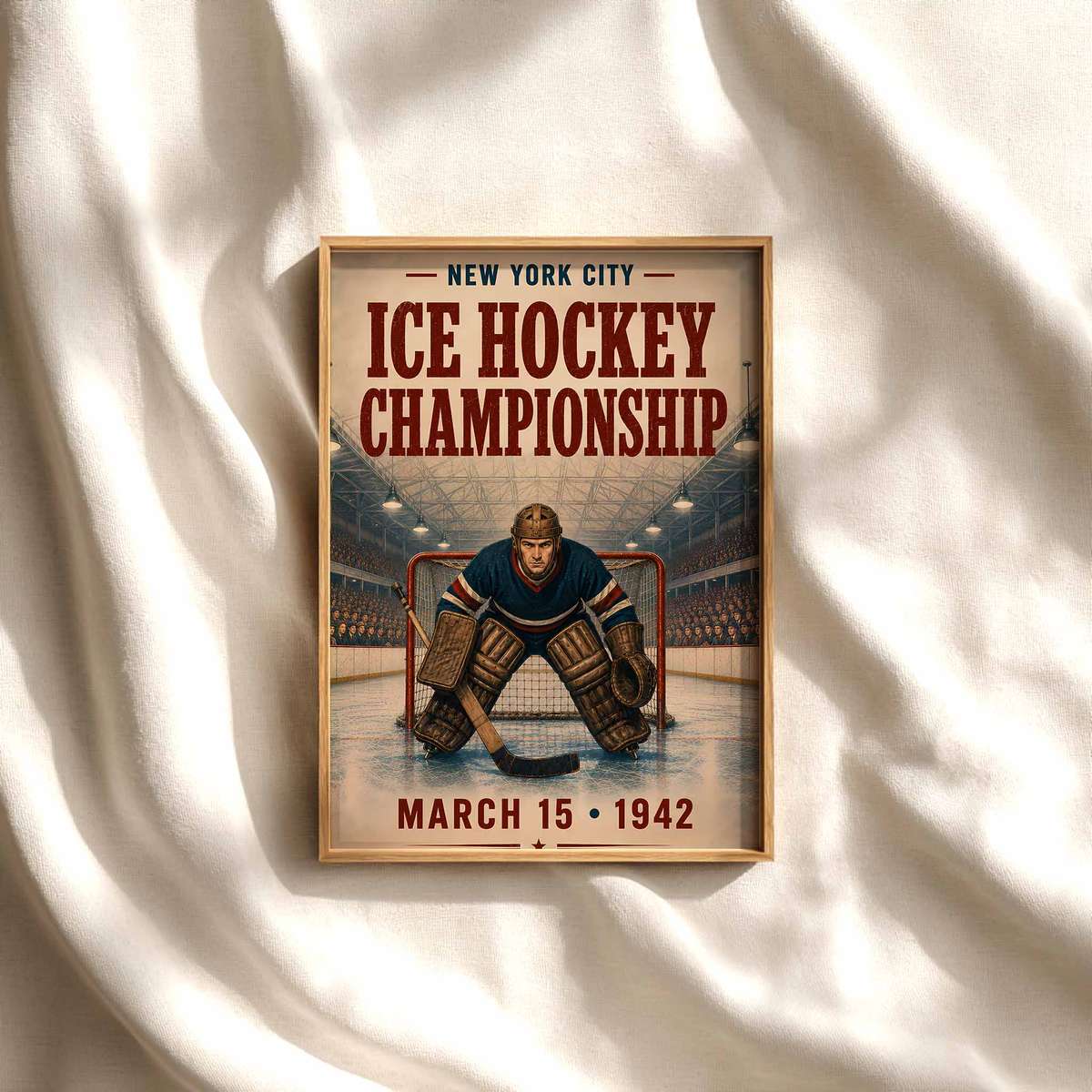
Color and identity play a strong supporting role. Jerseys and crests punctuate the pale field of ice with saturated colors and symbolic shapes, giving a focal point that anchors a room’s palette. Designers and print sellers lean into that contrast, producing images where team colors become decorative devices as much as identifiers. Because the ice provides a neutral, bright backdrop, even busy arenas resolve into clean, high-contrast compositions that read well at poster scale or as large-format canvas.
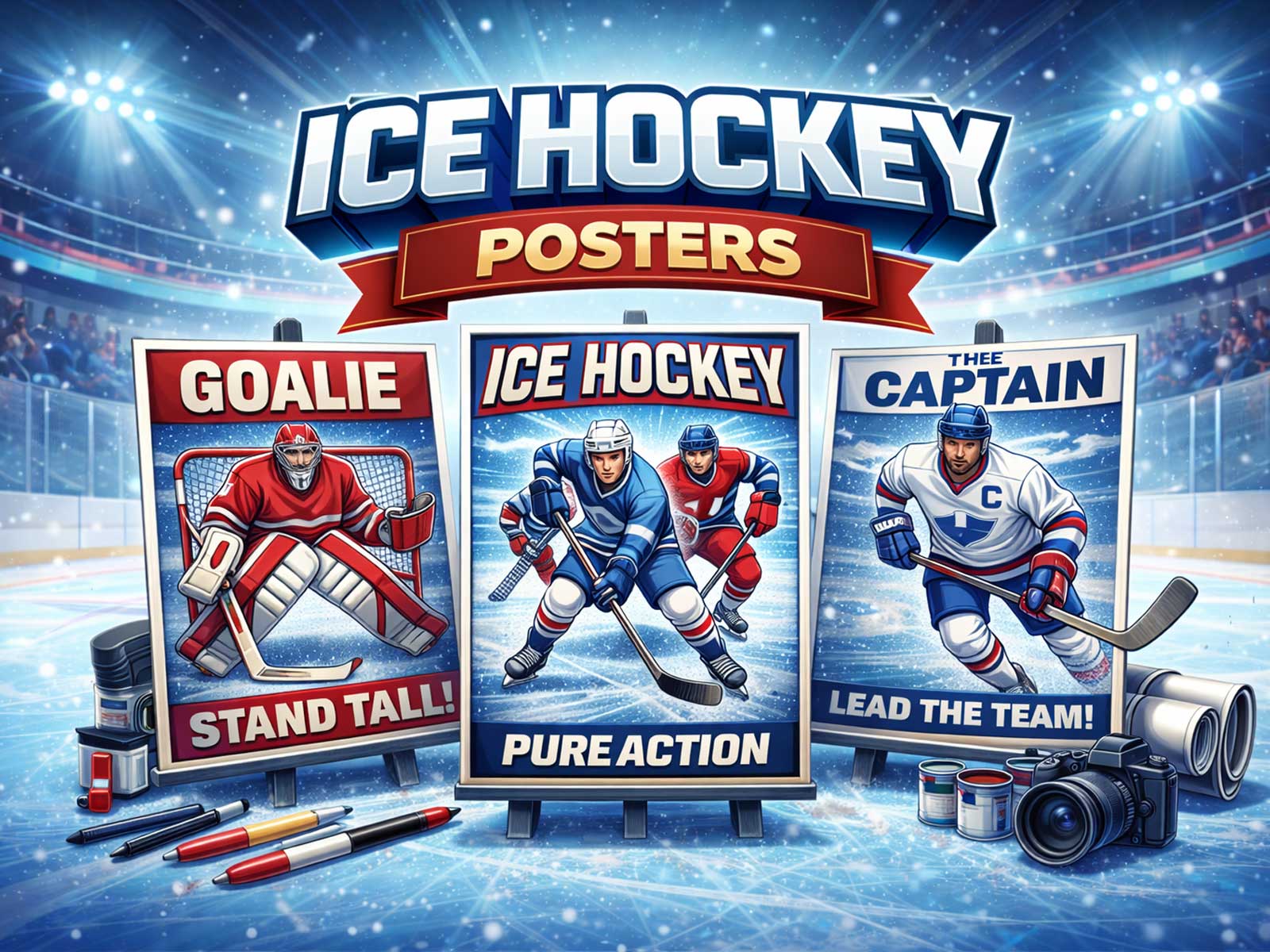
Beyond pure drama, there is an accessible commercial logic: photographers and print shops already work with the technical realities of hockey imagery, and there is a steady market for hockey posters and canvas prints. The combination of exploitable light, decisive body language and compositional tools makes hockey a predictable, flexible subject for reproduction—artists and retailers can create pieces that fit bedrooms, offices, game rooms and dedicated fan spaces while preserving visual impact.
In short, ice hockey’s visual universe is naturally suited to wall art because the medium—the ice—and the message—the tense, readable conflict—are already visually optimized. Whether you want a sharp, modern photograph that emphasizes light and motion or a high-contrast print that foregrounds crest and color, hockey imagery offers ready-made drama and legibility that translate effortlessly into décor and identity for any room.