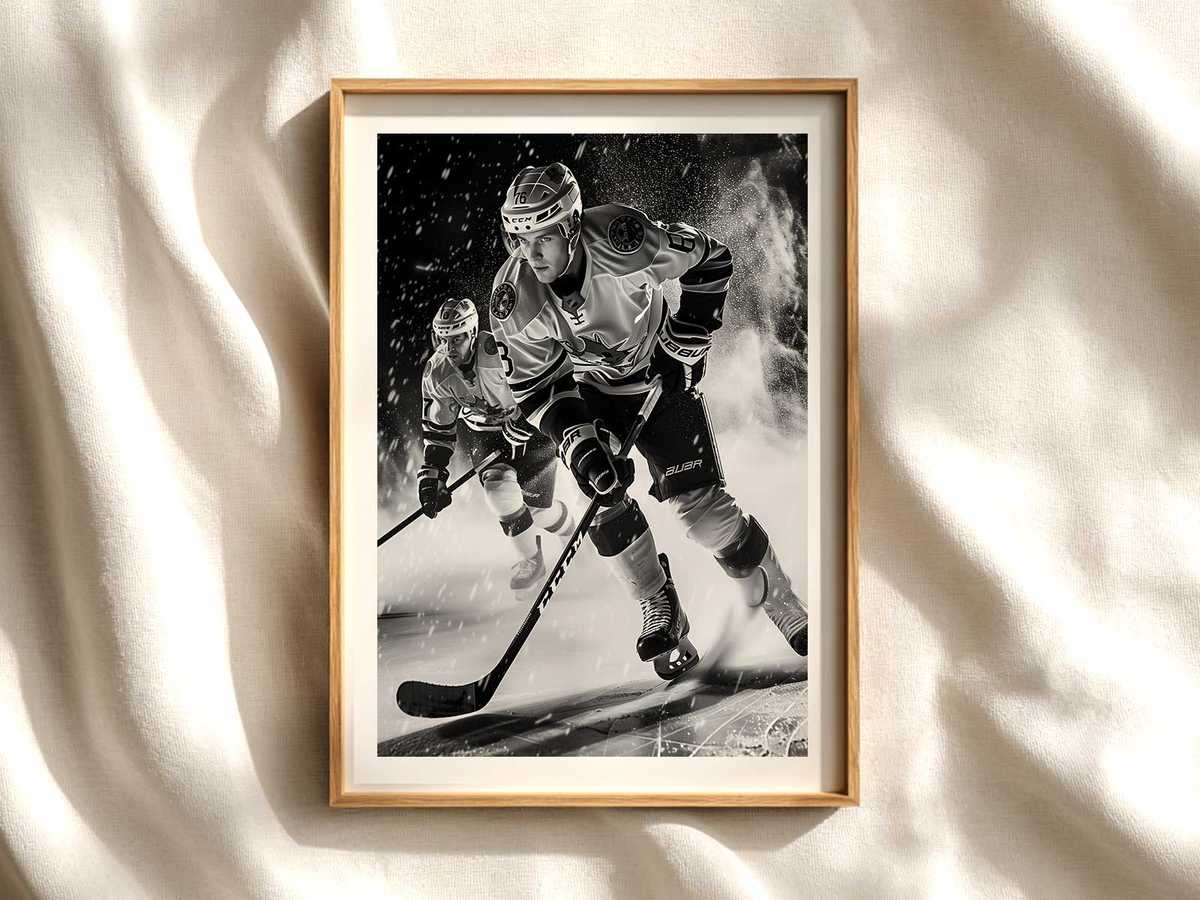
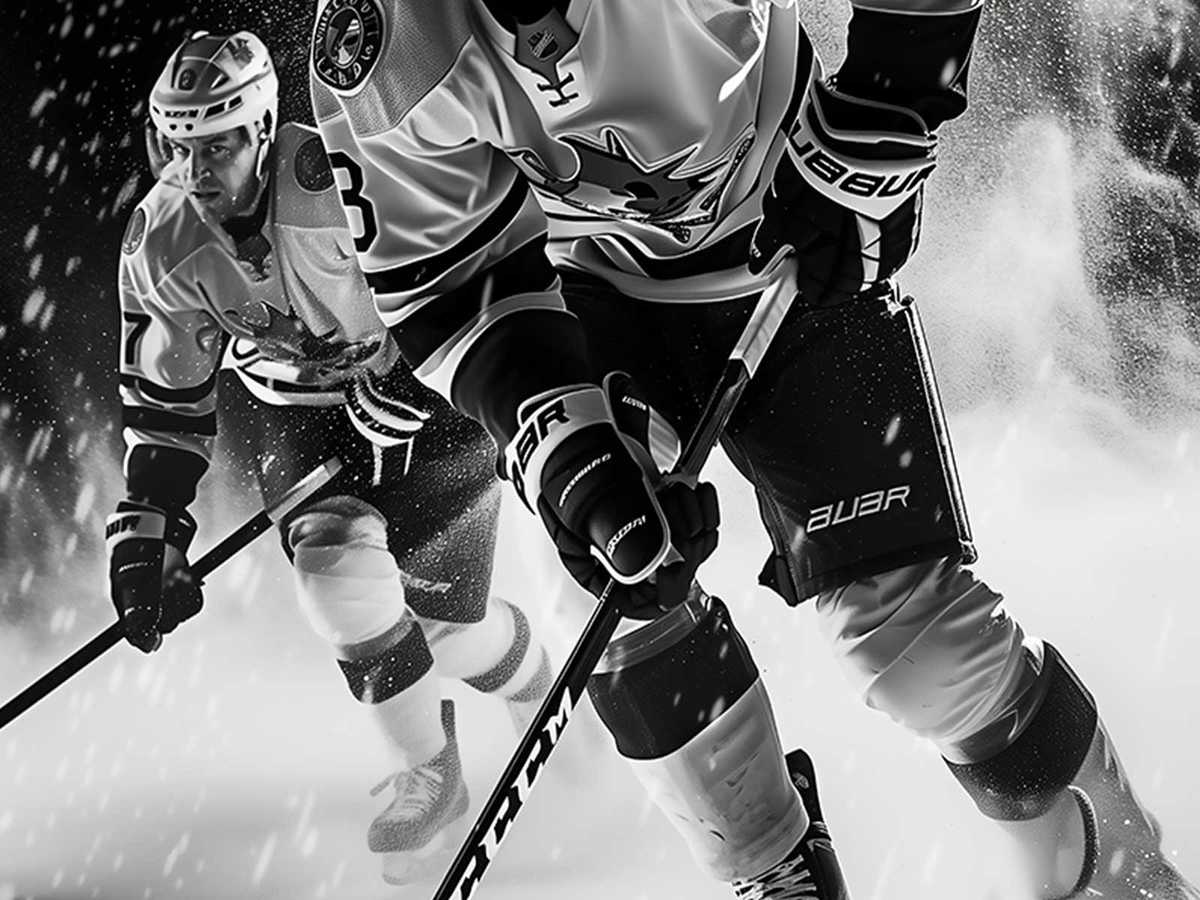
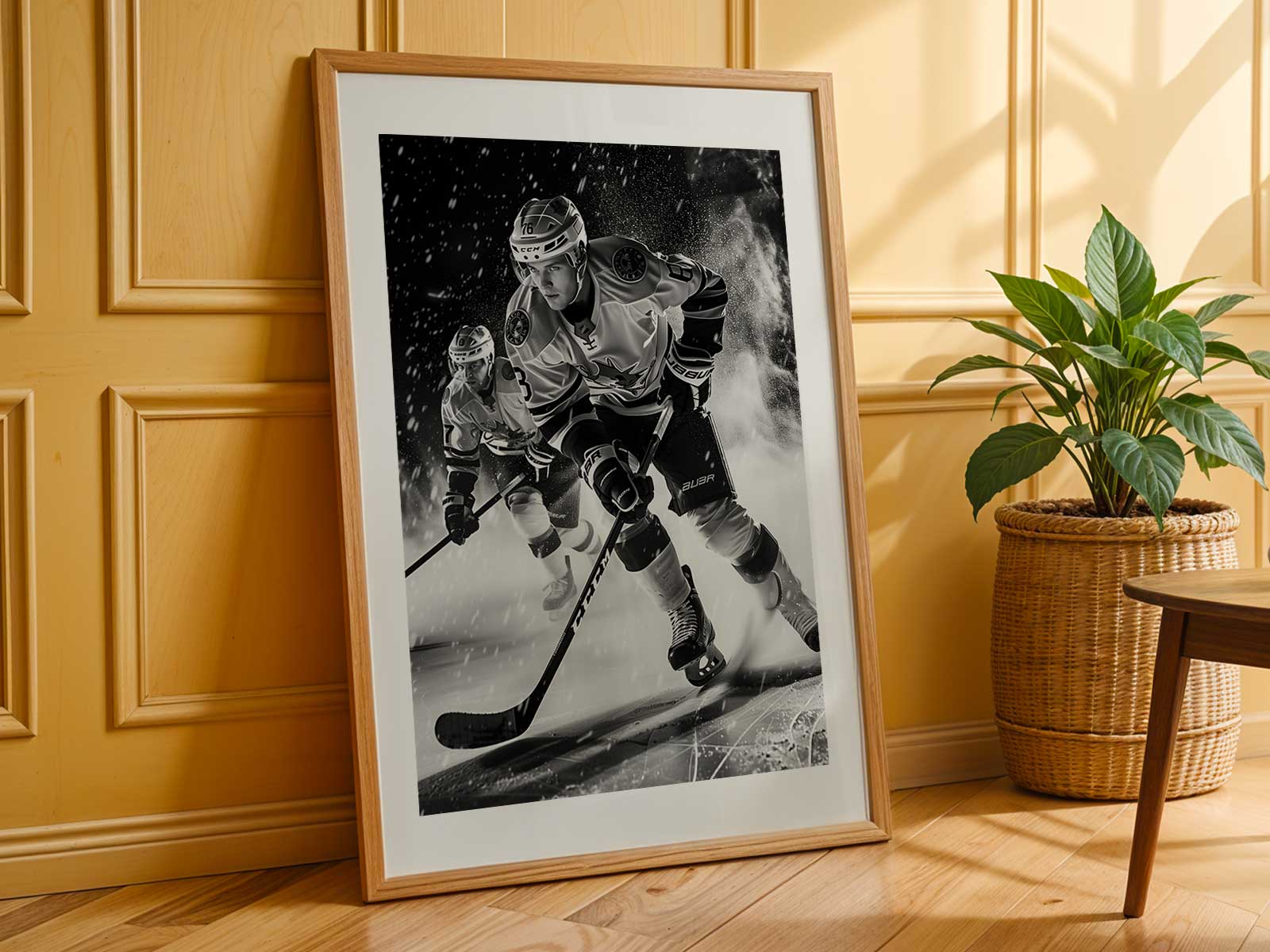
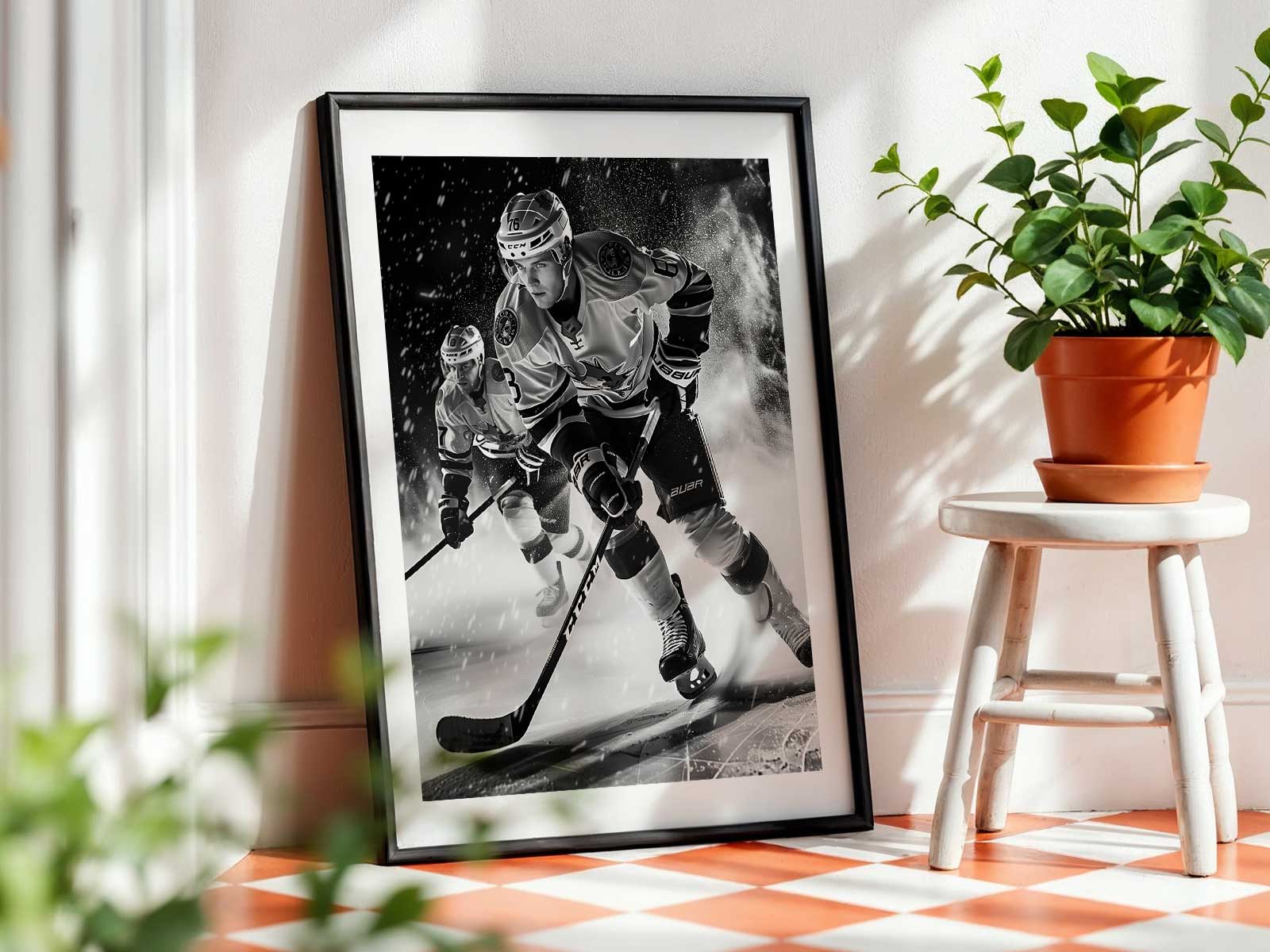
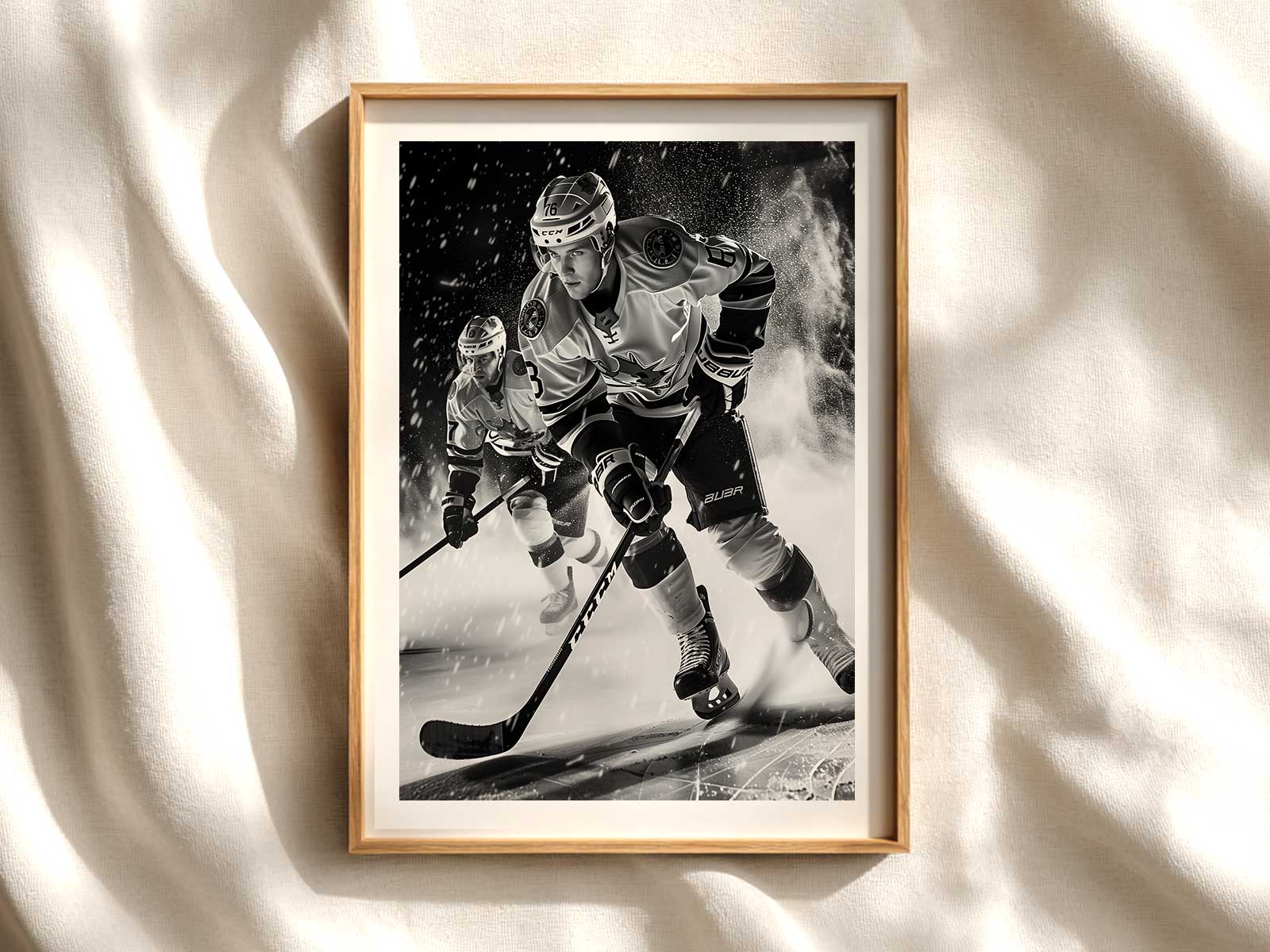
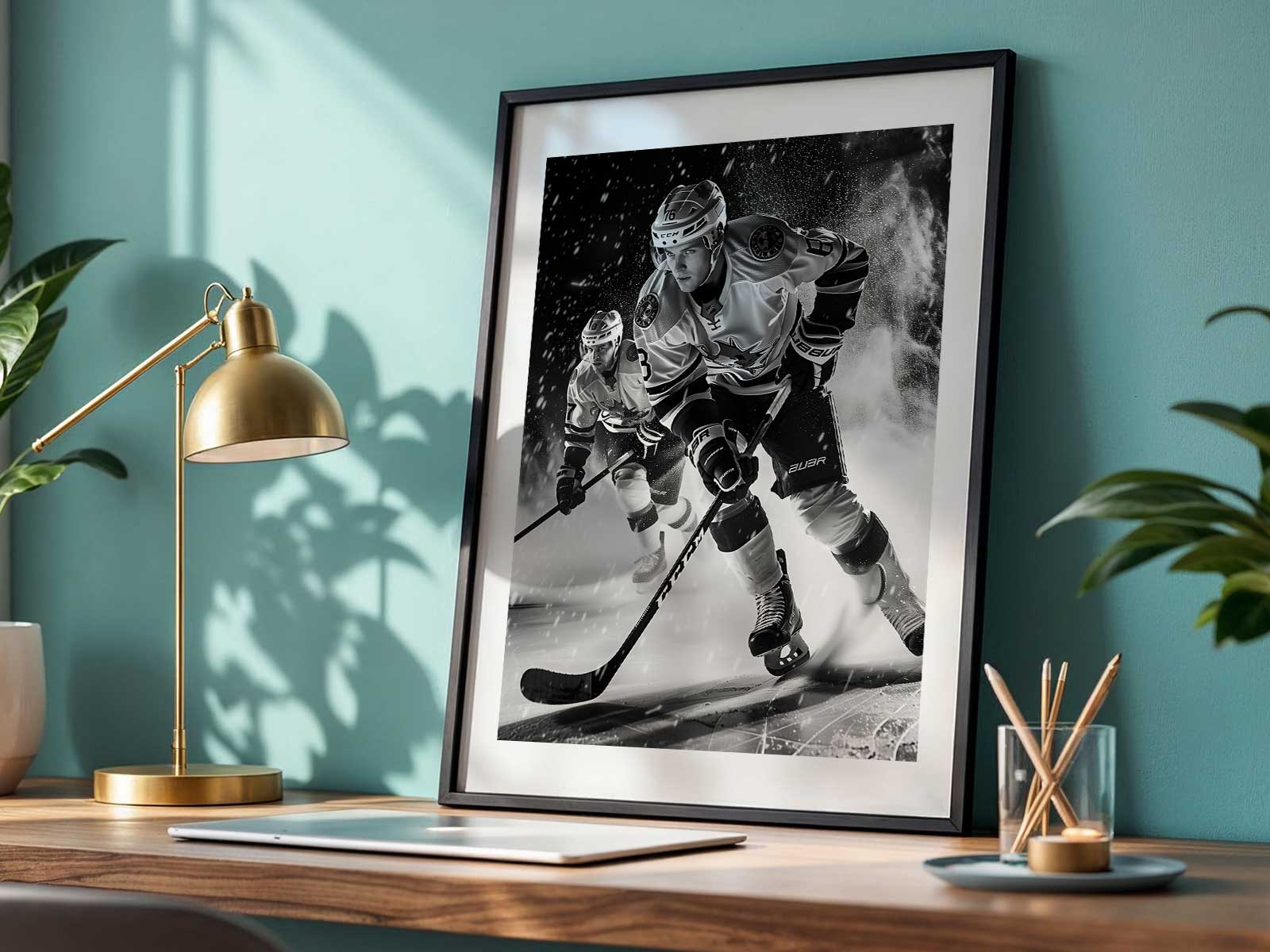
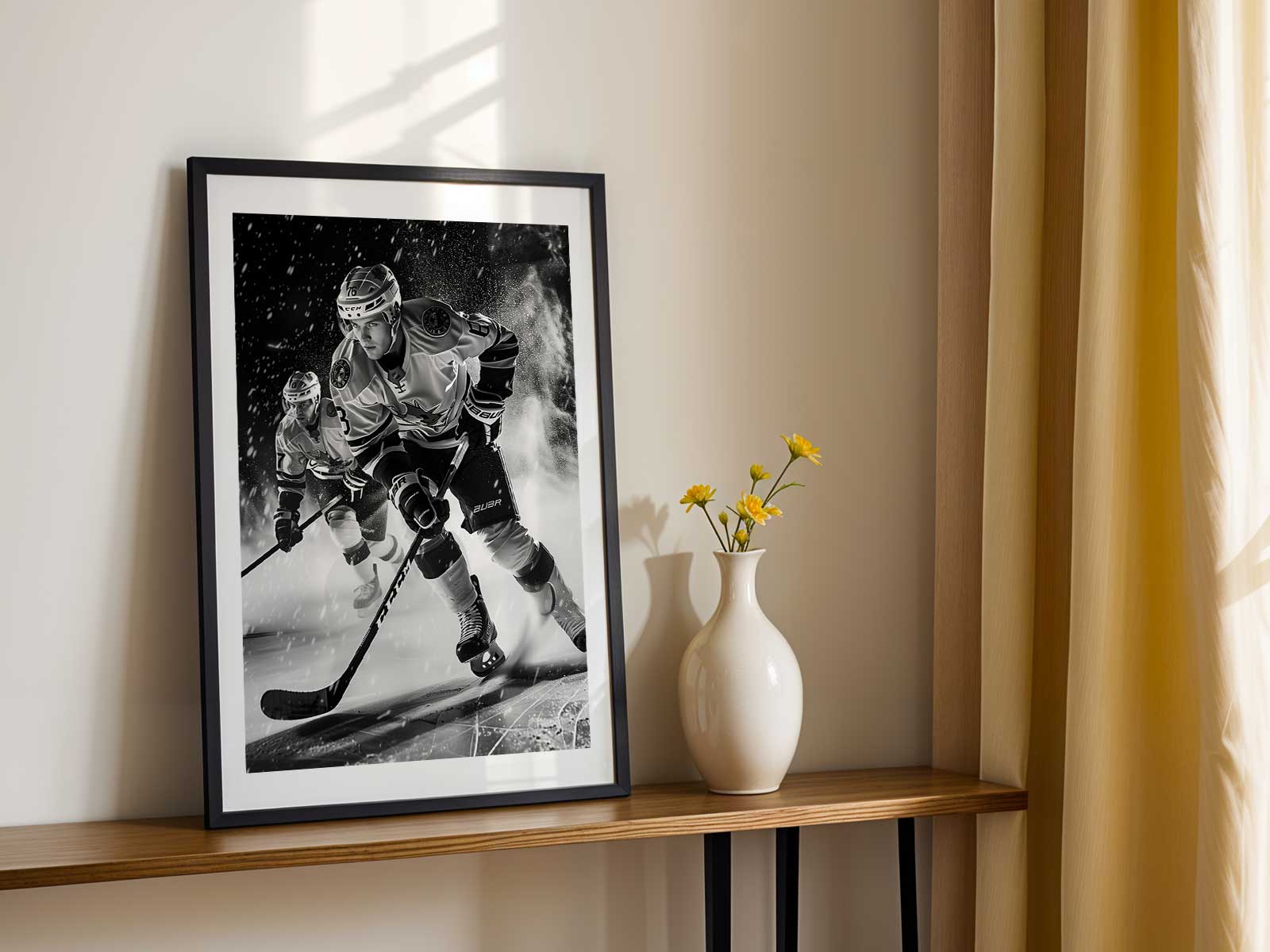
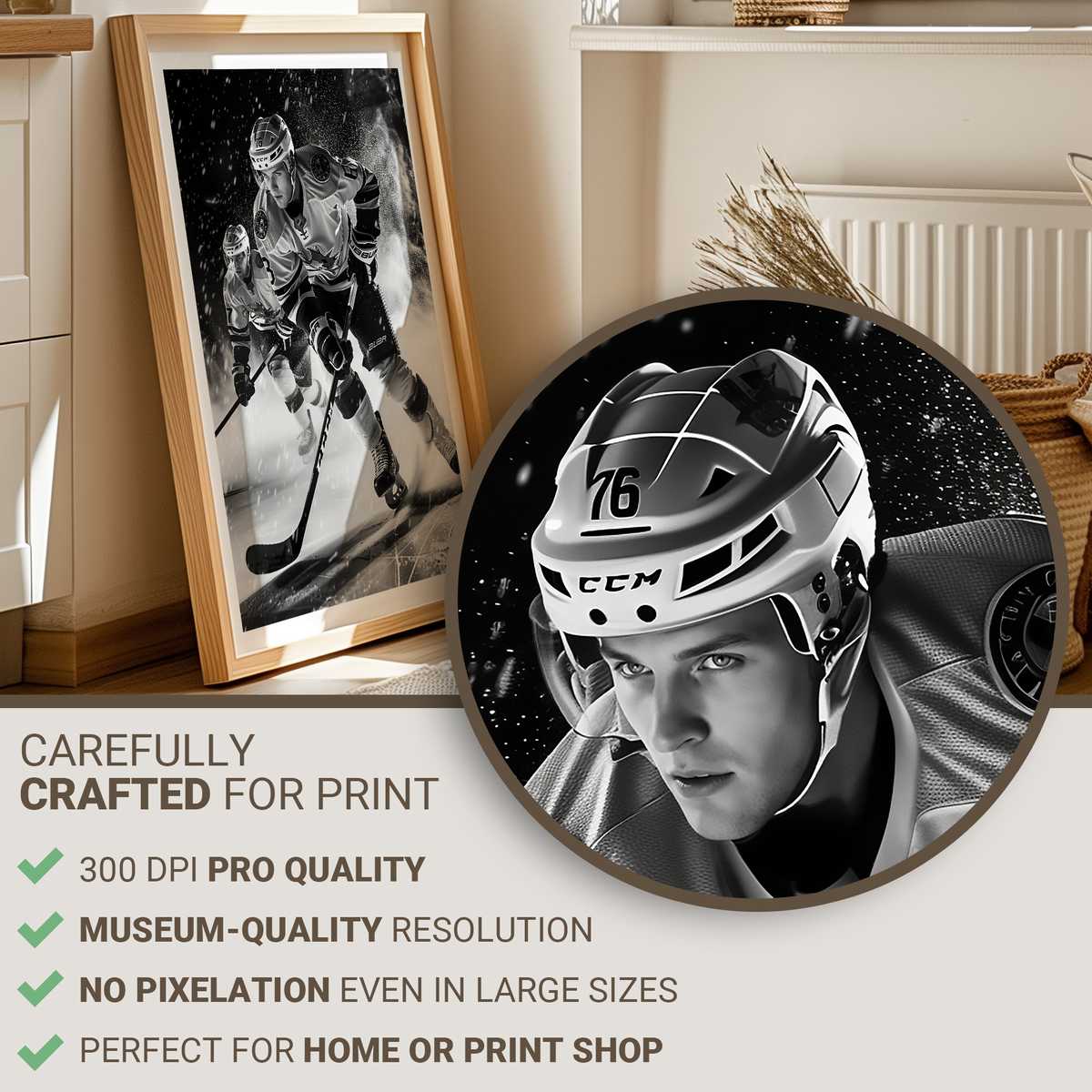
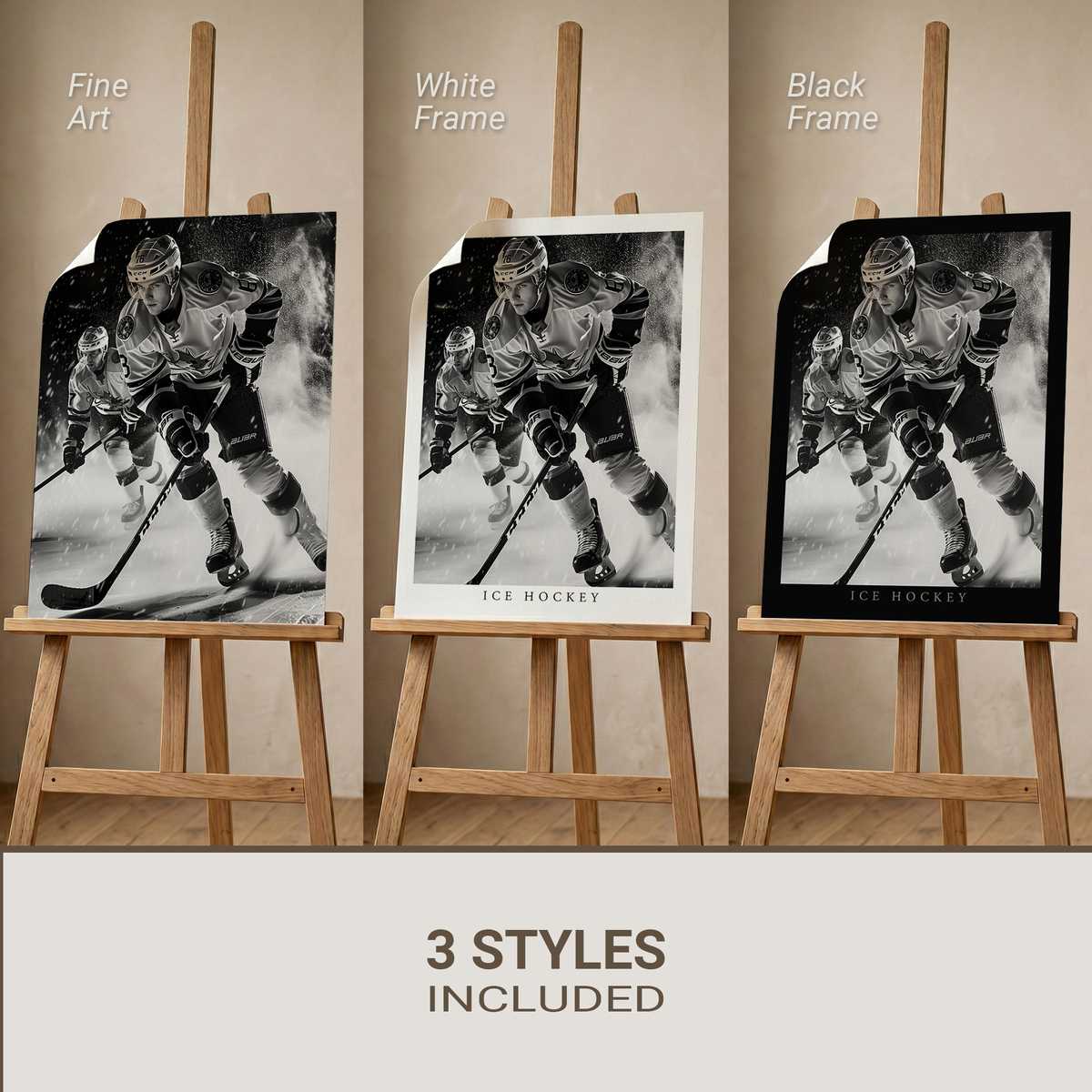
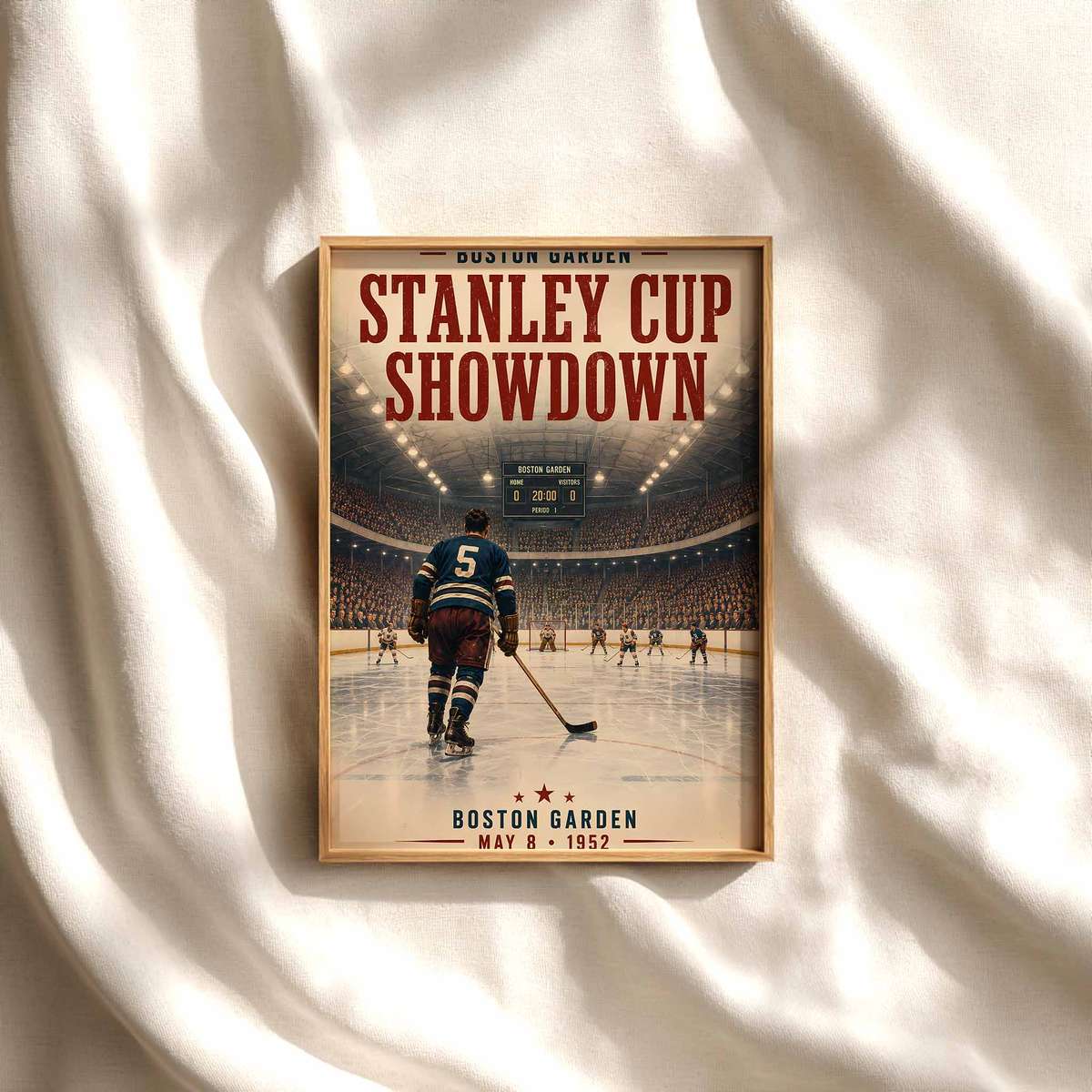
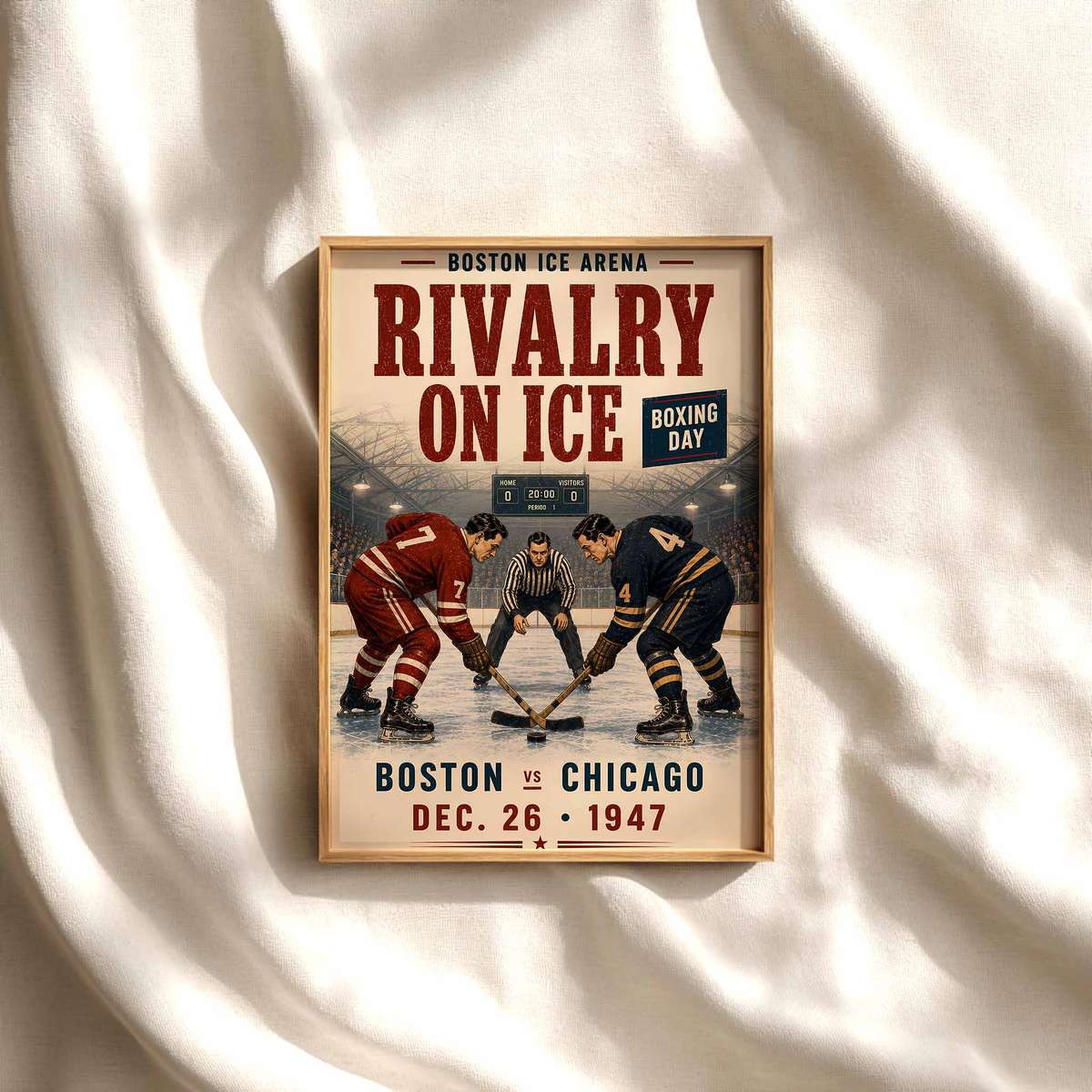
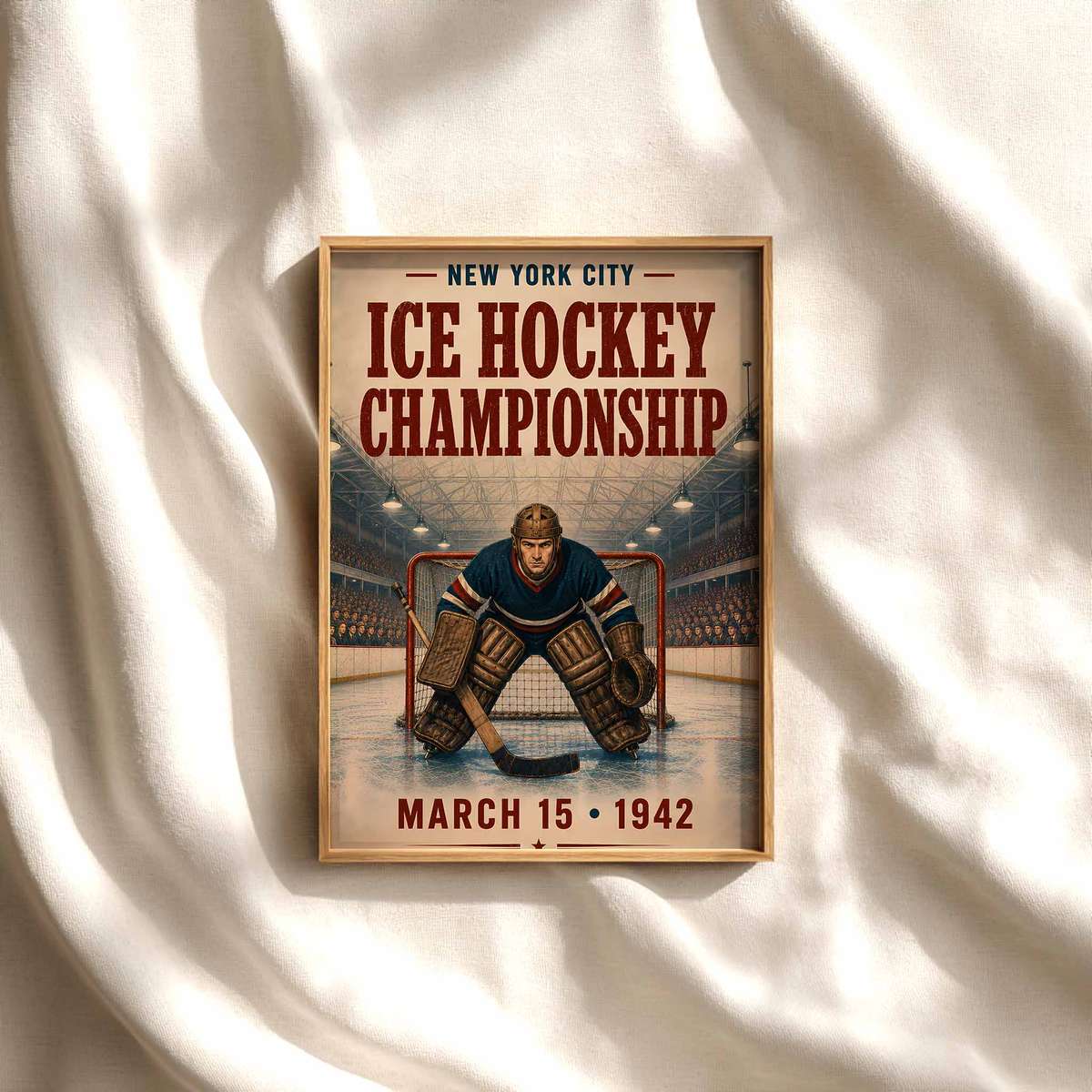
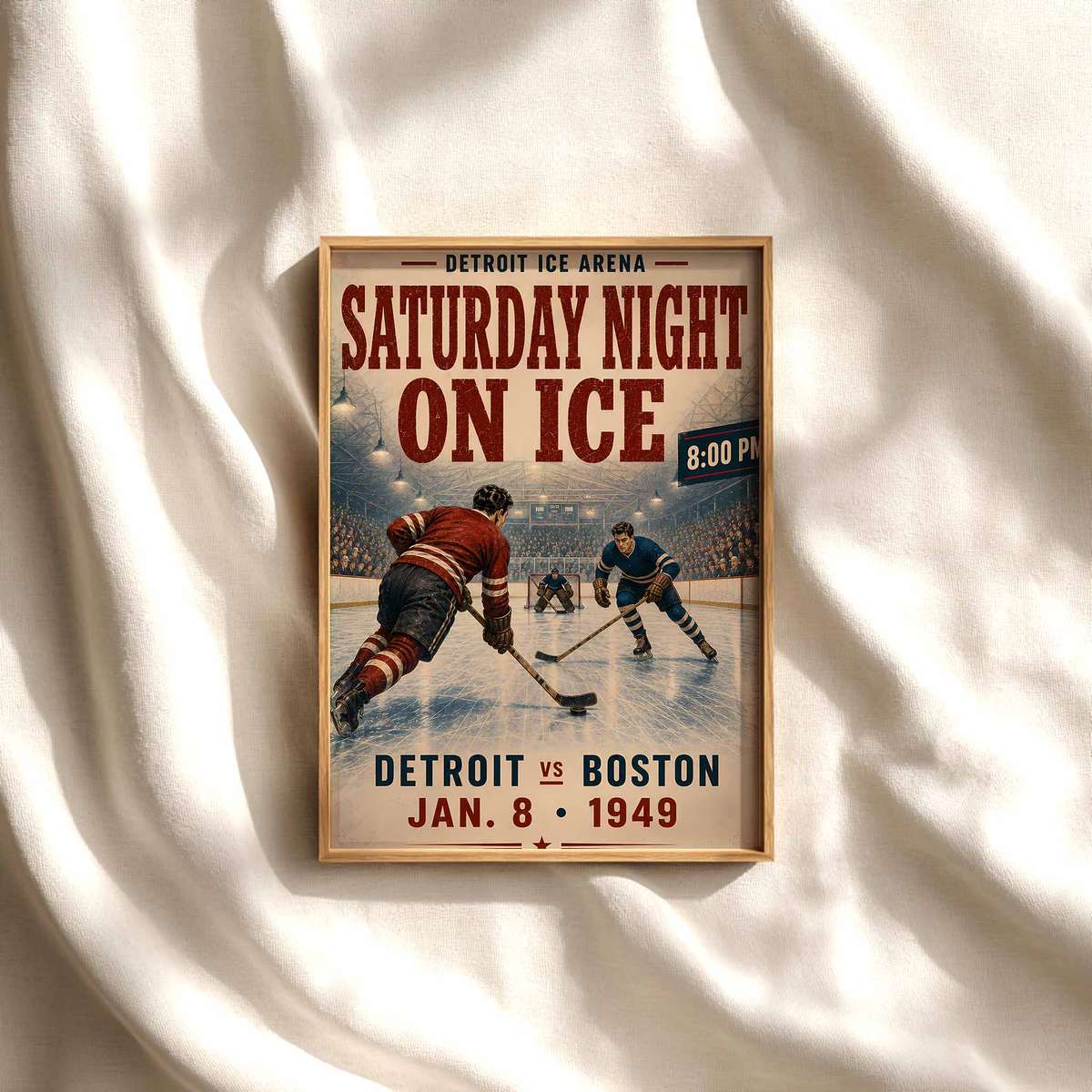
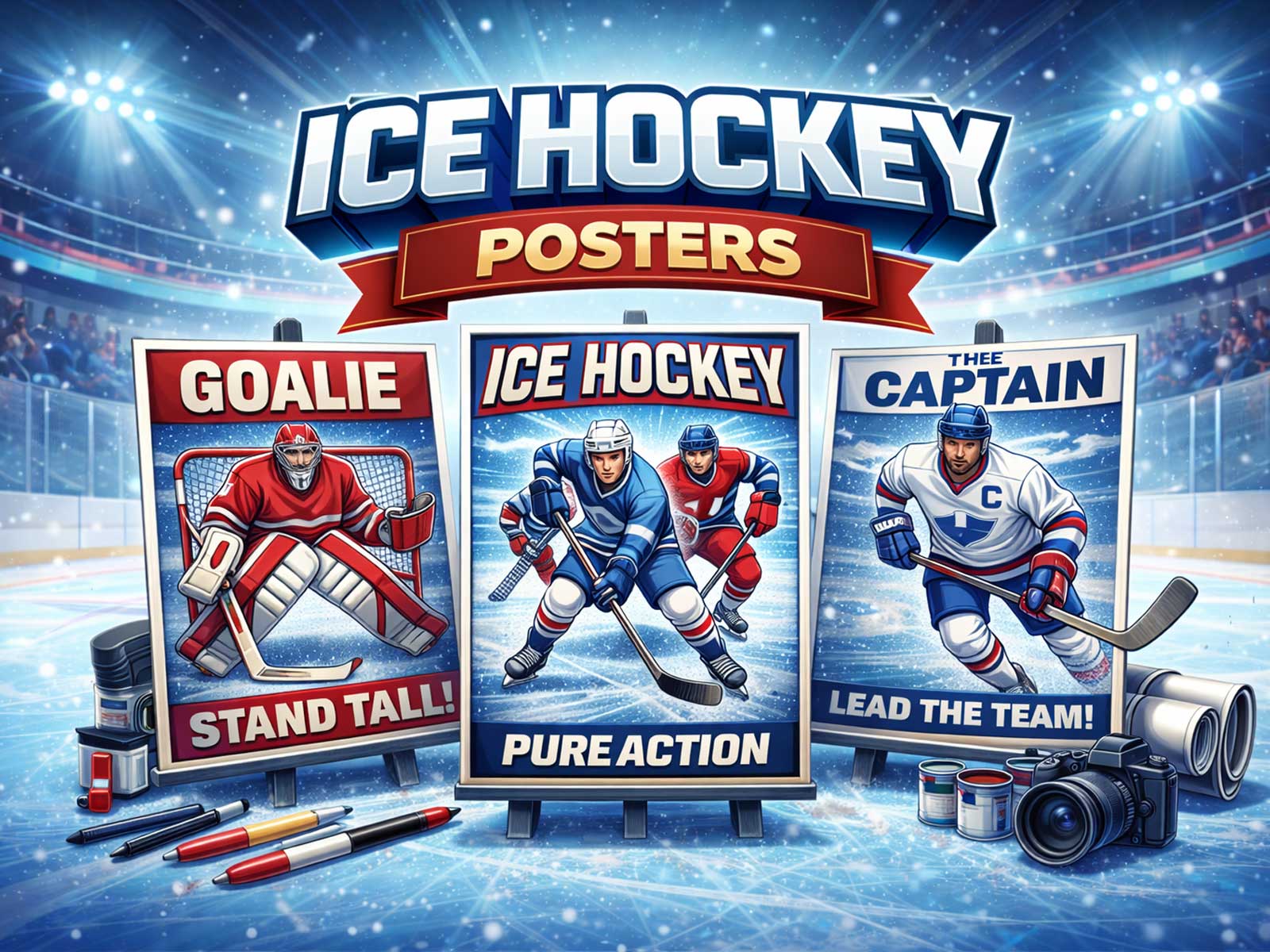
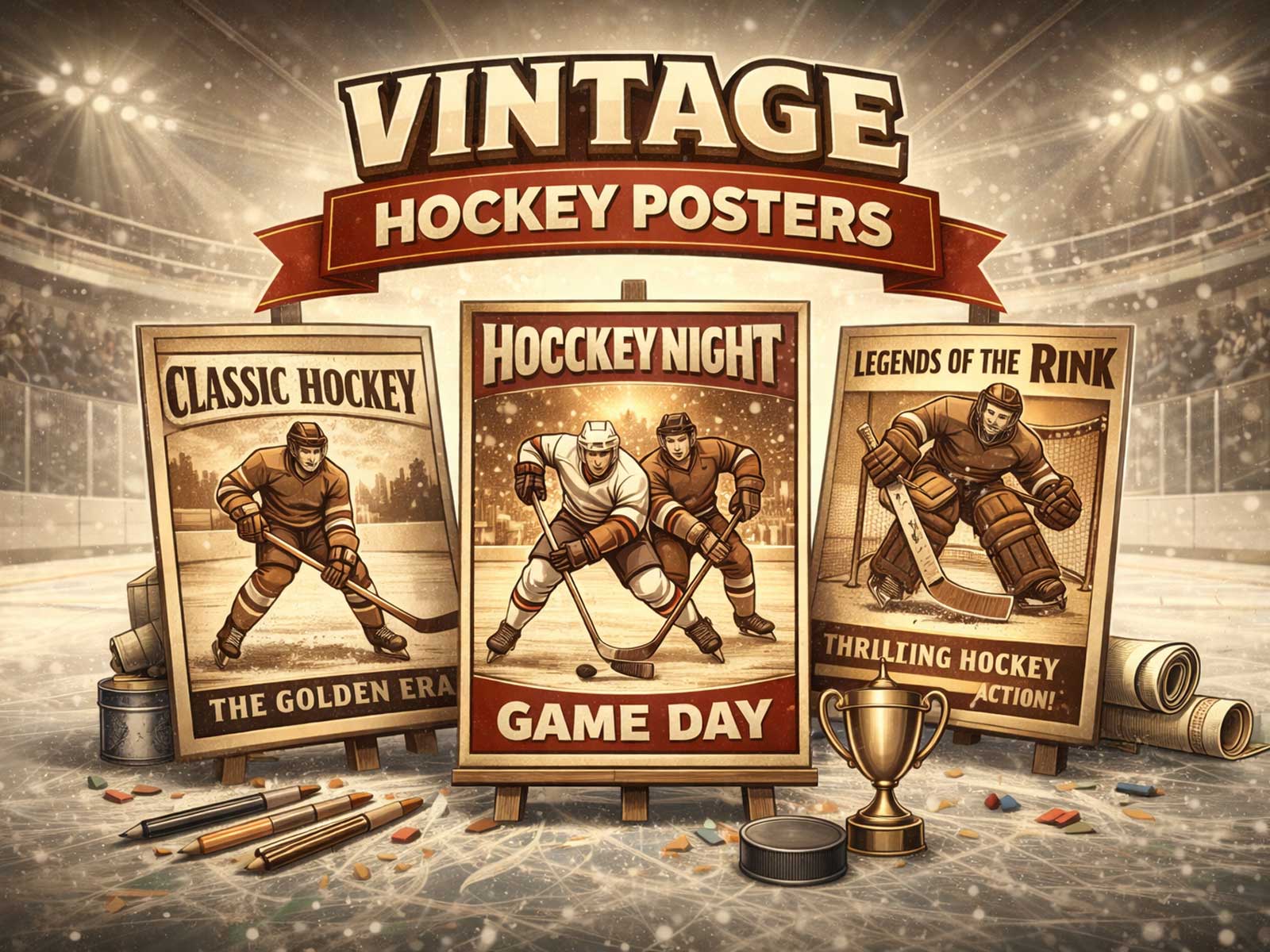
A goalie frozen between motion and refusal becomes more than a sports photograph: it is a study in tension, silhouette and identity. Goalie posters capture a unique visual language where the width of a stance, the carved shadow of a mask, the angular line of a stick and the taut web of the net create a composition that reads as powerfully in a living room or office as it does on a game feed. Unlike action shots that celebrate motion blur, a carefully framed goalie image trades speed for presence — an implied collision contained in a single, arresting moment.
What makes a goalie image work on a wall is how it balances human scale and graphic geometry. The low crouch expands into horizontal visual weight; pads and arms form negative spaces that contrast sharply against the rink’s clean white planes. The mask offers a focal emblem — an almost heraldic face that carries team colors and personal myth at once. When lighting sculpts the mask’s ridges and the ice’s micro-texture, the poster becomes tactile: you can feel the cold, the scratch of skate marks, the tautness of the goal mesh as if a puck had just rebounded off it.
Color plays a decisive role. Team crests and jersey hues anchor identity while the ice’s desaturated blues and grays give any composition a modern, pared-back backdrop. Retro posters lean into warm film grain and saturated vintage palettes, delivering nostalgia and decorative warmth. Contemporary prints favor high-contrast monochrome or accent color overlays that make a goalie pop like a sculptural object against neutral décor. Both approaches work because the subject — a solitary guardian in a defined architectural frame — reads cleanly across interior styles.
[IMAGE_INSERT_ARTICLE_01]
Angle and composition determine the mood. A low, wide-angle shot emphasizes dominance and presence; the stick’s diagonal becomes a leading line that directs the eye toward the net’s tension and the unseen puck. A tighter crop on the mask and glove isolates psychological intensity: the posture hints at readiness, giving the wall a charged, watchful energy. These are visual cues that translate easily into interior design: a dramatic goalie print anchors a feature wall in a fan cave or provides a focused break in a minimalist study.
Beyond fandom, goalie artwork appeals to design-minded viewers because it condenses motion into readable shapes and contrasts. Rink geometry — the boards, crease, and goal frame — provides a natural grid that organizes the composition. The cold, reflective surface of the ice introduces subtle highlights that act like natural accents in a room, complementing metal, concrete or wood finishes. A well-chosen poster can either harmonize with a space’s palette or intentionally disrupt it, drawing attention without shouting.
There is also a narrative quality to goalie images: resilience, concentration and split-second decision-making. These narratives make such posters suitable for bedrooms, offices, or gyms where a quiet intensity is desirable. In a collector’s gallery, goalie prints sit alongside action shots and historic portraits to form a balanced visual story of the game — the last line of defense rendered as both athlete and icon.
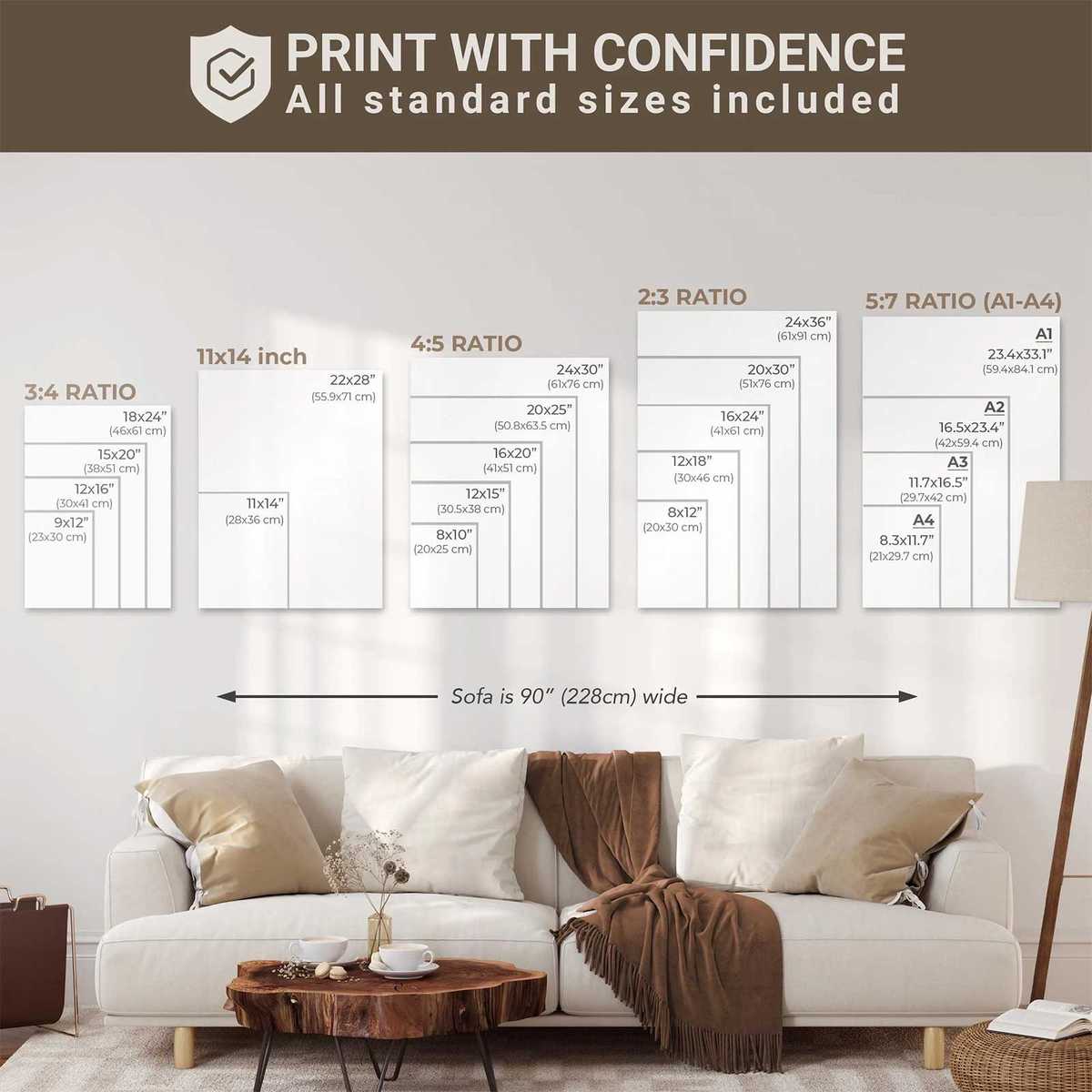
In practical terms, consider scale and placement. Larger formats emphasize the sculptural presence and are ideal above sofas or headboards, while medium or small prints work well in stacked arrangements or as part of a mixed-media wall. Matte finishes soften glare and suit warm interiors; glossy or metallic finishes amplify contrast in modern, high-contrast spaces. Either way, a goalie poster is less about documentation and more about mood: it brings the rink’s tension, the team’s identity and the sport’s kinetic poetry into everyday rooms.
Ultimately, goalie posters succeed because they translate an athletic moment into a composed, visual argument — posture and mask as iconography, stick and net as graphic elements. They are posters that decorate but also define atmosphere, appealing to both devoted fans who recognize the nuance and design-conscious owners who appreciate clean, dramatic imagery.