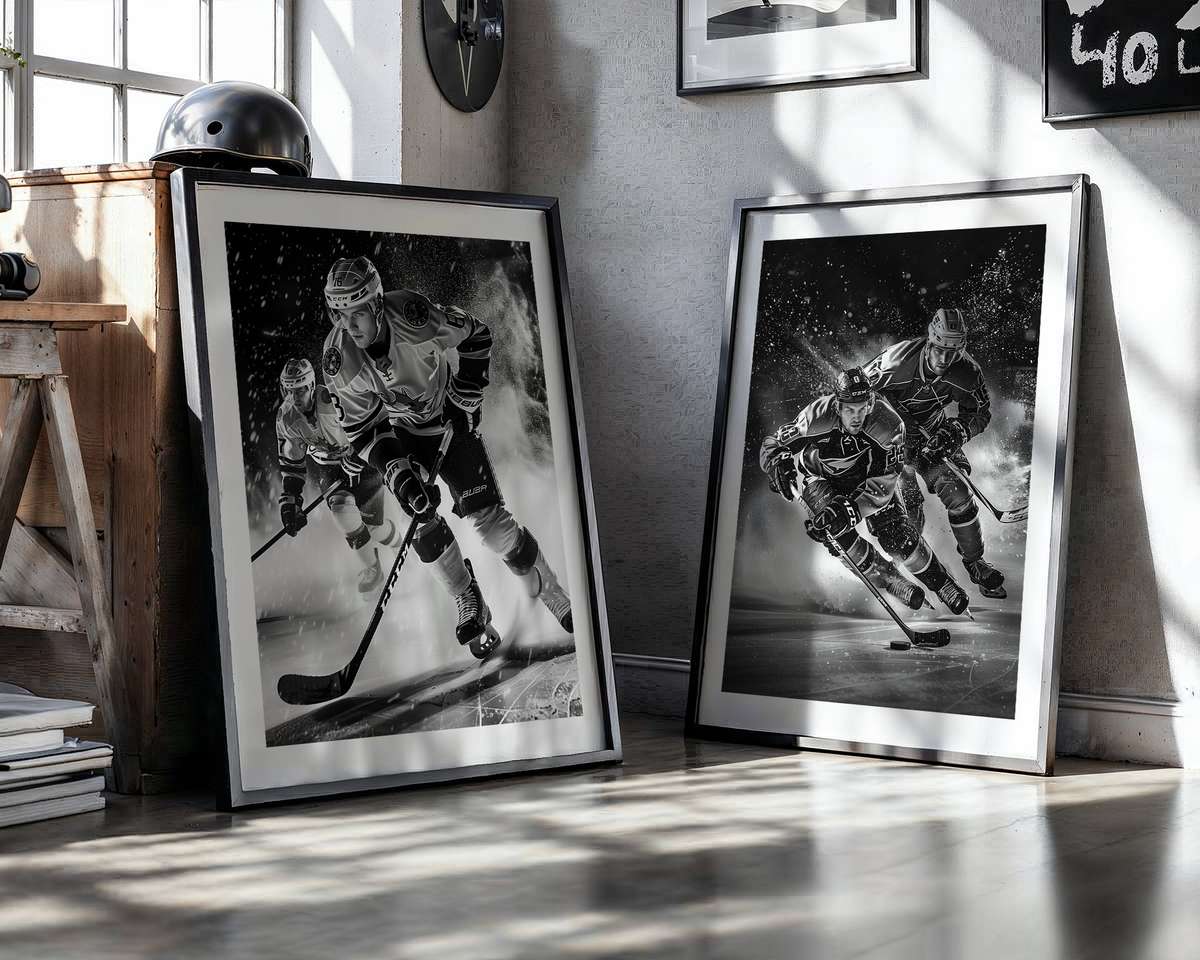
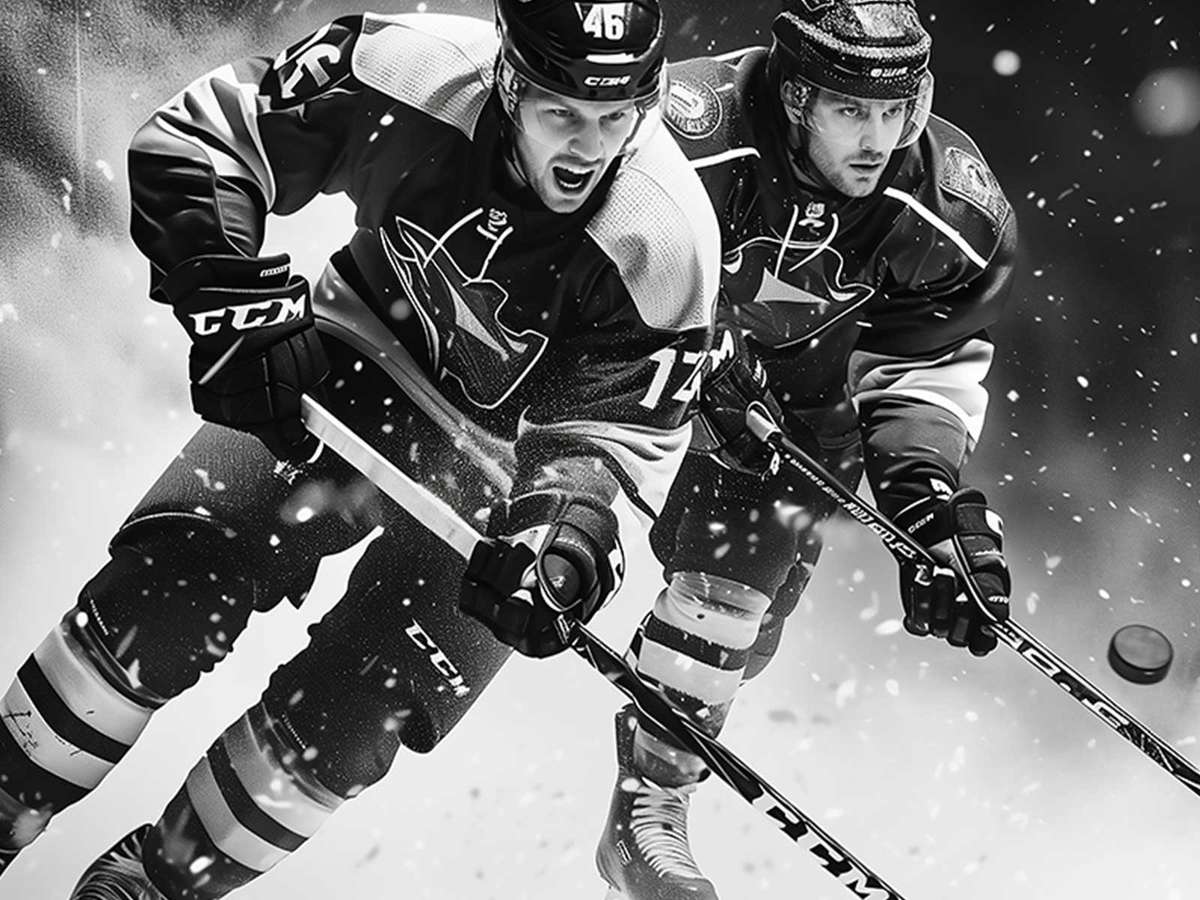
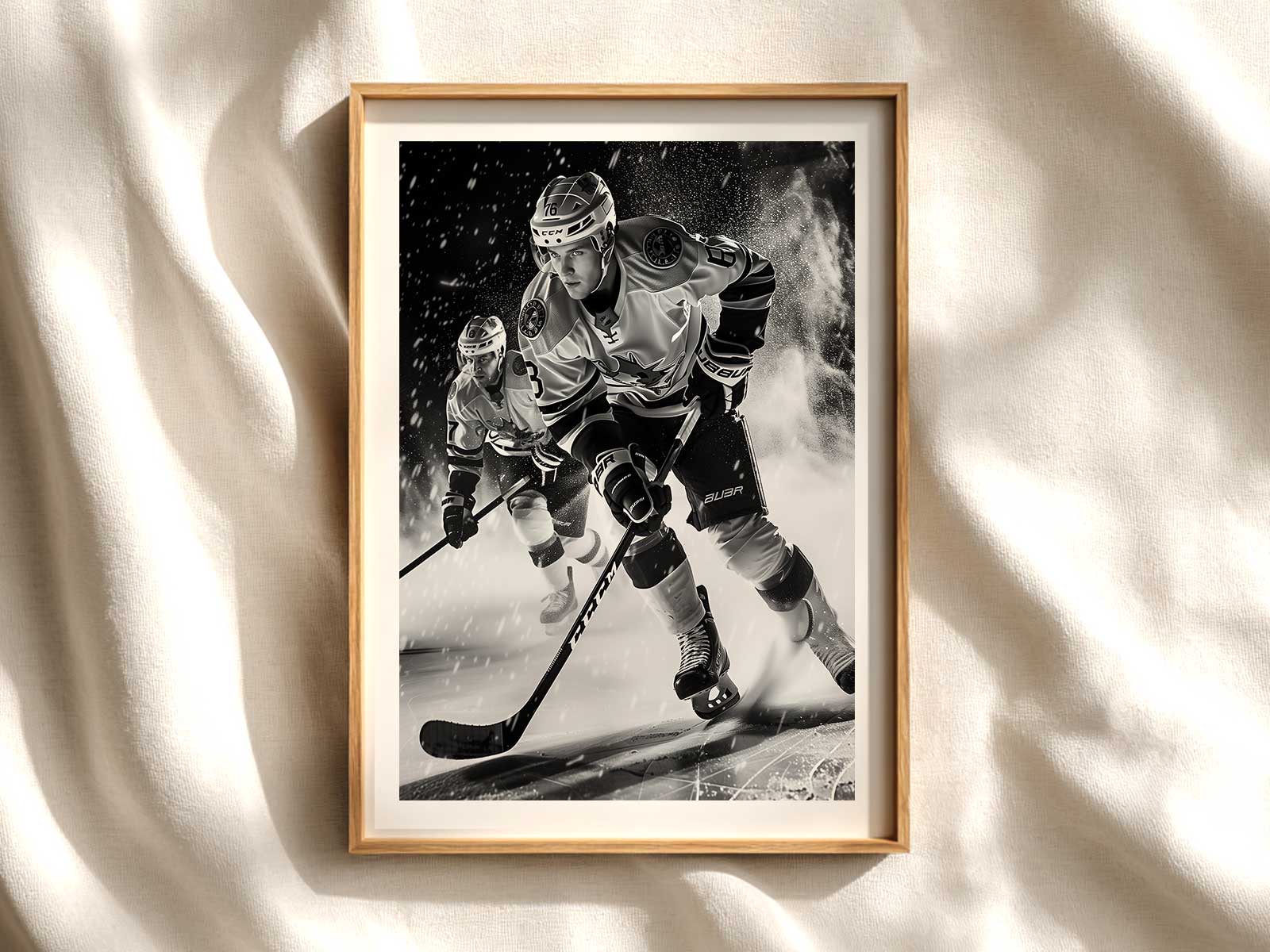
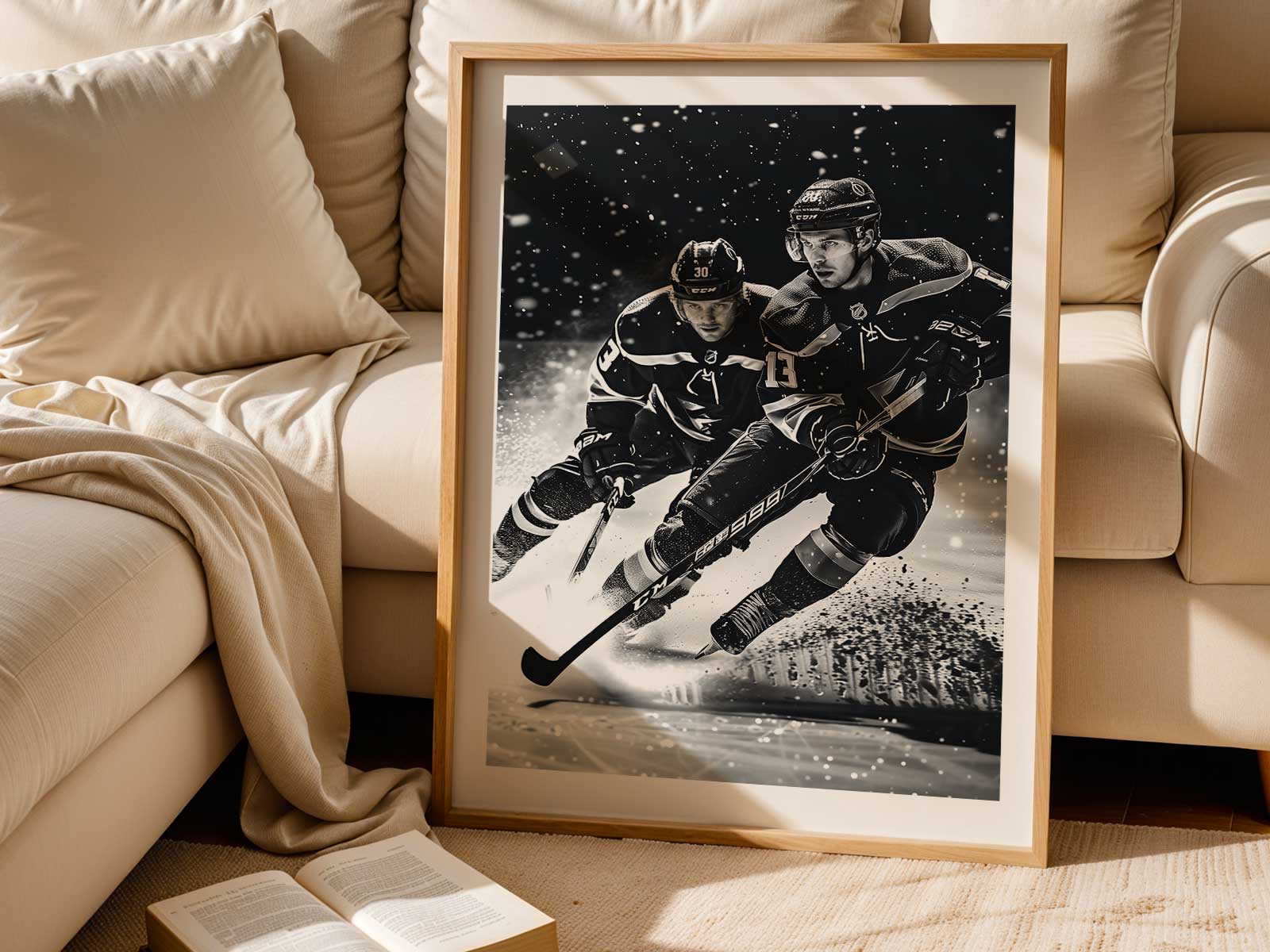
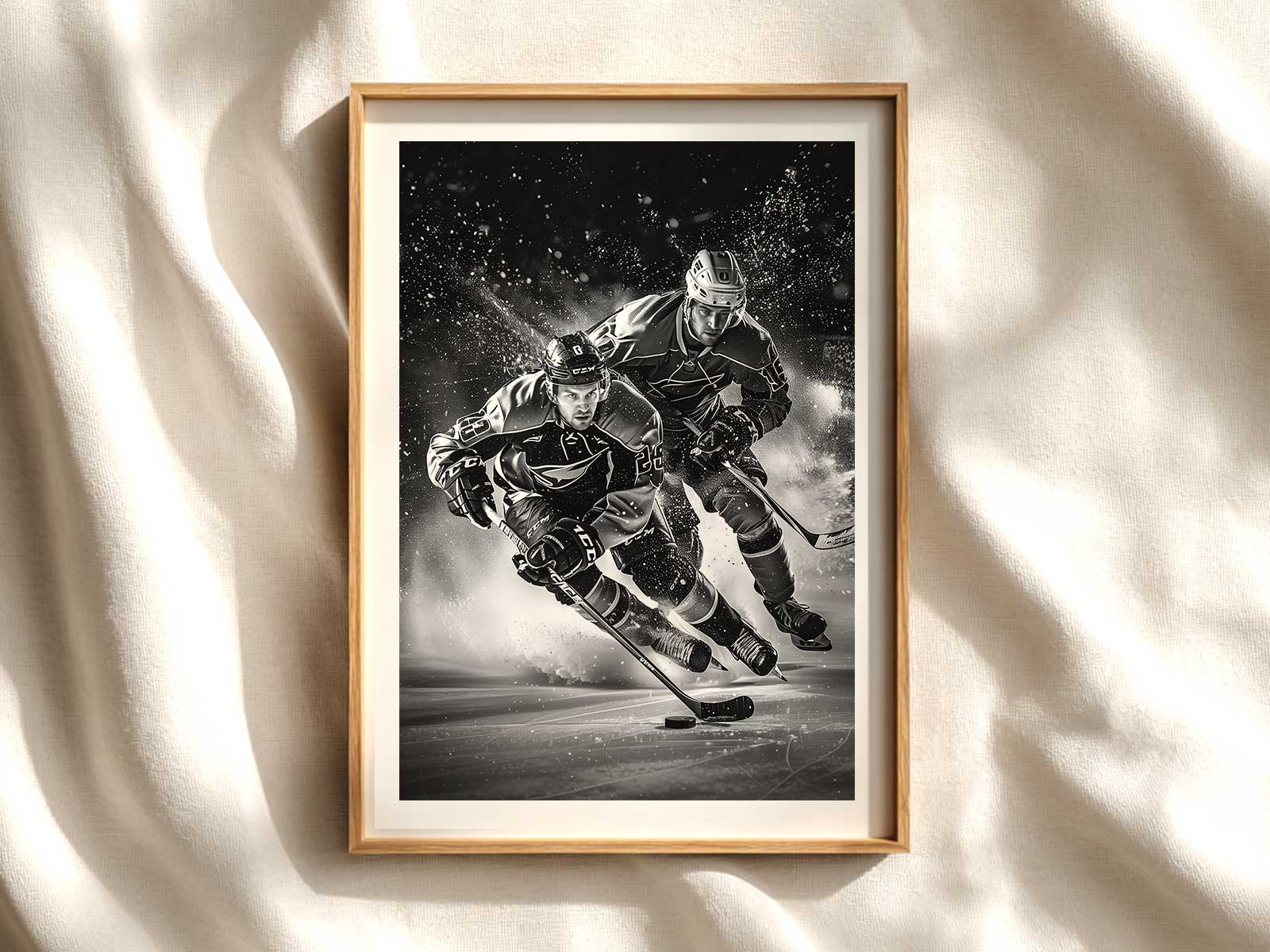
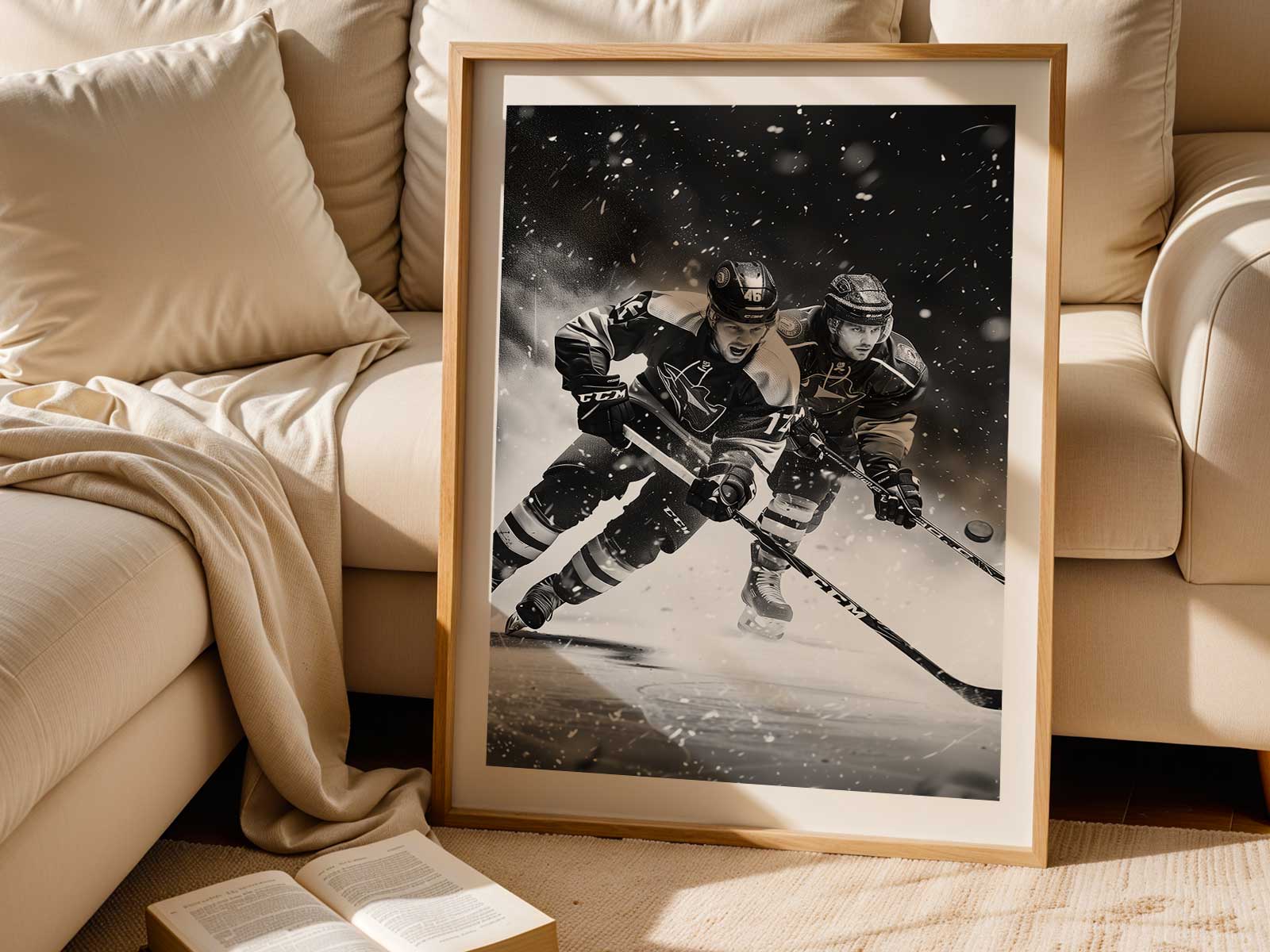
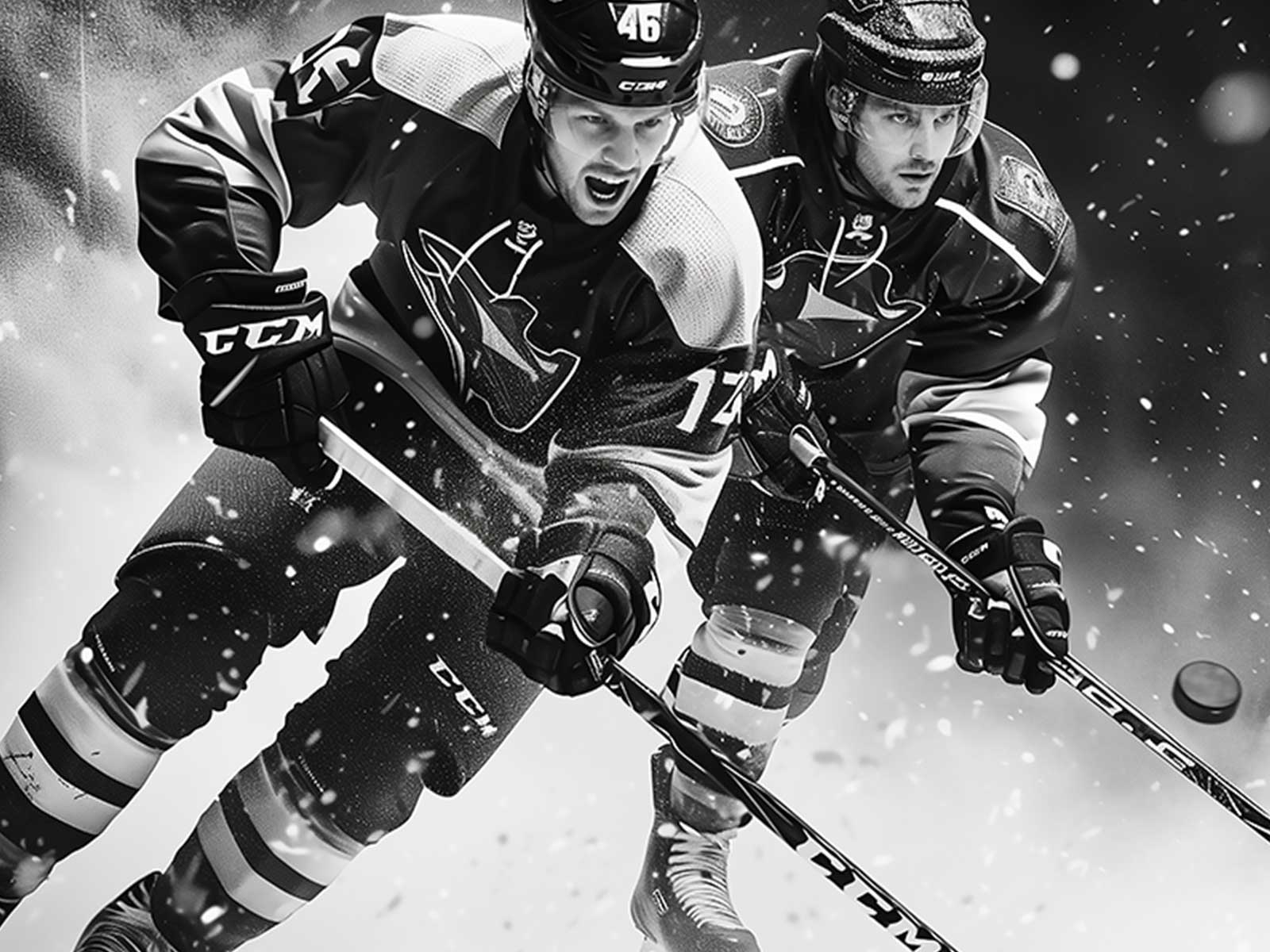
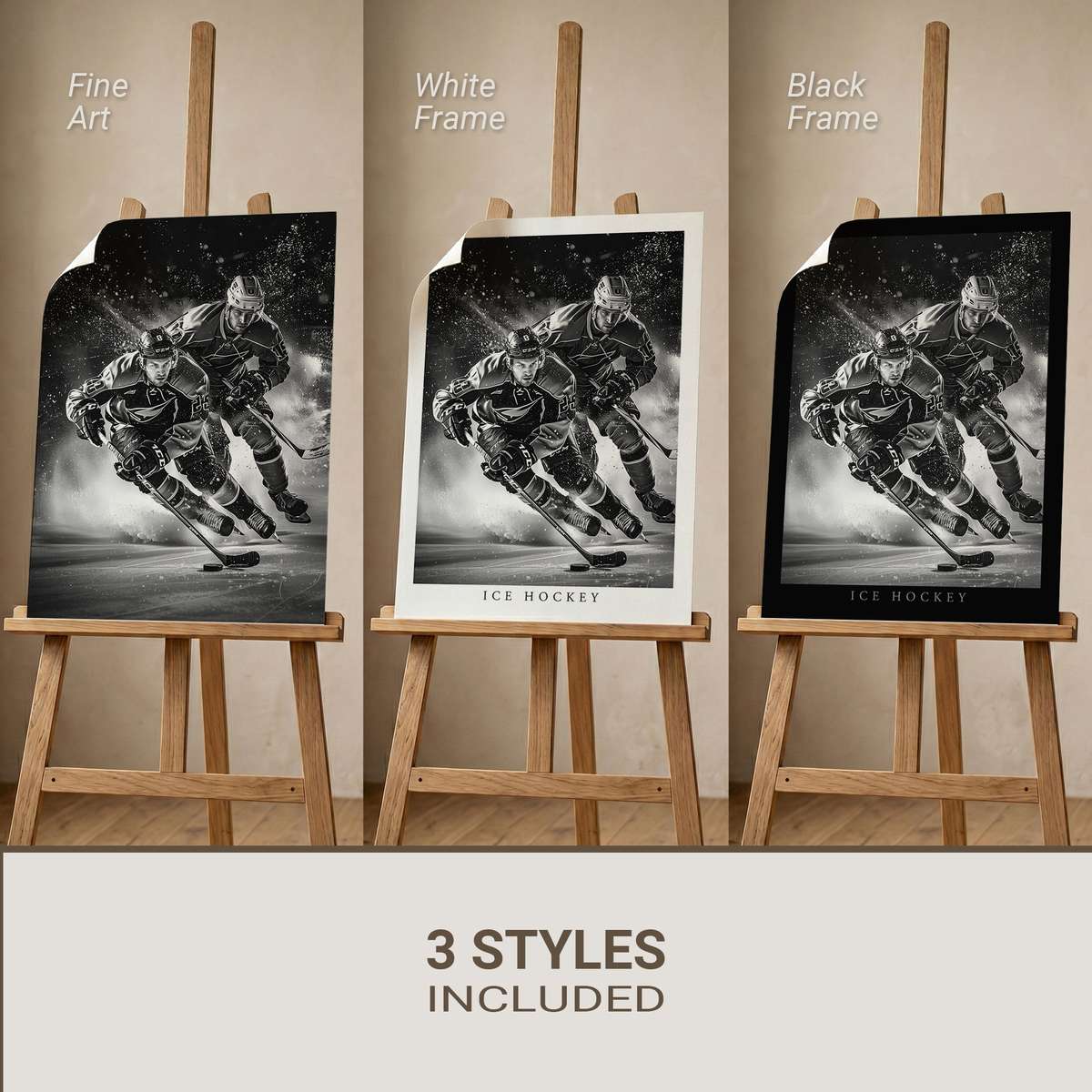
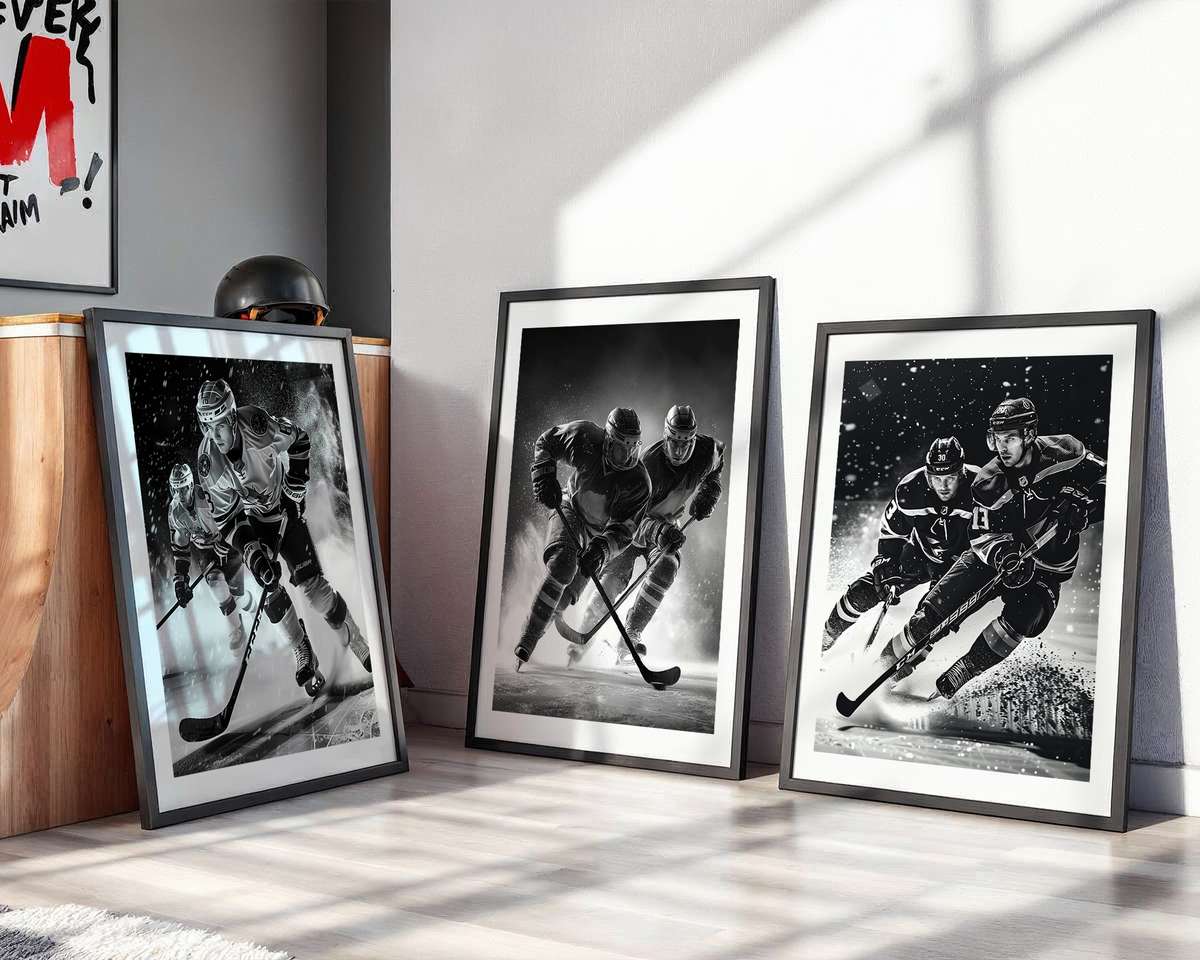
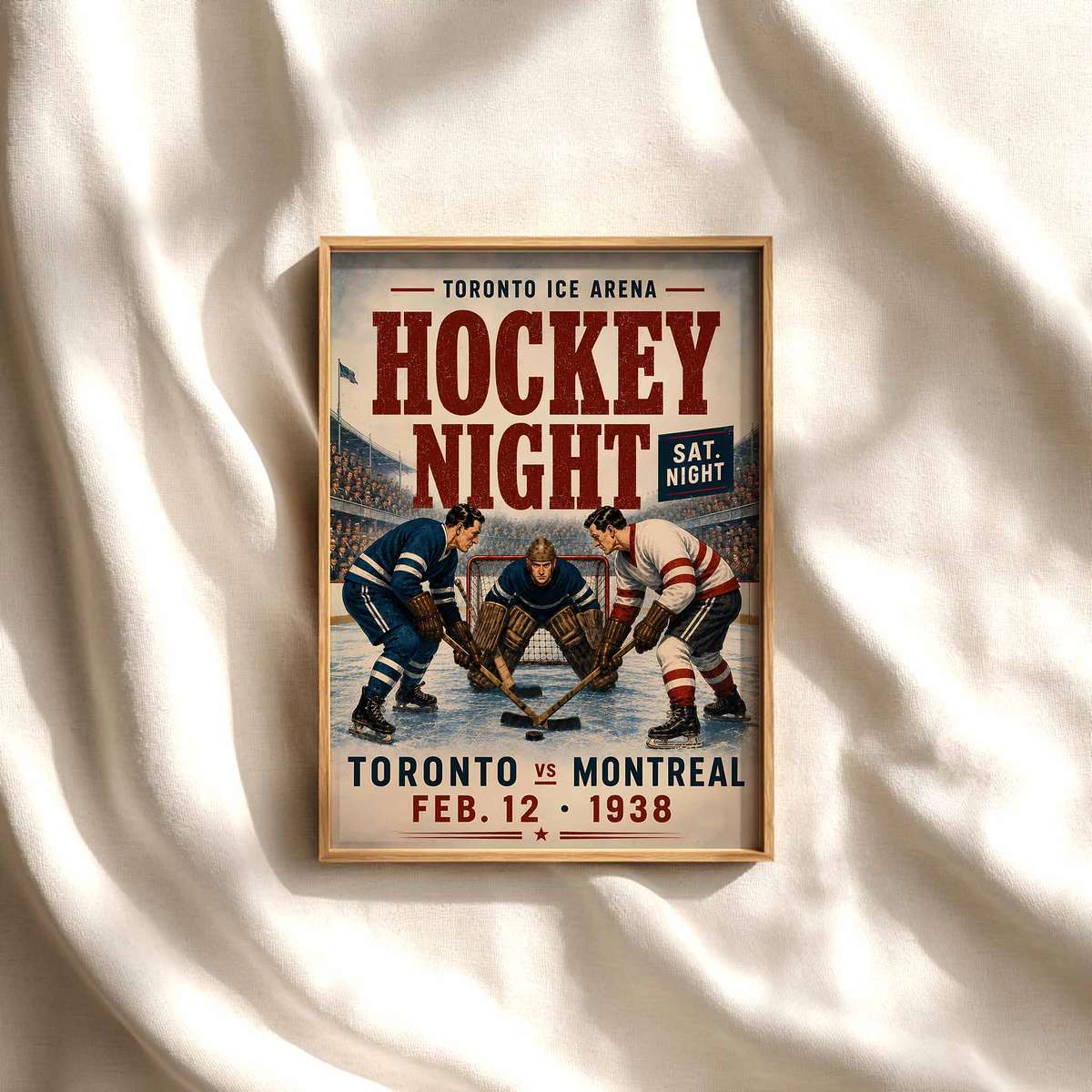
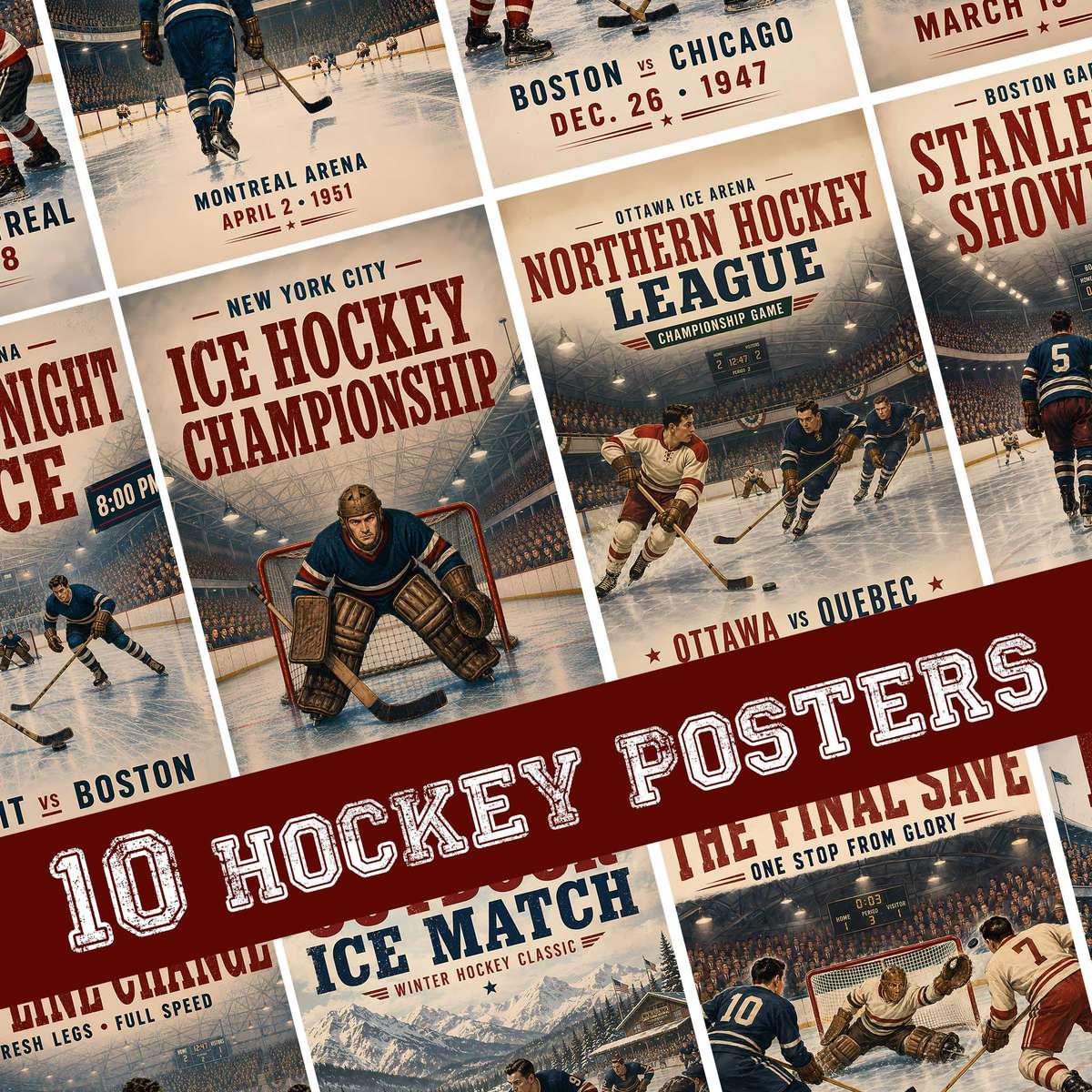
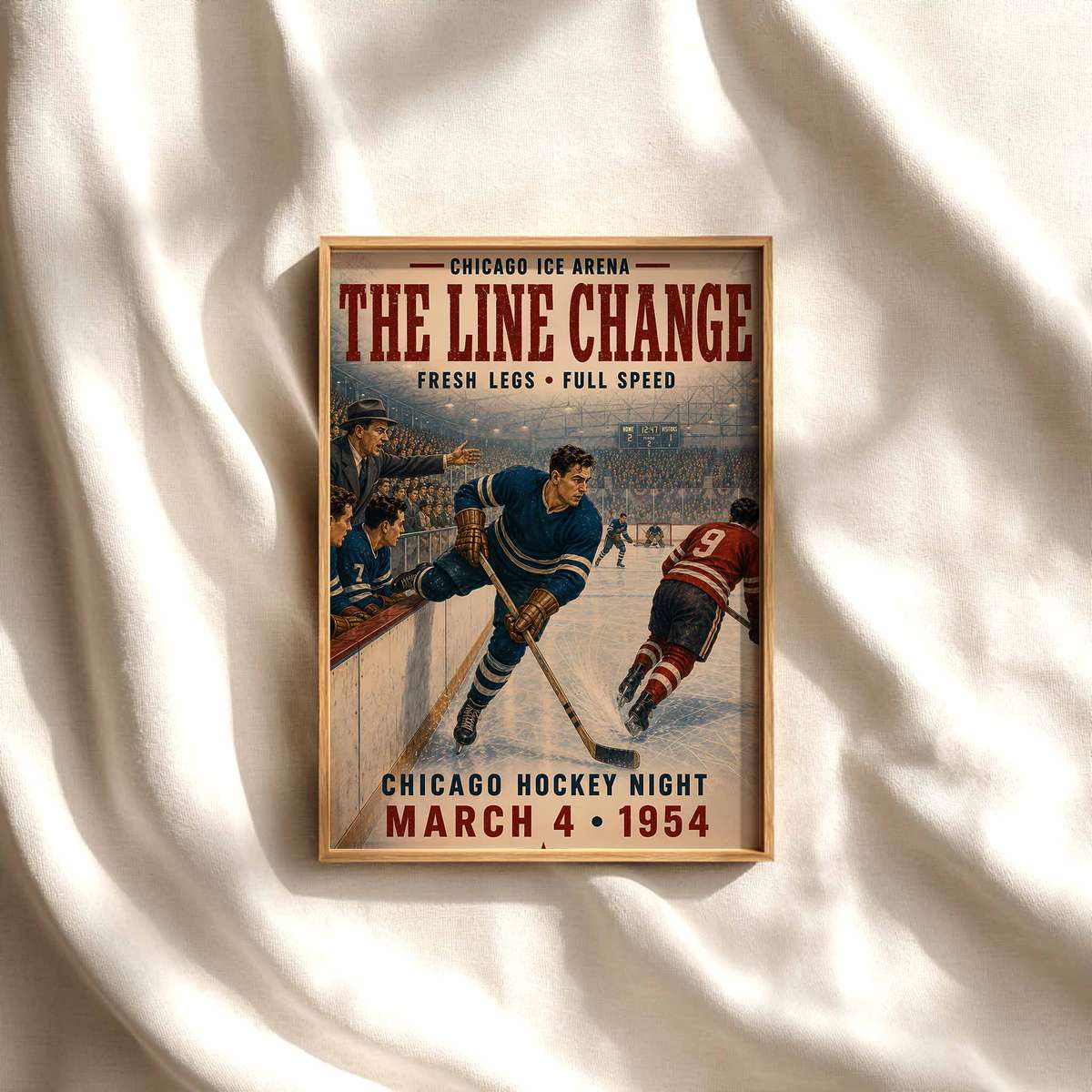
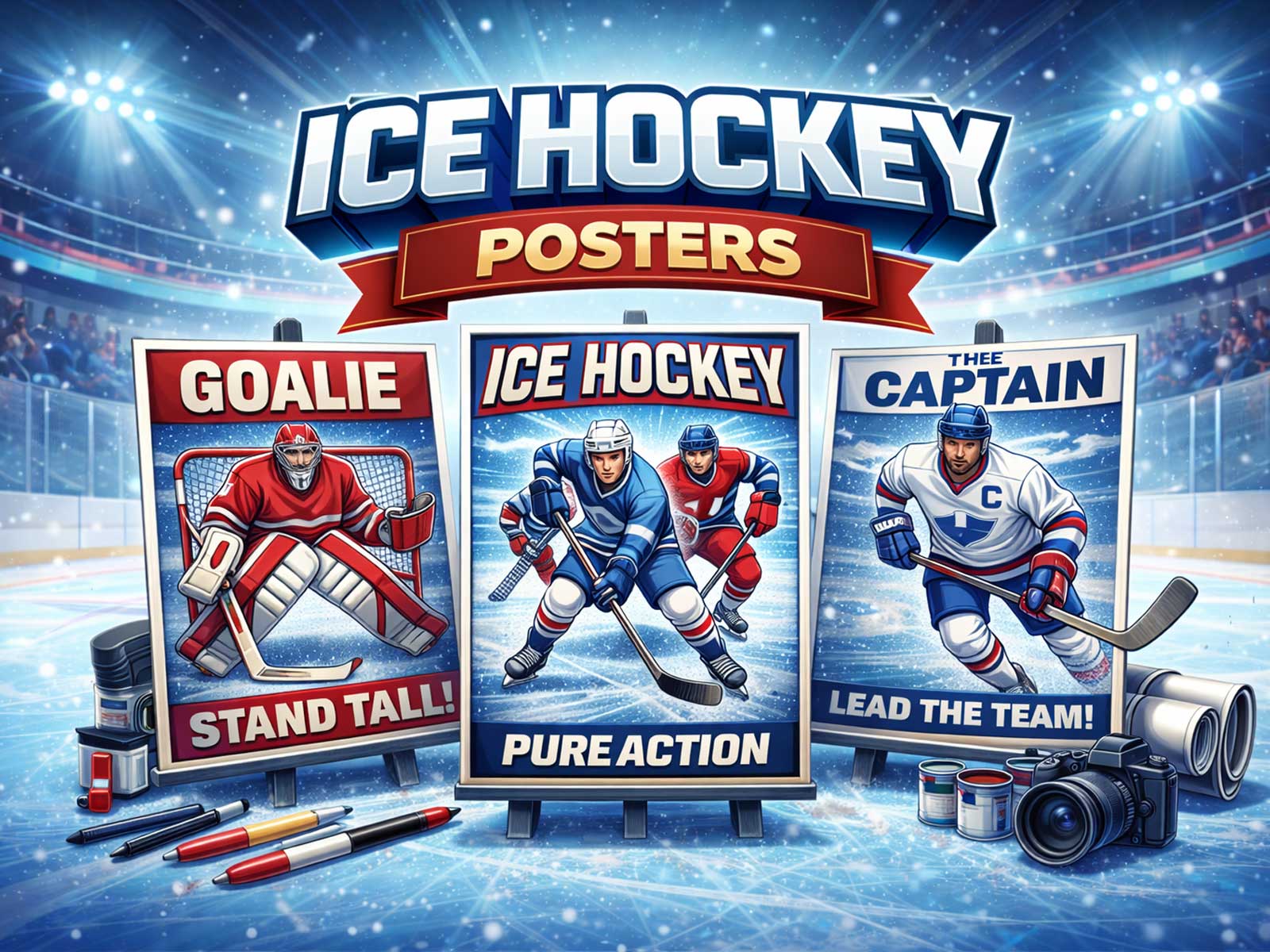
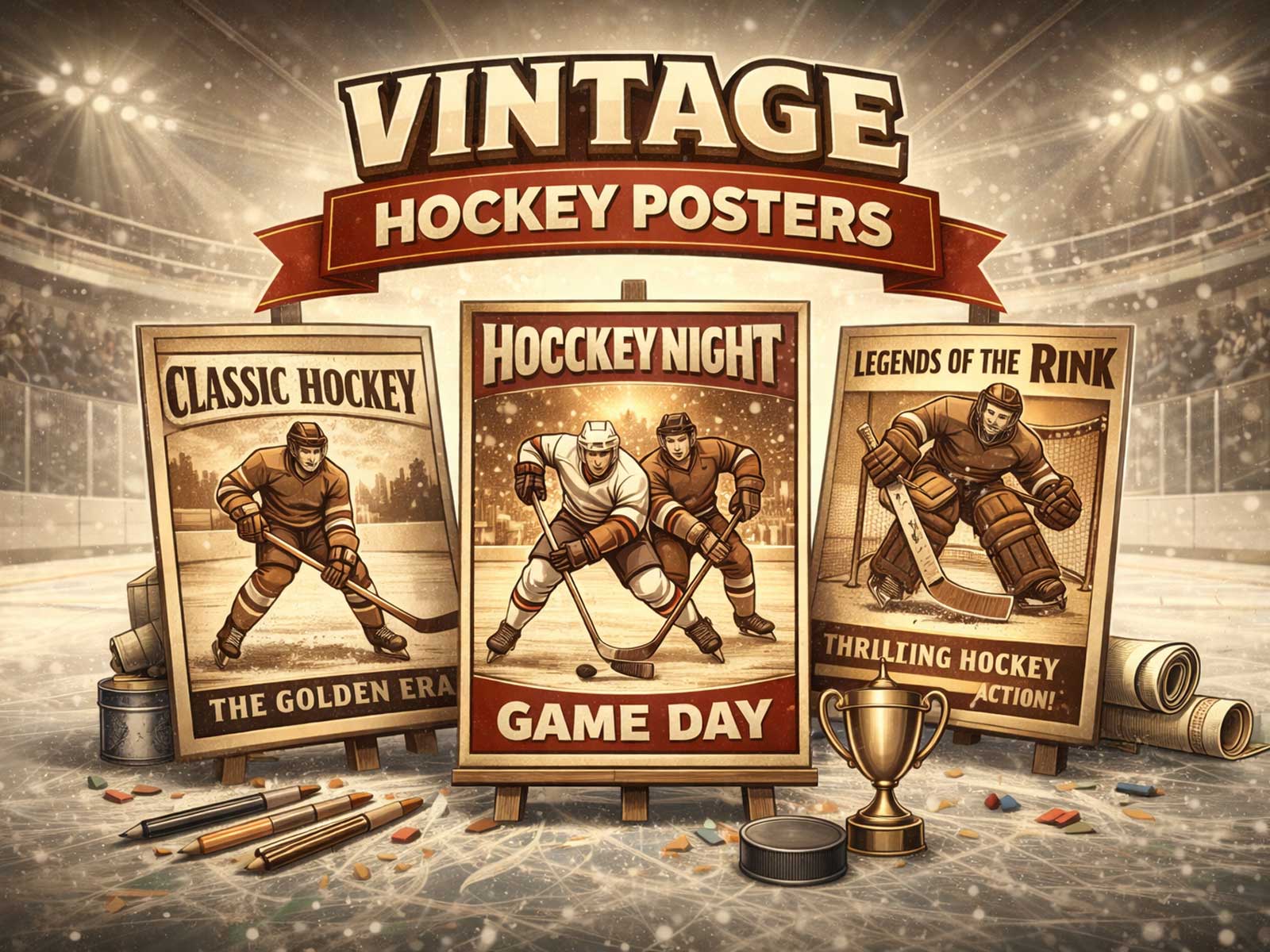
Hockey is a sport of extremes — speed measured in edges and lean, collisions that read like punctuation, and a palette of crisp whites and saturated team colors. On a wall, that same language becomes a powerful tool for shaping atmosphere. A well-composed hockey poster doesn't just show a moment; it translates the rink's reflective surfaces, the stark contrast between arena light and shadow, and the corporeal intensity of play into a room's visual grammar. The result is a décor element that feels kinetic, cool, and unmistakably purposeful.
The mirror-like plane of ice is one of hockey wall art’s greatest assets. Thin layers of frost, scrape marks and fresh reflections catch overhead lights and create subtle gradients that read like texture from across a room. Artists and photographers use that sheen to split a composition: the upper register of players and arena lights, and a reflected, slightly abstracted lower register that adds depth. In a bedroom or office this doubling effect expands perceived space; in a game room it raises the drama, making the poster act like a window onto motion.
Contrast is another defining visual strategy. Arenas are lit to isolate action — bright rinks surrounded by dark stands — and that high-contrast lighting translates perfectly to wall art. A poster that emphasizes glowing ice and silhouetted players creates a bold focal point against neutral walls, or conversely, complements a darker, moody scheme. Team jerseys and crests become color anchors: a punch of red, blue or gold can organize surrounding accents like throw pillows or a desk lamp, while muted vintage palettes lend a quieter, nostalgic character for more refined interiors.
Energy and physicality in hockey imagery operate on two registers: implied motion and tactile impact. A player in mid-stride, a splash of ice from a hard stop, or the arc of a stick all suggest trajectory and force. These elements guide the eye and infuse a room with momentum without overwhelming it. In an office a single dynamic poster can encourage alertness and focus; in a child’s bedroom it inspires movement and play; in a fan cave a series of prints arranged chronologically or by intensity builds a layered narrative that reads like a season on the wall.
[IMAGE_INSERT_ARTICLE_01]
How you choose between modern and retro treatments defines the mood. Modern hockey decor leans on crisp photography, minimal typography and high-contrast palettes for a contemporary, gallery-ready feel. Retro pieces favor grain, distressed textures and period typography that evoke nostalgia and warmth. Both approaches exploit the same visual assets — ice texture, contrast, and emblematic jerseys — but they speak to different identities: the sleek collector who prefers restrained sophistication, or the sentimental fan who wants history and memory in the décor.
Beyond imagery, rink geometry—the boards, blue lines, face-off circles—offers compositional scaffolding that designers use to structure a poster. These elements provide rhythm and visual direction, helping a piece sit harmoniously above a sofa, behind a desk, or as part of a stacked gallery wall. A poster that respects negative space around those geometric cues will feel integrated rather than pasted on, allowing the room to breathe while still carrying a strong visual charge.
Ultimately, hockey wall art succeeds because it balances two instincts: spectacle and intimacy. It harnesses the spectacle of a fast, physical sport — flashes of color, the drama of light on ice — while inviting close looking through texture and detail. Whether you want a bold centerpiece for your game room, a motivating piece above a home office, or a quieter tribute in a bedroom, a hockey poster reshapes atmosphere by bringing the sport’s cold intensity and vivid identity directly into the room’s visual story.