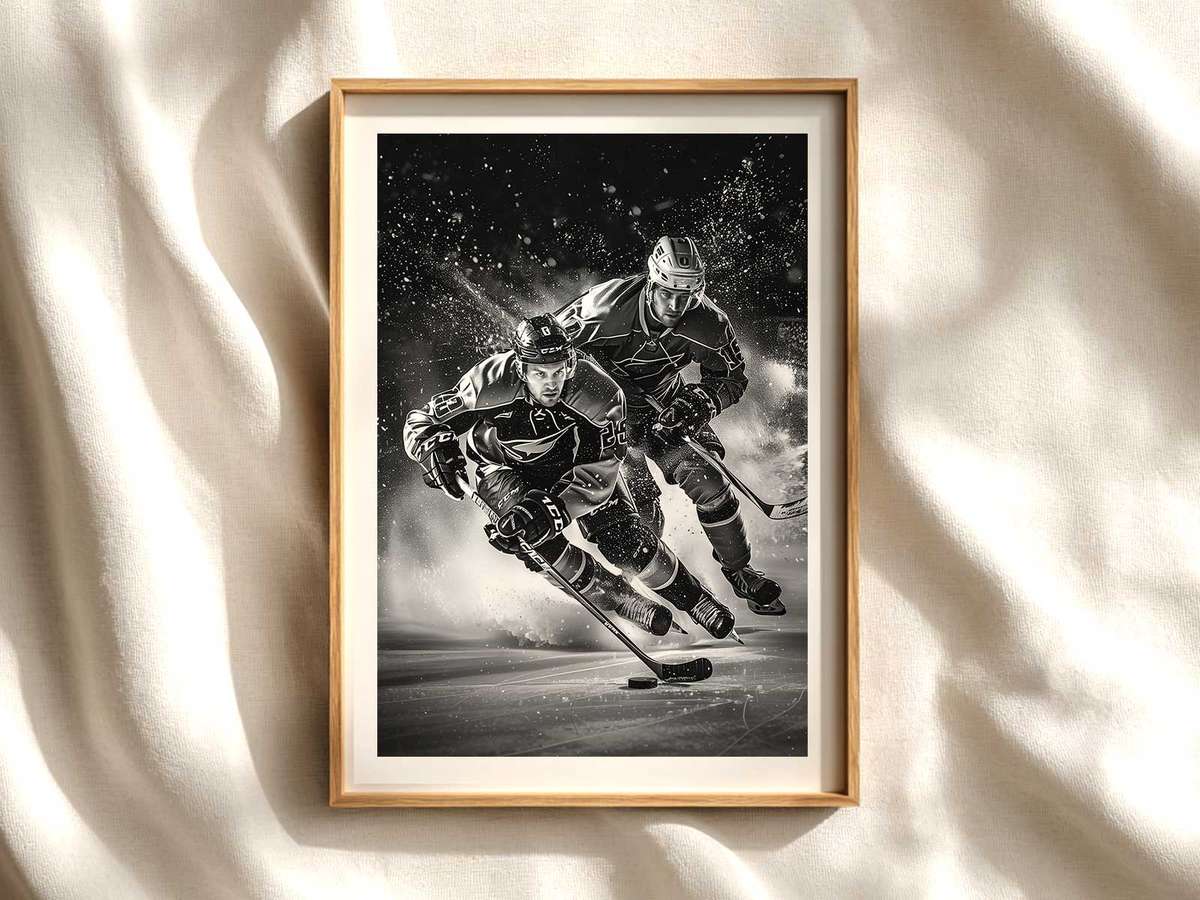
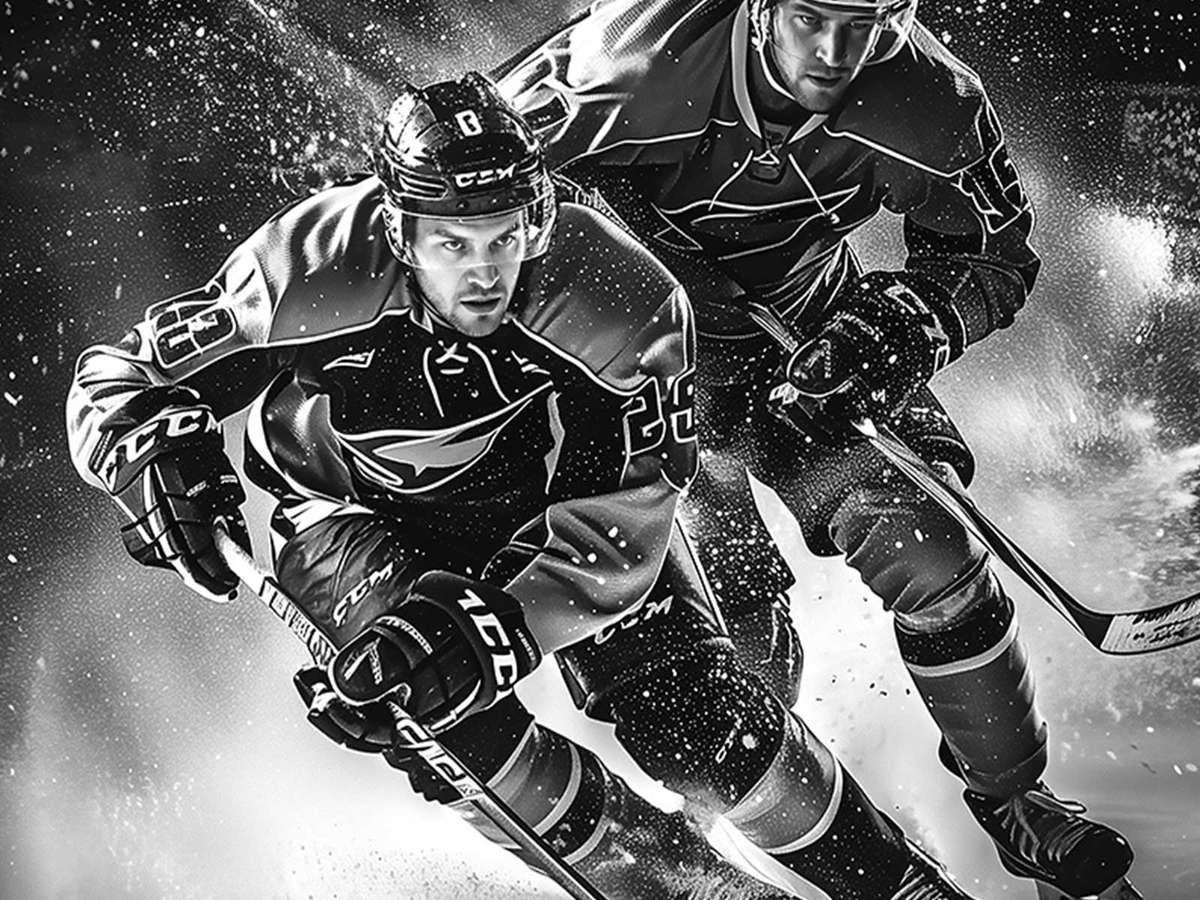
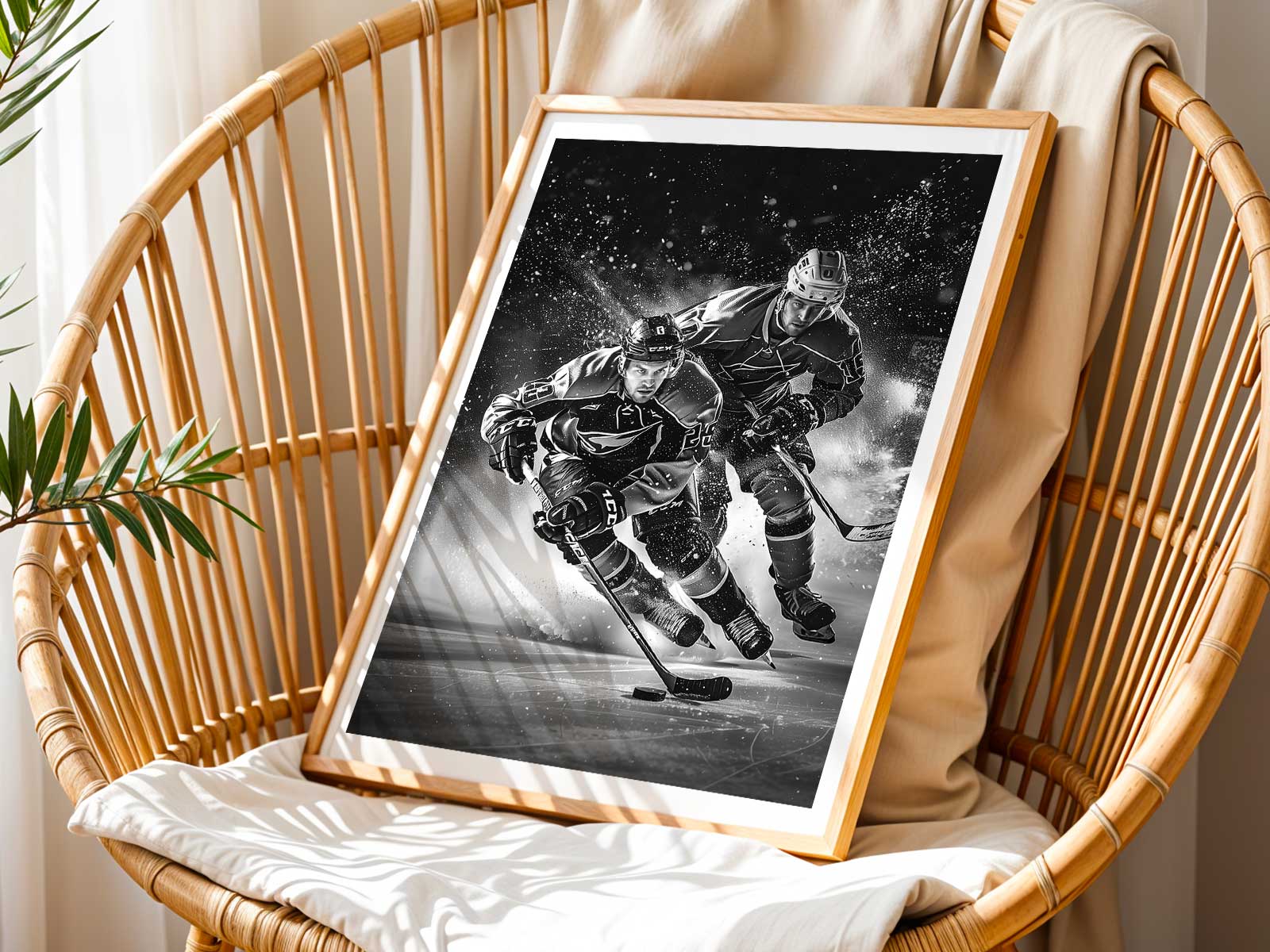
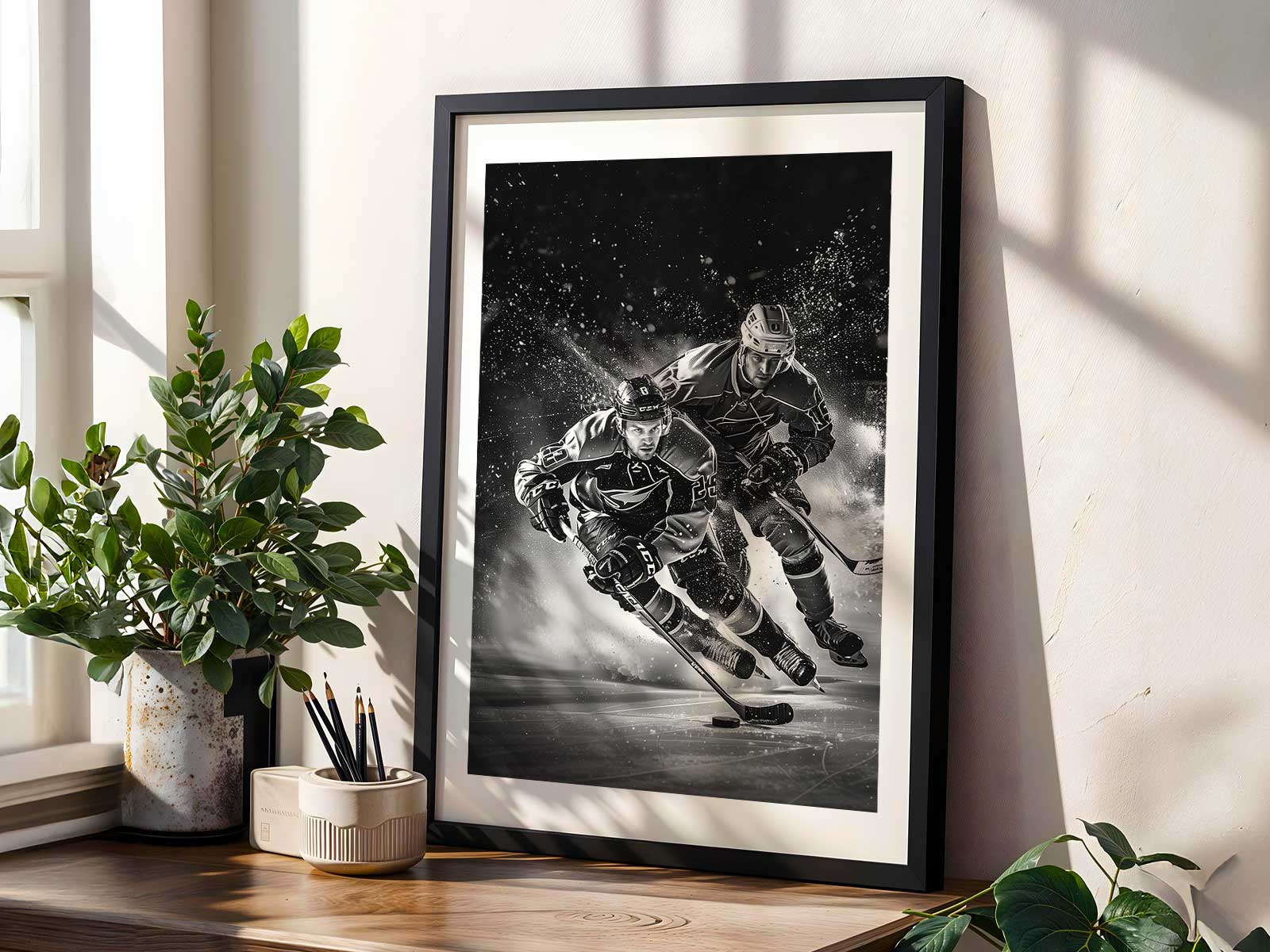
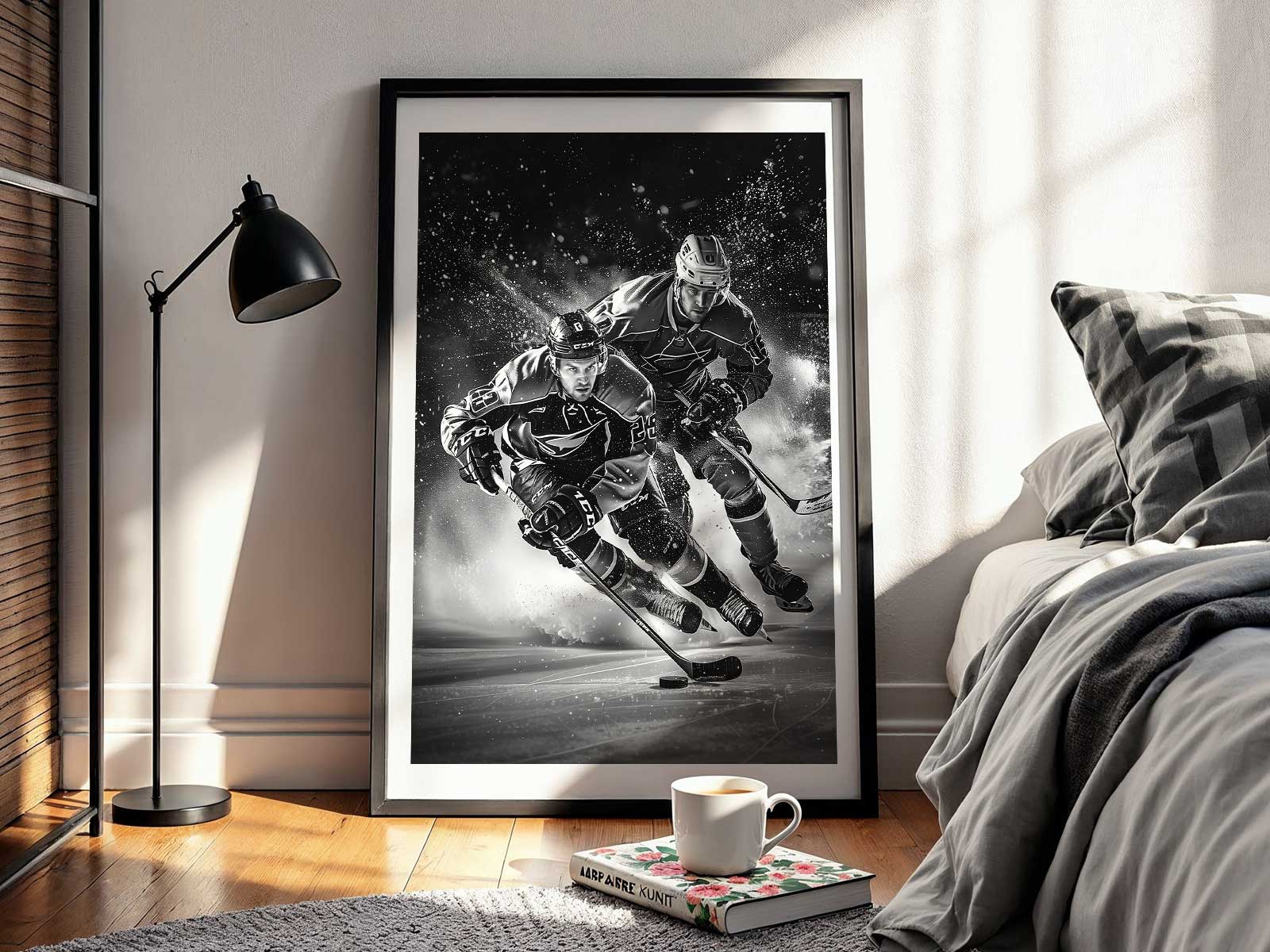
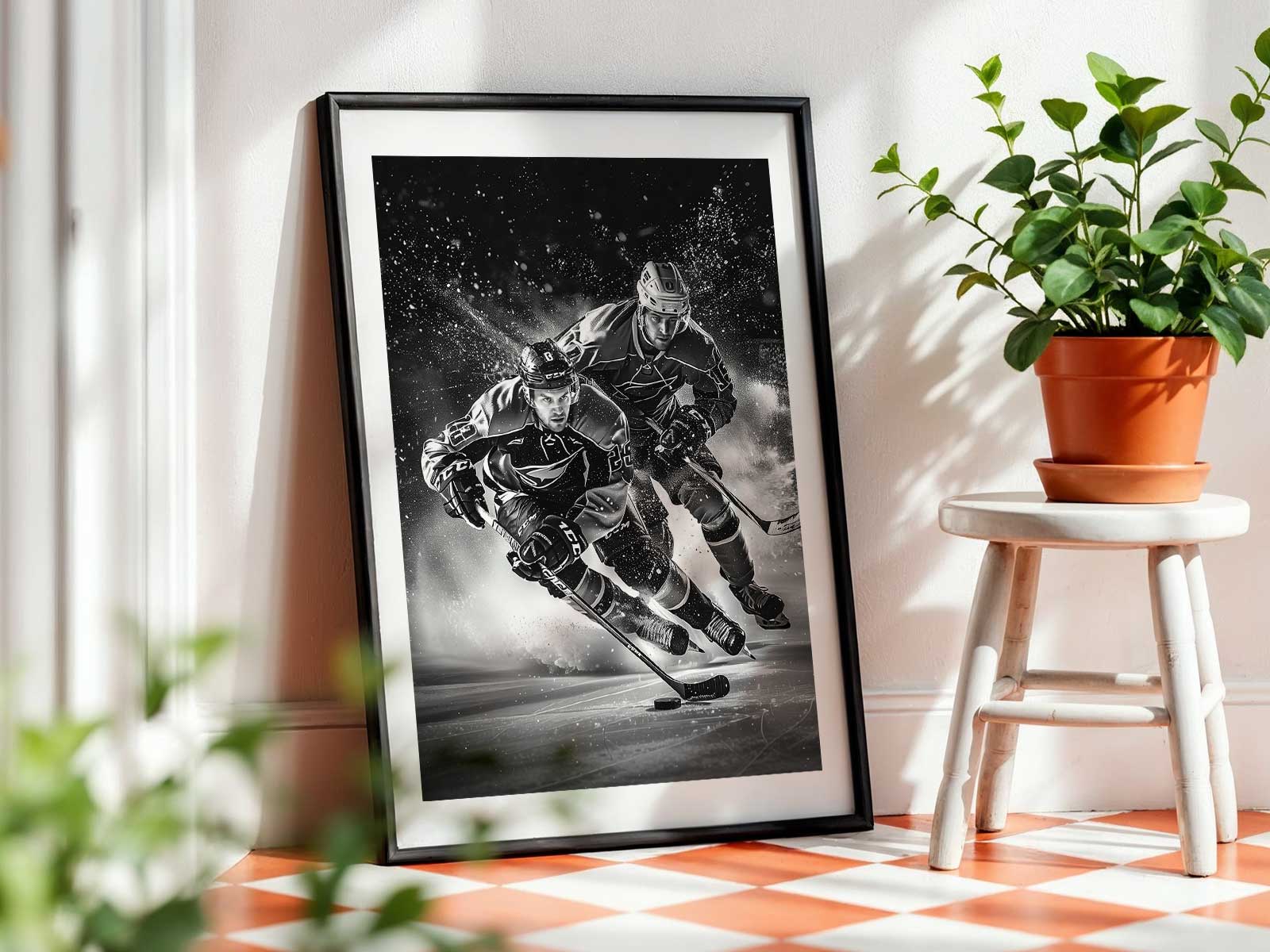
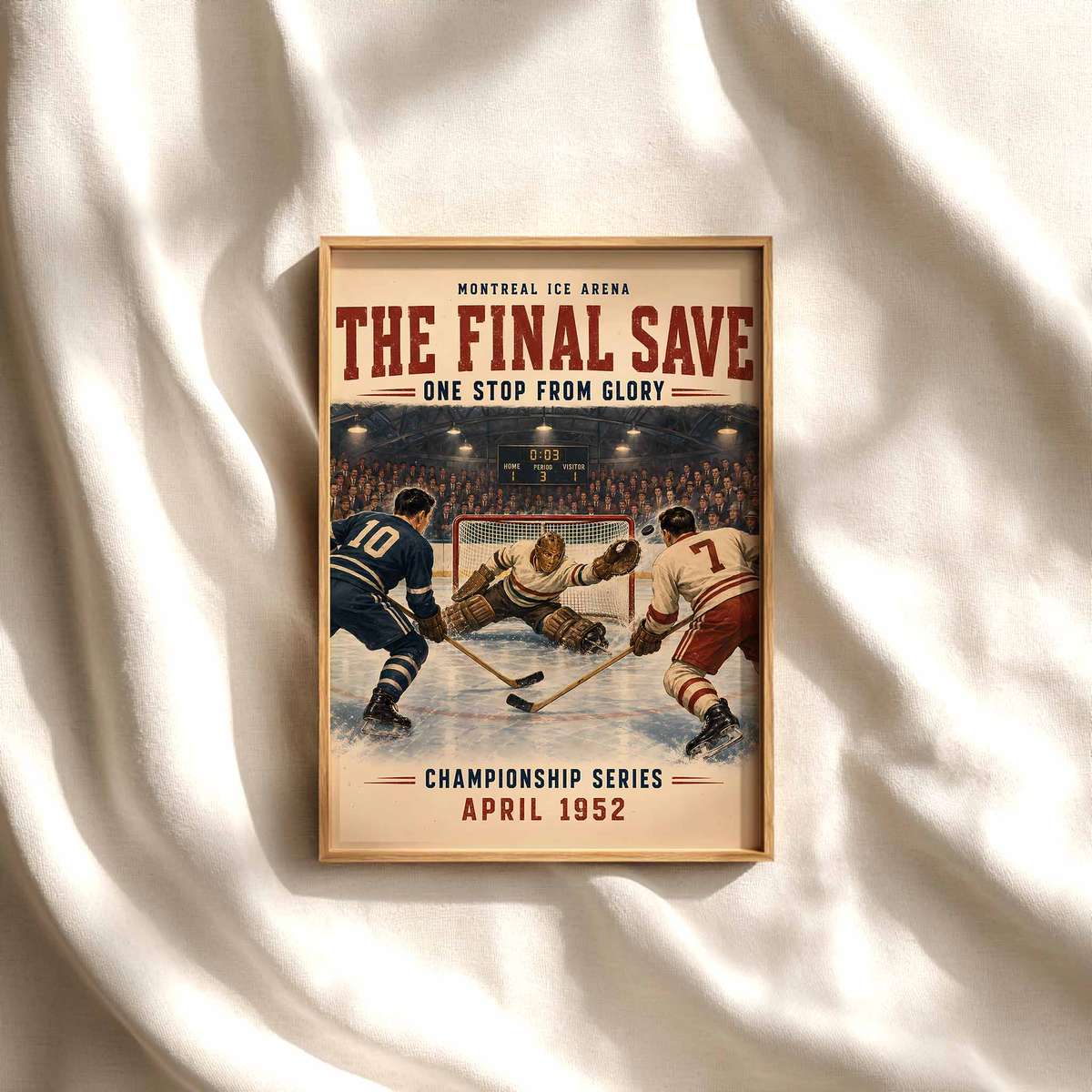
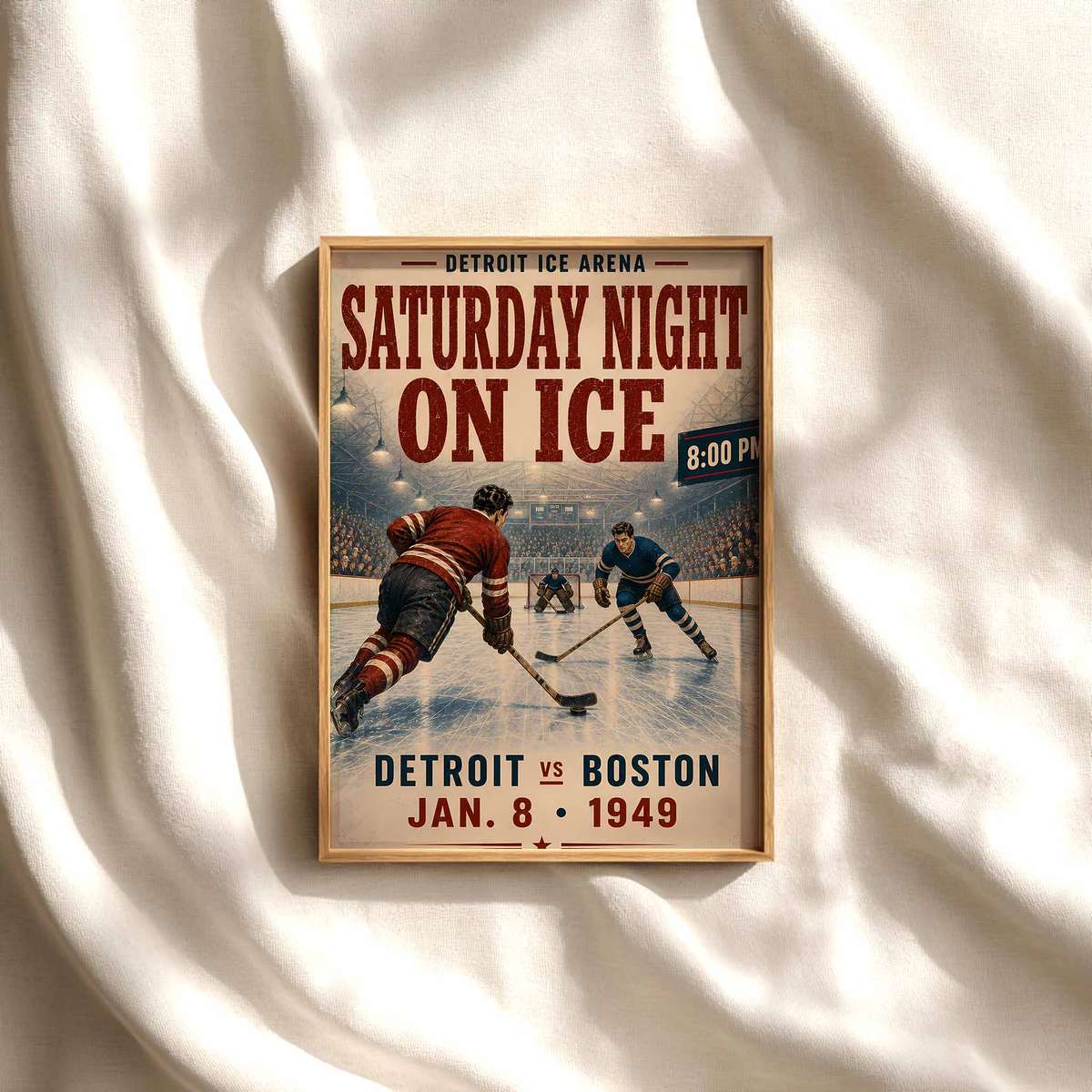
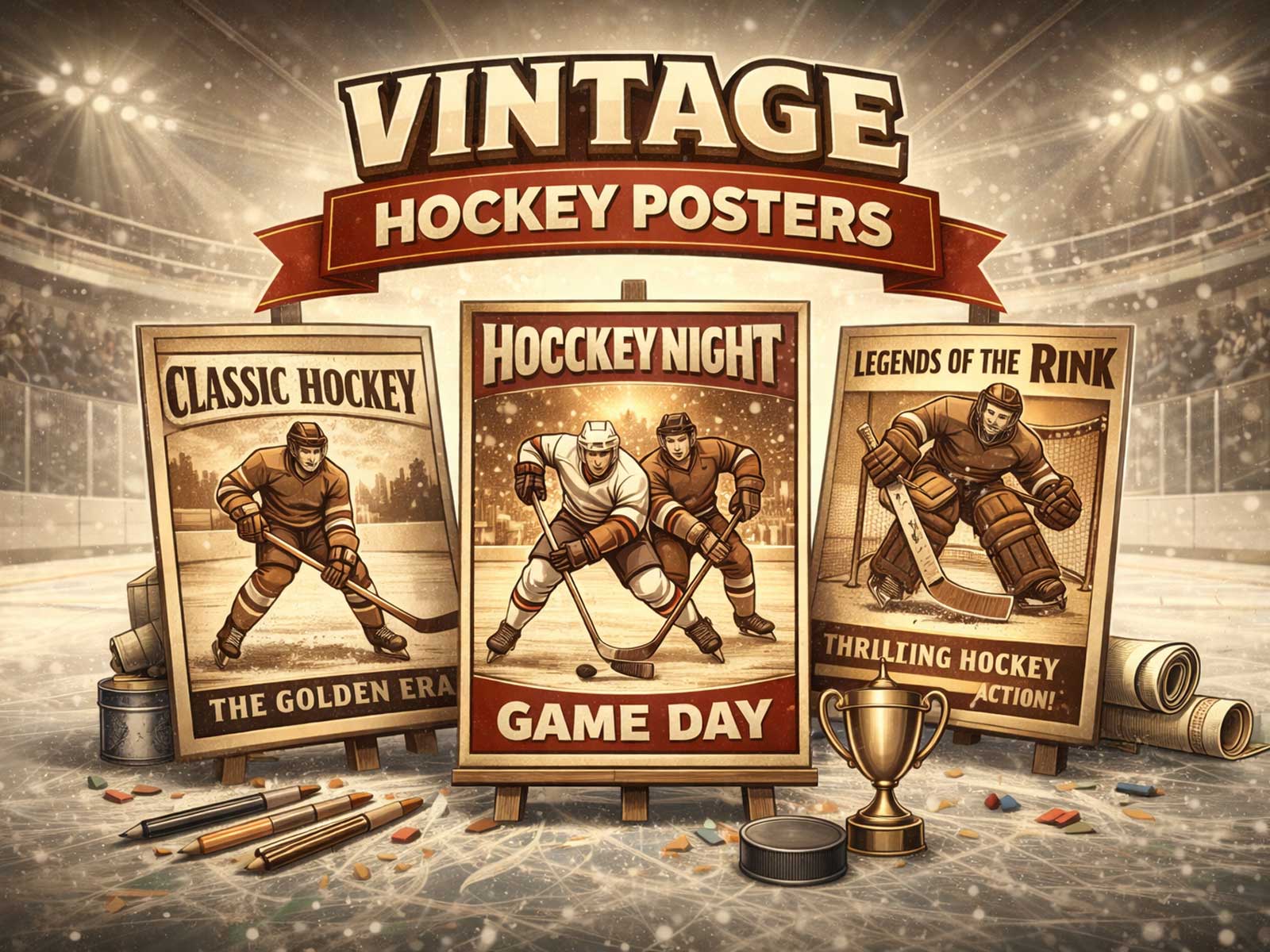
There’s an immediate honesty to a vintage hockey poster that modern reproductions rarely capture: the look of a lived-in sweater, the soft crackle of an old press, the way a team crest has softened at the edges. Poster hockey in its vintage guise works because it doesn’t merely reference the past — it translates the physical traces of history into visual mood. When a wall piece bears the muted reds of a classic uniform or the grain of a letterpress title, it reads as belonging to a lineage rather than as a styled affectation.
Much of the poster’s power comes from detail that speaks to memory. Old sweaters and crests are shorthand for a specific, tactile era: heavier fabrics, stitched felt logos, blocky numbers worn thin at the seams. Designers and collectors know these cues. Even without naming dates or players, a poster that shows a peeling decal, slightly off-register print, or a warm, sun-faded palette evokes locker-room warmth, the smell of wood and resin, and the louder, rougher tempos of earlier hockey. That sensory shorthand is what transforms an image into a story and a room into a repository of feeling.
Print texture is another secret ingredient. Visible dot patterns, soft halftones, and the uneven bleed of ink suggest processes — letterpress, screen print, lithography — that carry weight beyond technique: they promise craft. That surface imperfection resists the slick flatness of digital images and signals age in a way our eyes and emotions register quickly. In interior terms, textured posters add depth to a wall without competing with other objects; they anchor a space with subtle complexity, inviting touch and closer inspection.
[IMAGE_INSERT_ARTICLE_01]
Color palettes in vintage hockey posters are purposefully restrained. Where contemporary sports design often favors hyper-saturation, older palettes use muted primaries, desaturated blues and creams, and the restrained contrast of naturally aged paper. Those choices are calming and architectural: a single poster can set a room’s tonal centre, making a den, office, or game room feel cohesive. Classic crests and insignia act like visual keystones — compact emblems of identity that read well across scales, from intimate study to large feature wall.
There’s also an emotional economy at play. Vintage hockey imagery leans on shared cultural scripts — grit, teamwork, regional pride — without spelling them out. A photograph tinted with warm halation or an illustration that preserves the imperfection of hand-drawn line work asks the viewer to supply the narratives: the hometown heroes, the cold stands, the small triumphs celebrated by local fans. That participatory aspect is why collectors prize original prints and why reproductions that capture that spirit feel more valuable than mass-market retro graphics.
Finally, authenticity matters. A poster that genuinely echoes old-league aesthetics does so through honest visual language: typography that matches the era, crests that respect proportion and placement, and paper tones that imply time. That fidelity distinguishes real heritage pieces from mere “vintage-style” décor. For rooms meant to celebrate lineage — a bar, a study, a family game room — authentic poster hockey imagery becomes less decoration and more identity: it declares affinities, stokes memories, and holds a place for stories yet to be told.
Choosing a vintage hockey poster is ultimately an act of mood-making. It’s about inviting a sport’s tactile history into your space through texture, color, and emblem — and letting that visual memory shape how the room feels and who it welcomes.