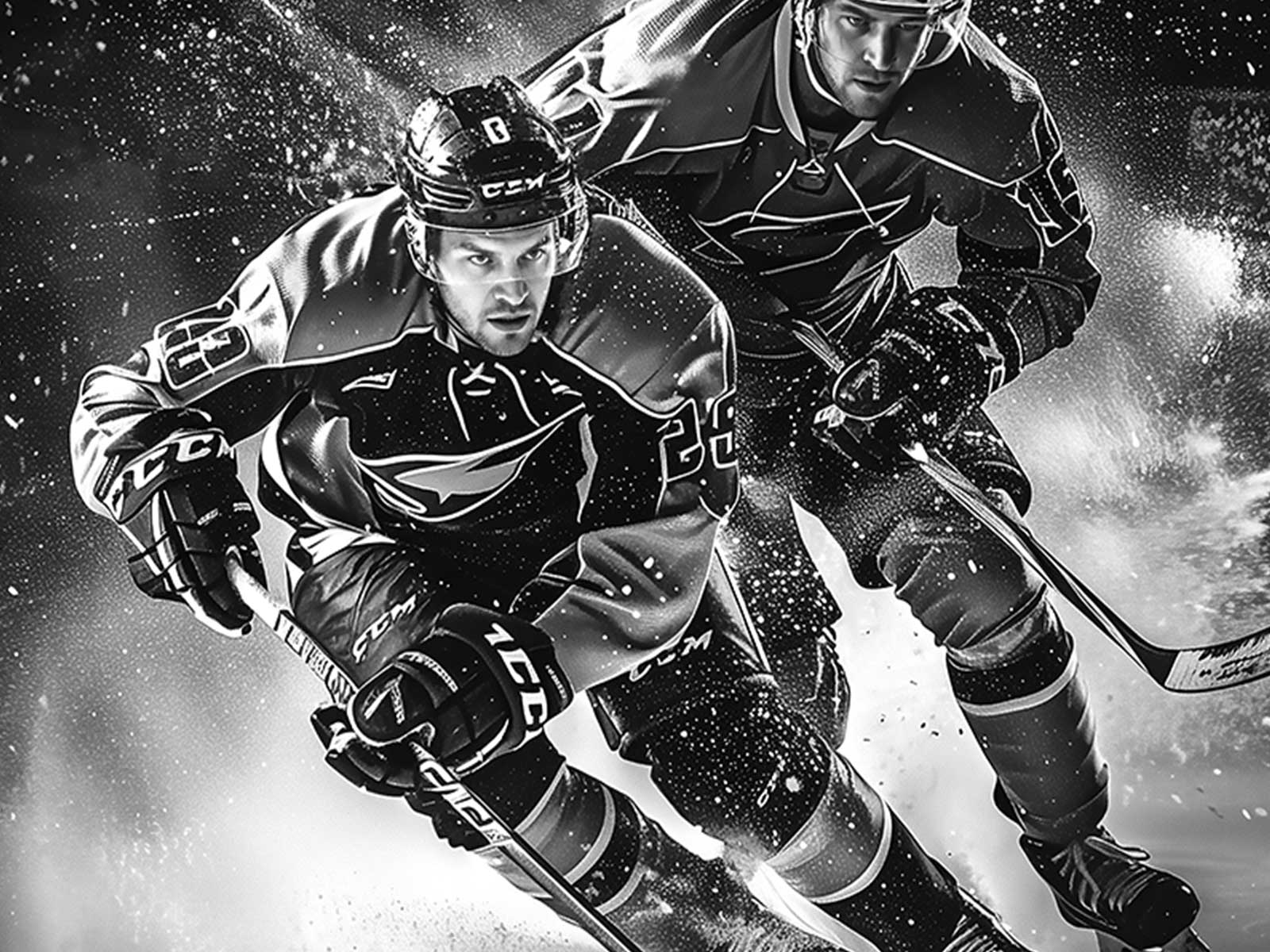
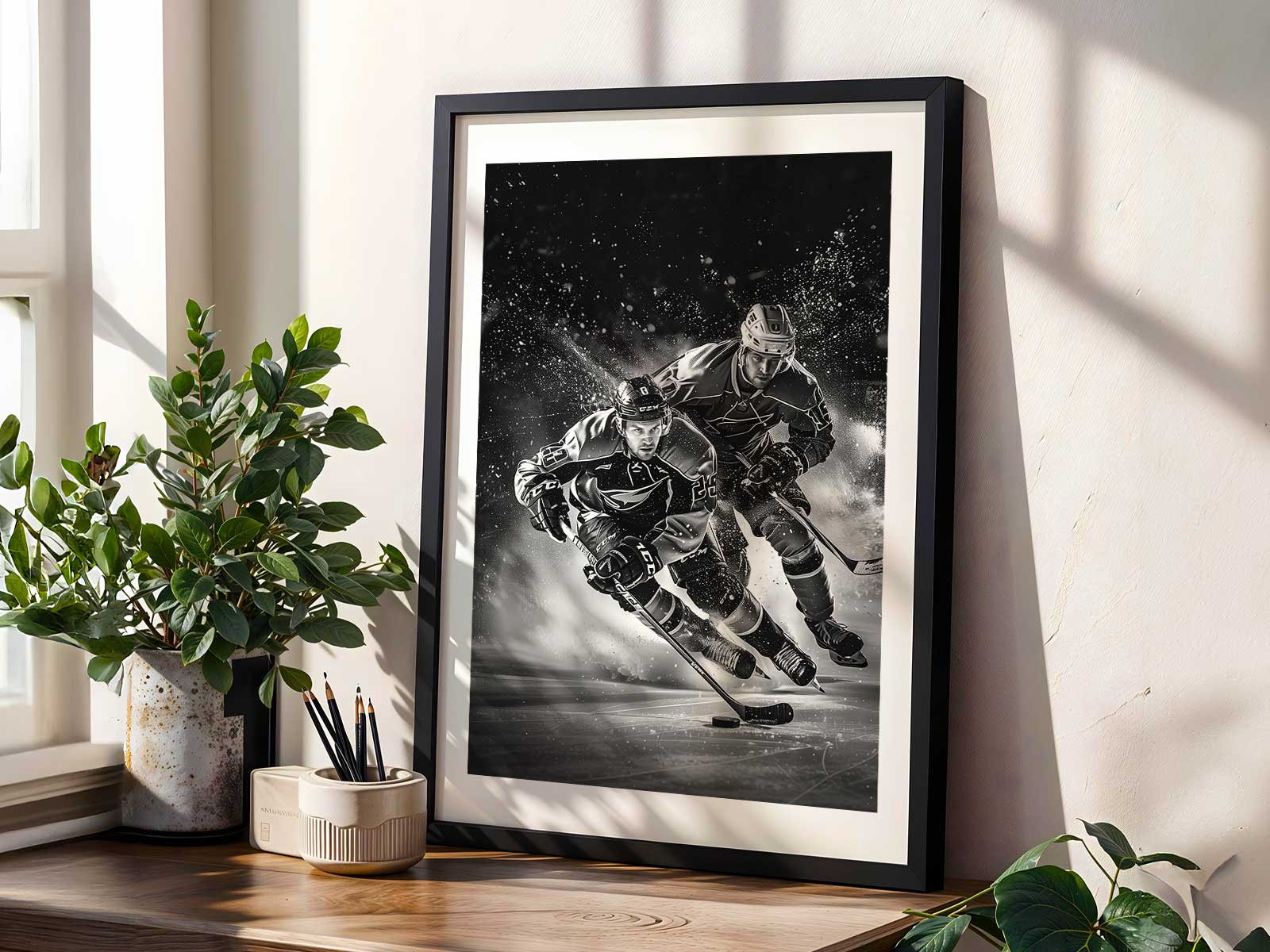
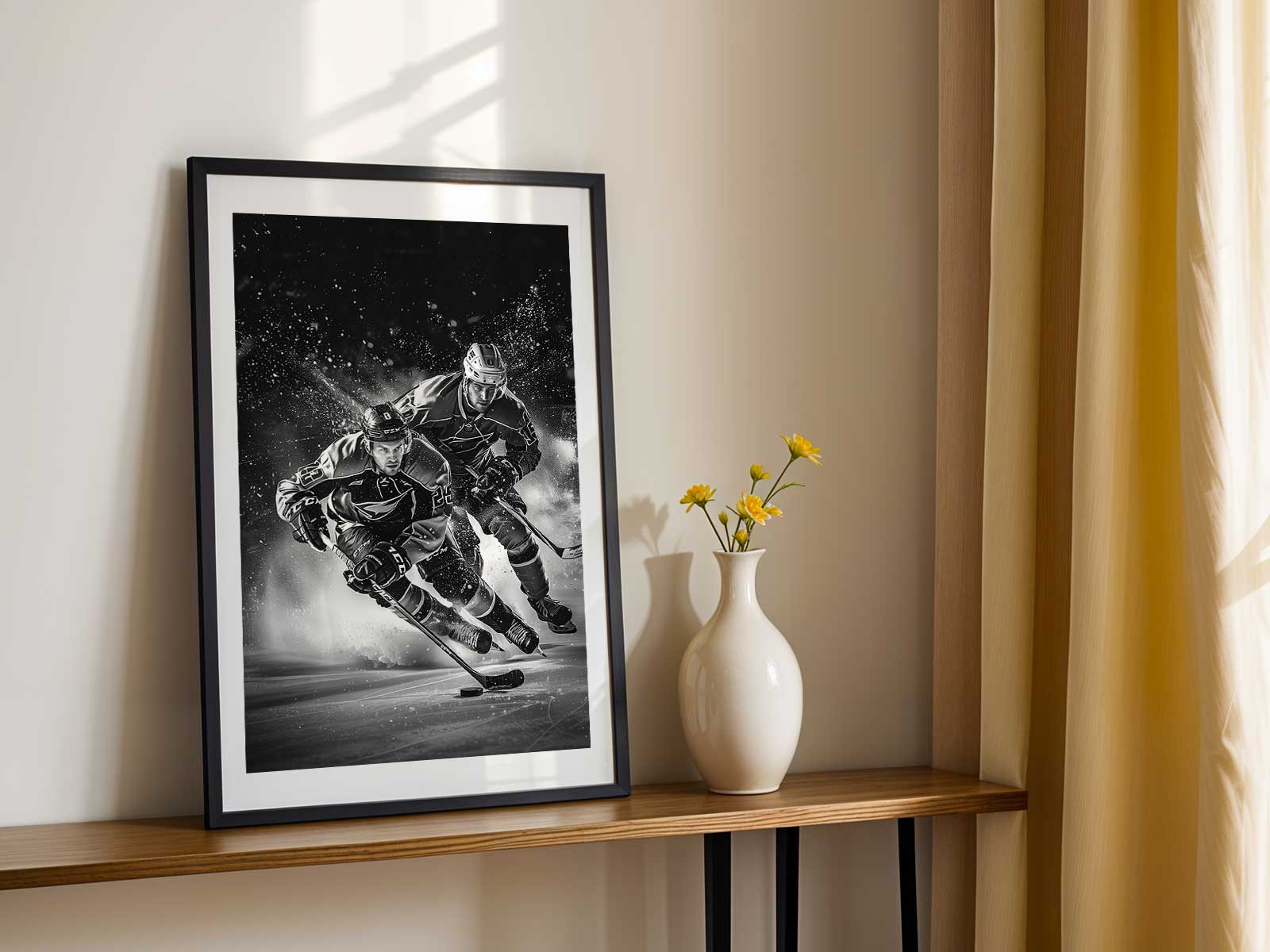
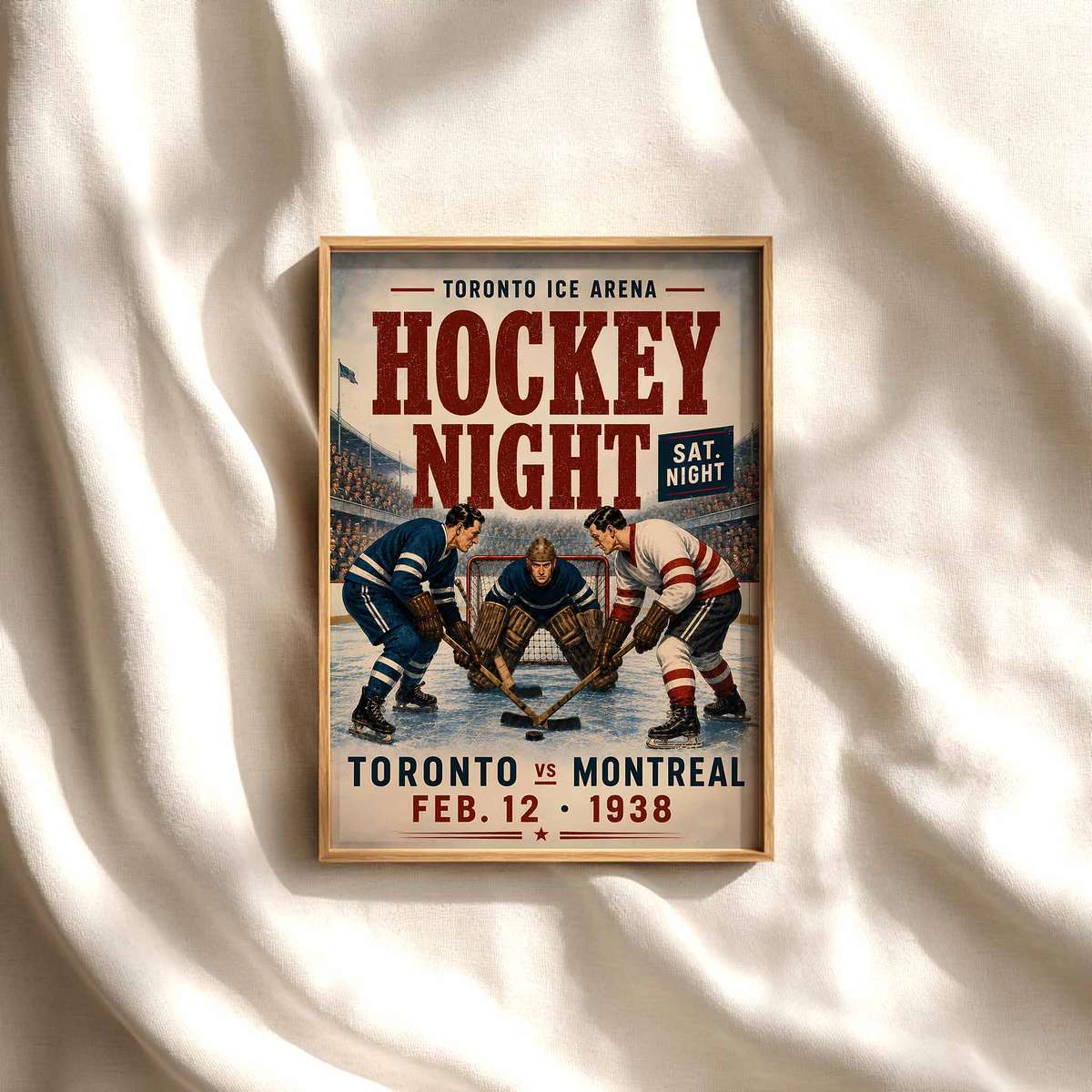
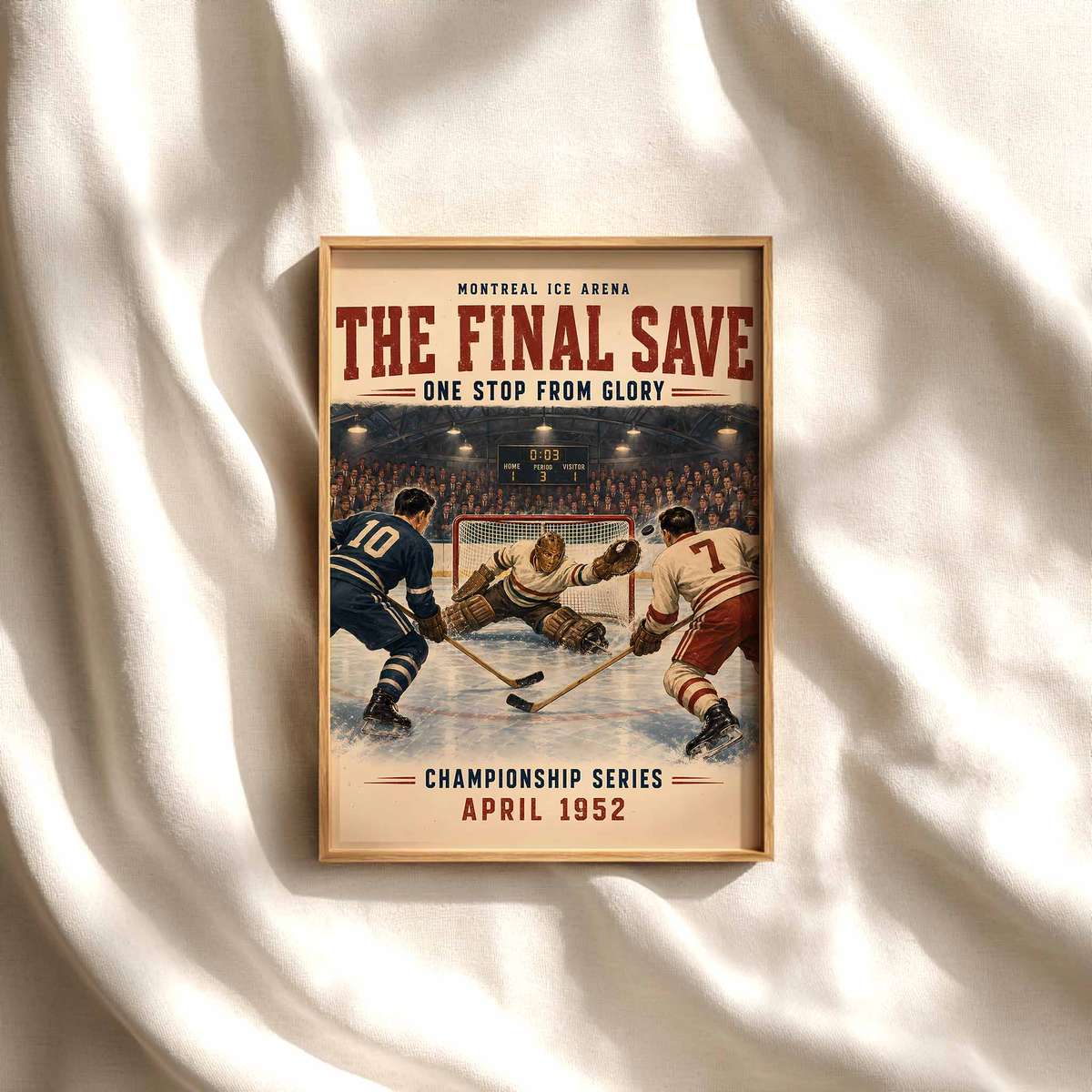
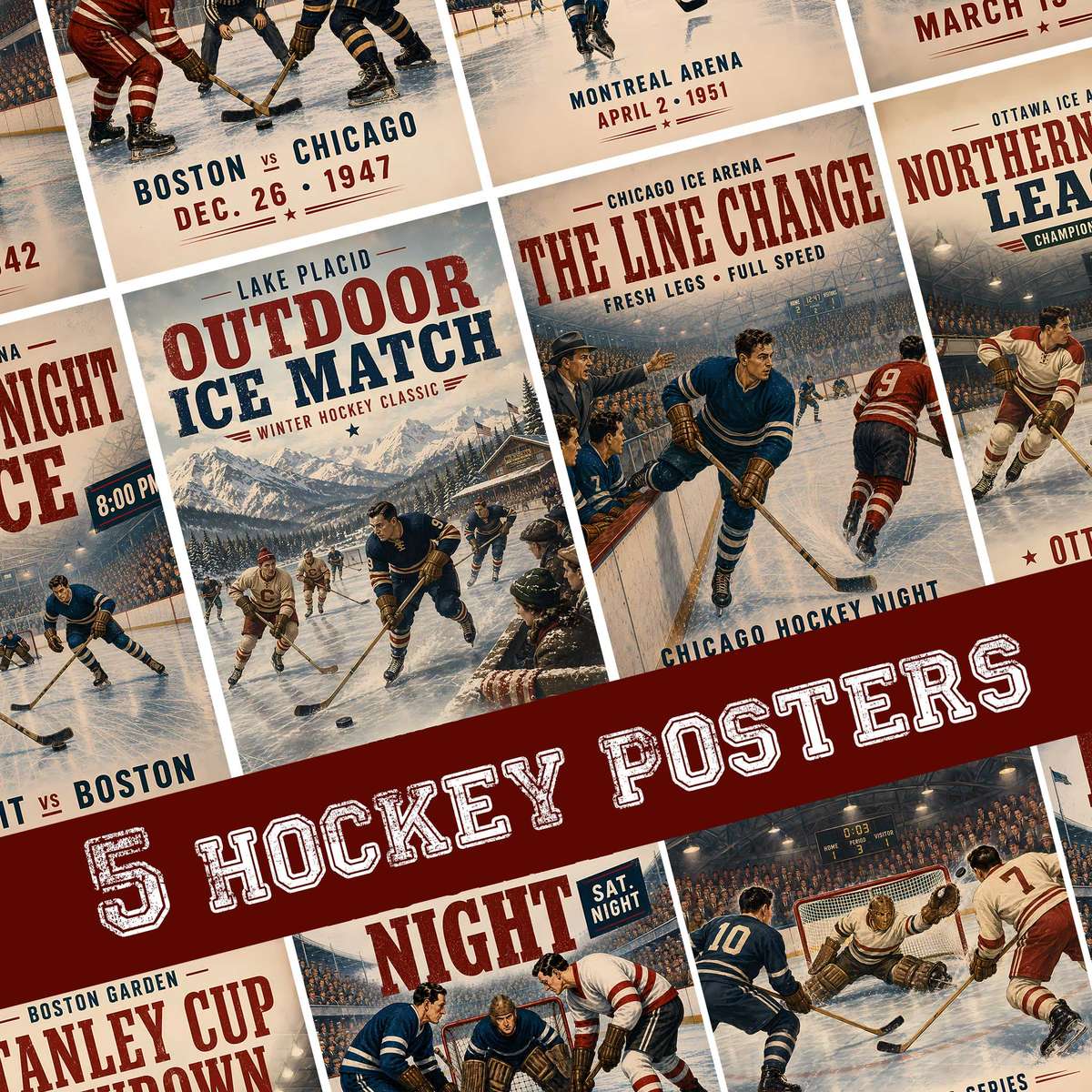
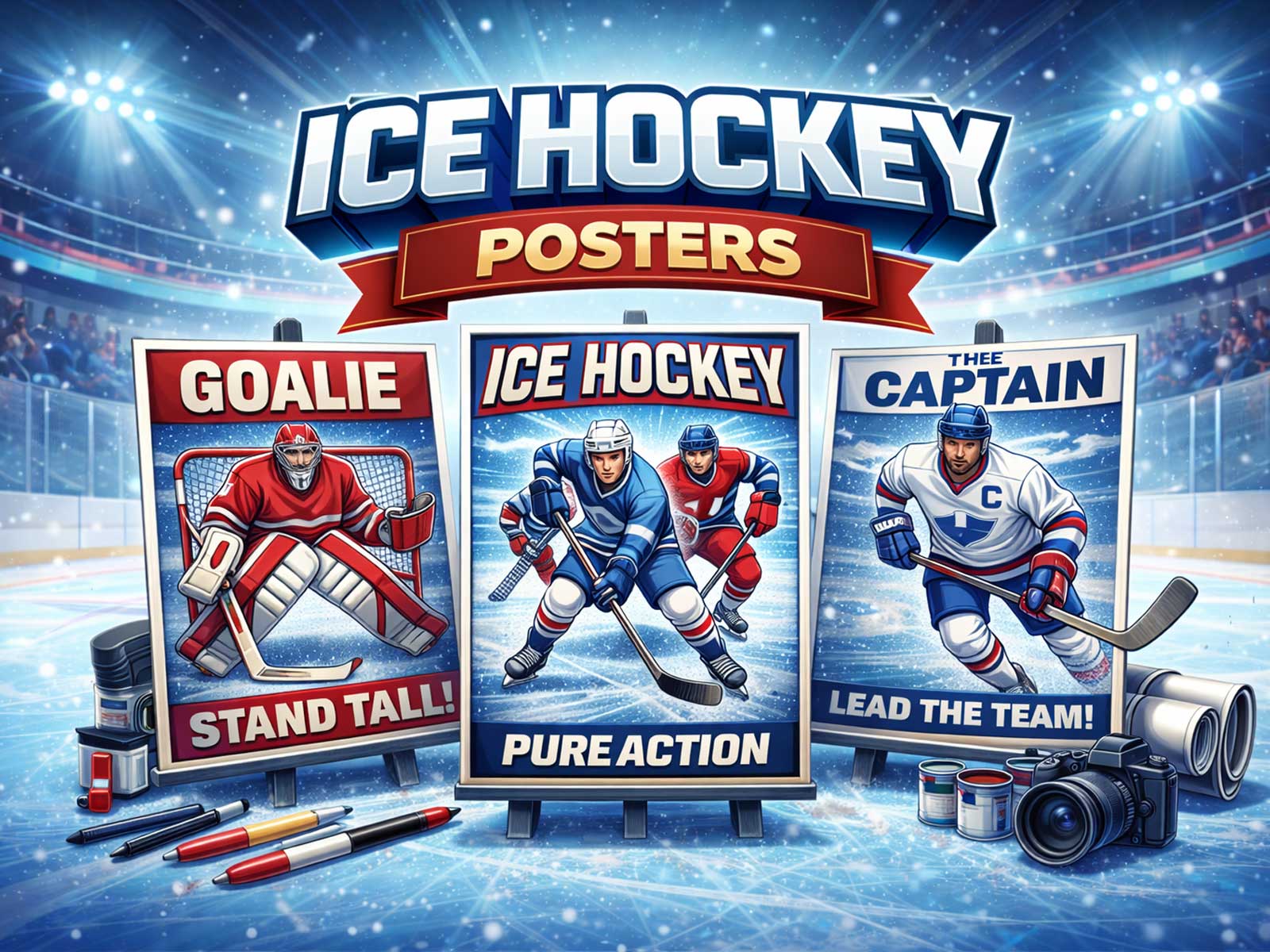
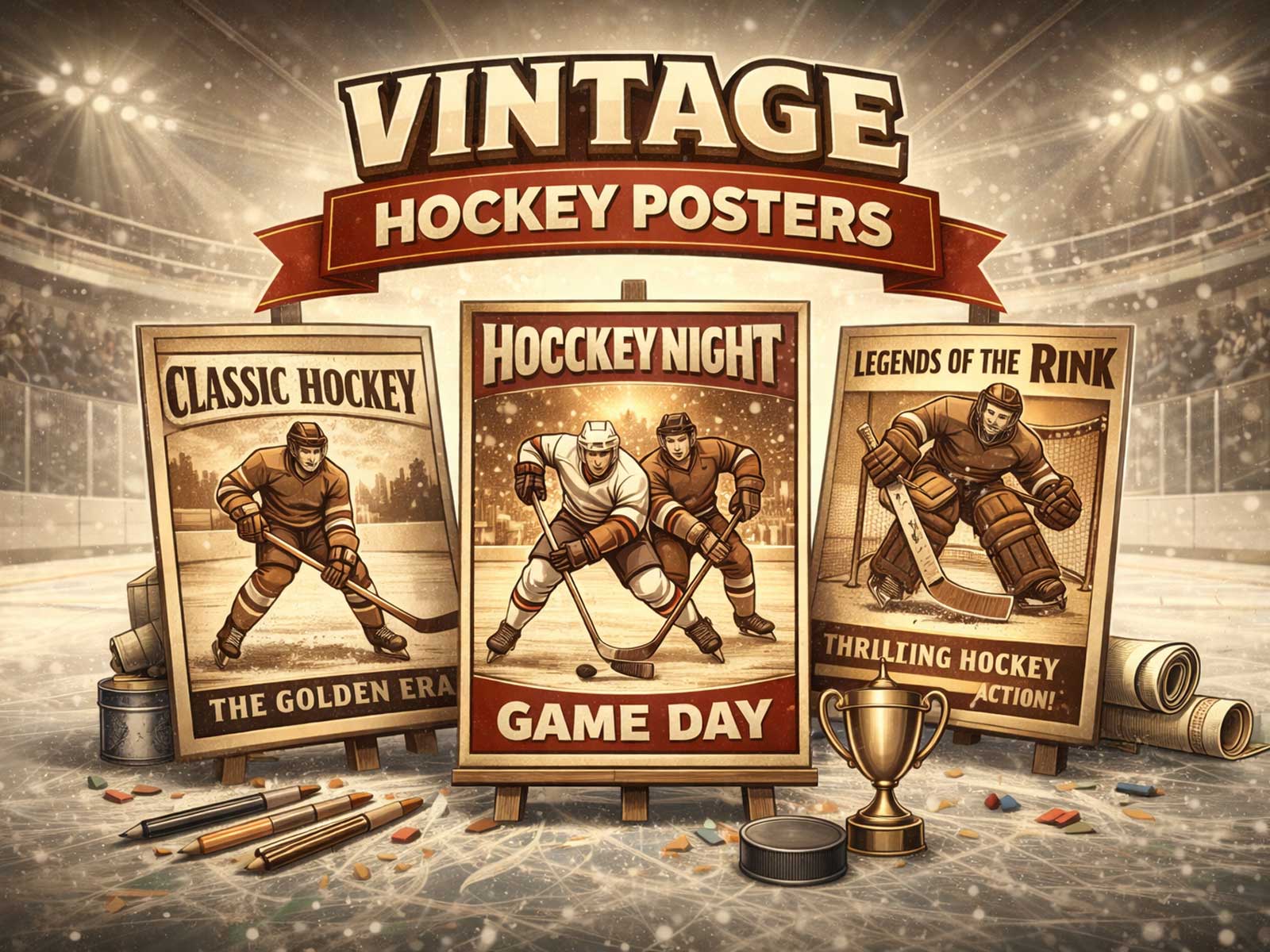
A powerful hockey poster does more than celebrate a sport: it transforms a wall into a moment. High-quality sports posters and action photography are routinely used in interior design to create dynamic ambiance and serve as deliberate focal points, and hockey images are especially suited to that role. The sport’s inherent contrasts—rapid motion against a flat rink, taut bodies against the smooth sheen of ice, bold jerseys and crests against cool whites—translate naturally into visual drama that reads instantly across a room.
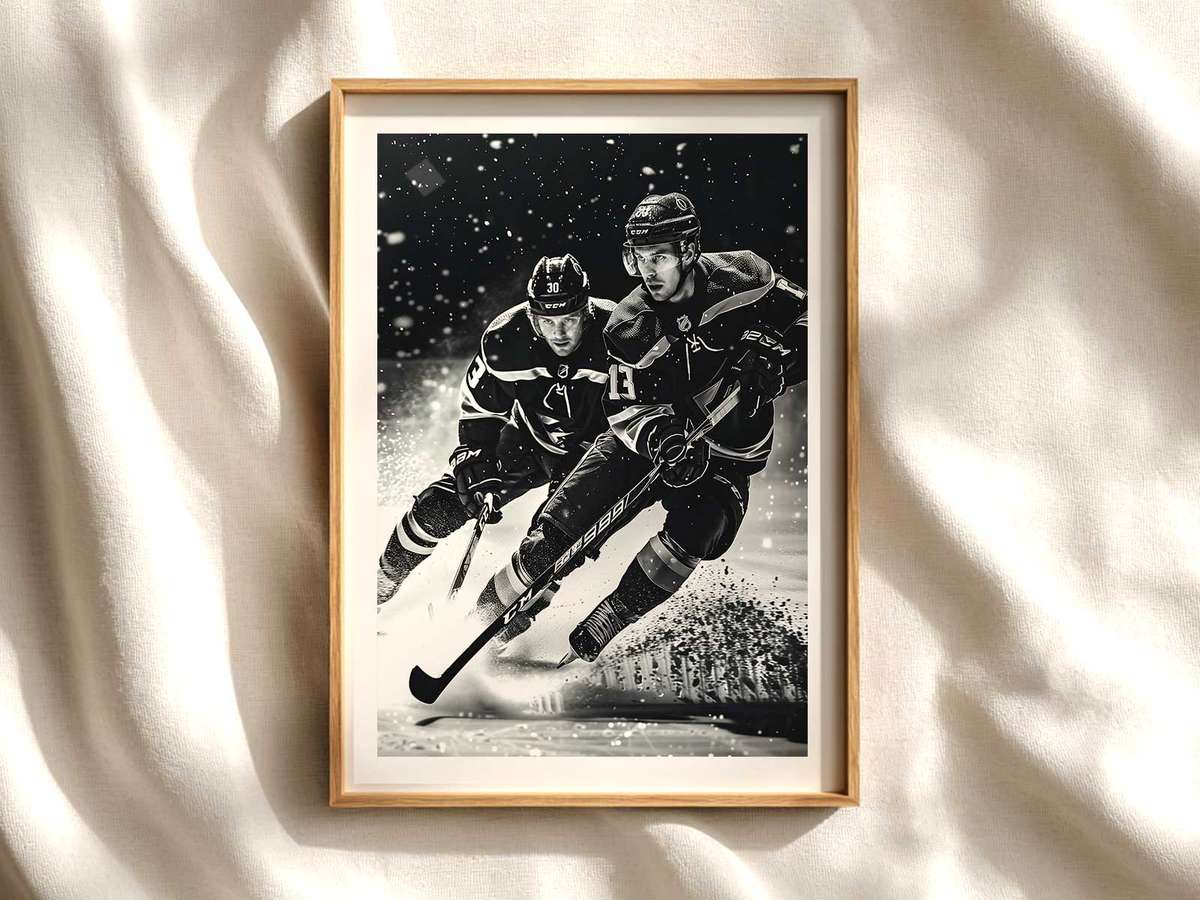
Hockey photography uses techniques designed to freeze or imply motion: fast shutter speeds to capture a blade cut through ice, panning to render a streak of motion, and controlled lighting to coax out reflections and textures from the rink surface. Those technical choices accentuate what matters on the wall: the sense of speed, the bright micro-reflections of skate marks, and the physical tension of a check or sprint toward goal. When reproduced as a framed or large-scale print, these elements create an immediate sense of energy that pulls the eye and animates surrounding decor.
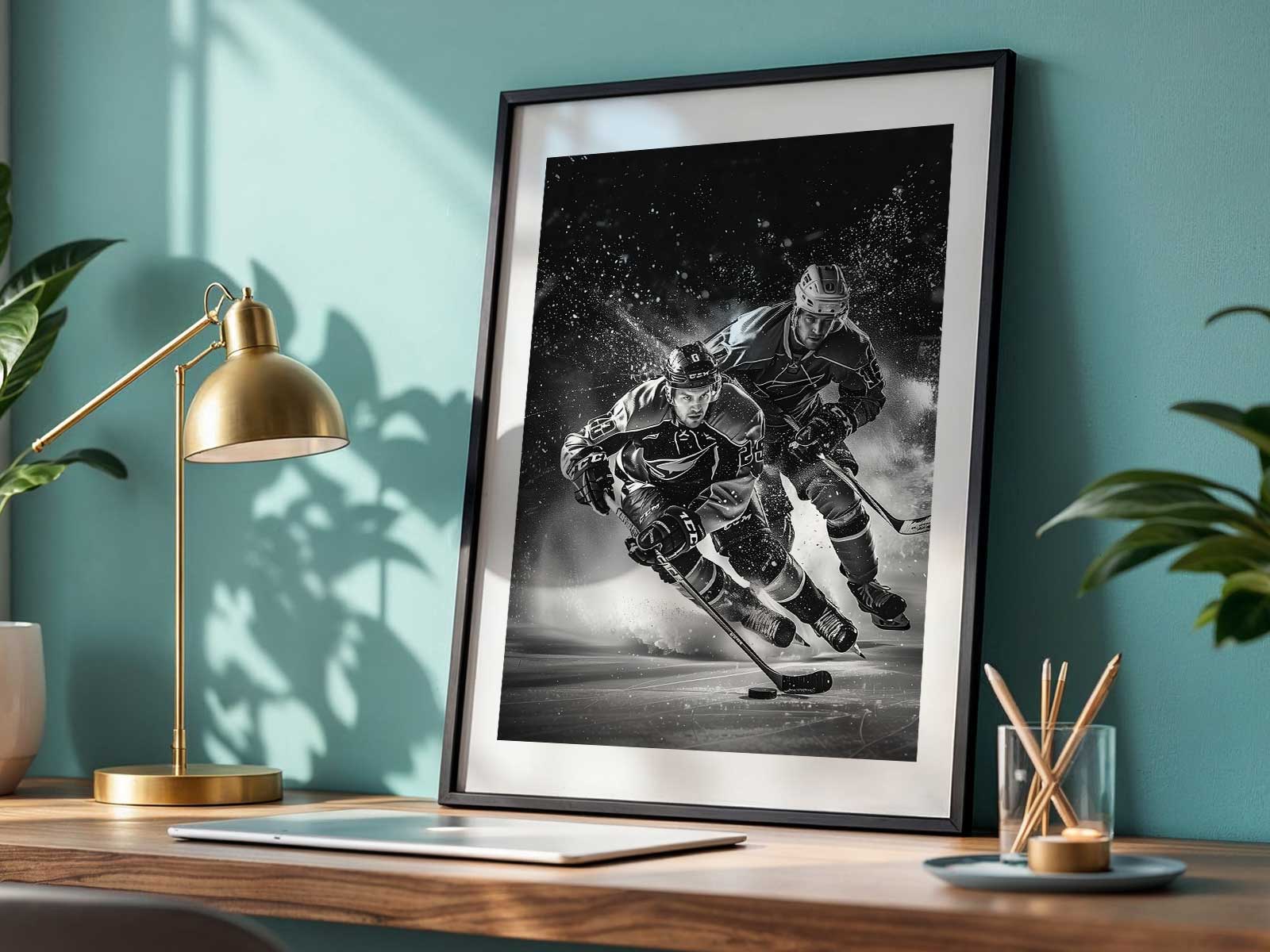
Color and identity are crucial. Jerseys, team crests and helmet graphics give hockey images strong, readable shapes that translate well at poster scale. A carefully chosen palette lets a poster either harmonize with a room or act as a deliberate accent: deep team colors anchor a dark game room, while a high-contrast, ice-dominated composition brightens an office or bedroom. Design guidance for displaying sports posters recommends matching a poster’s palette to room colors and paying attention to placement and lighting—avoid direct sunlight, use UV-filtering glass where possible, and position prints at eye level to maximize impact and longevity.
[IMAGE_INSERT_ARTICLE_01]
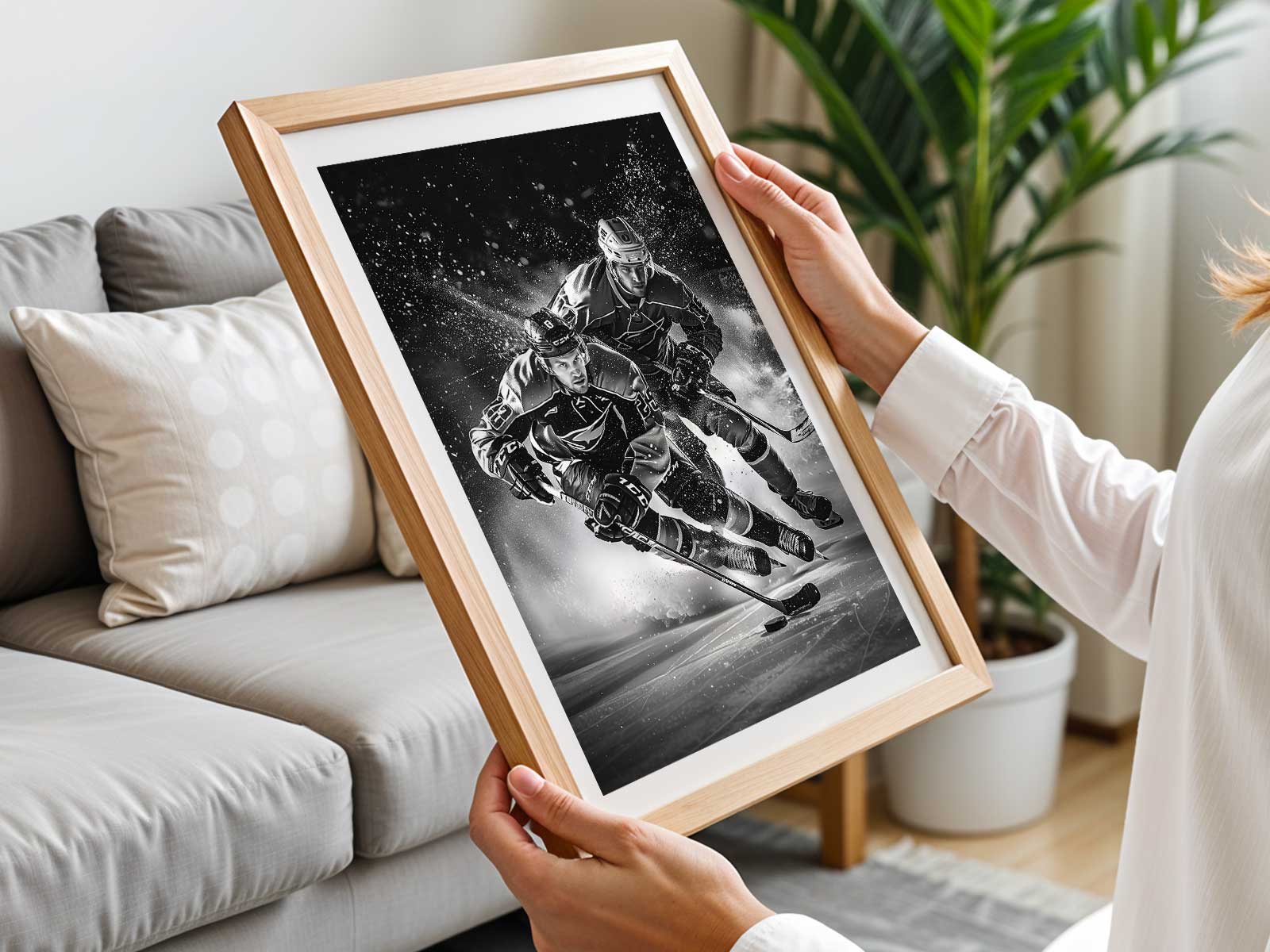
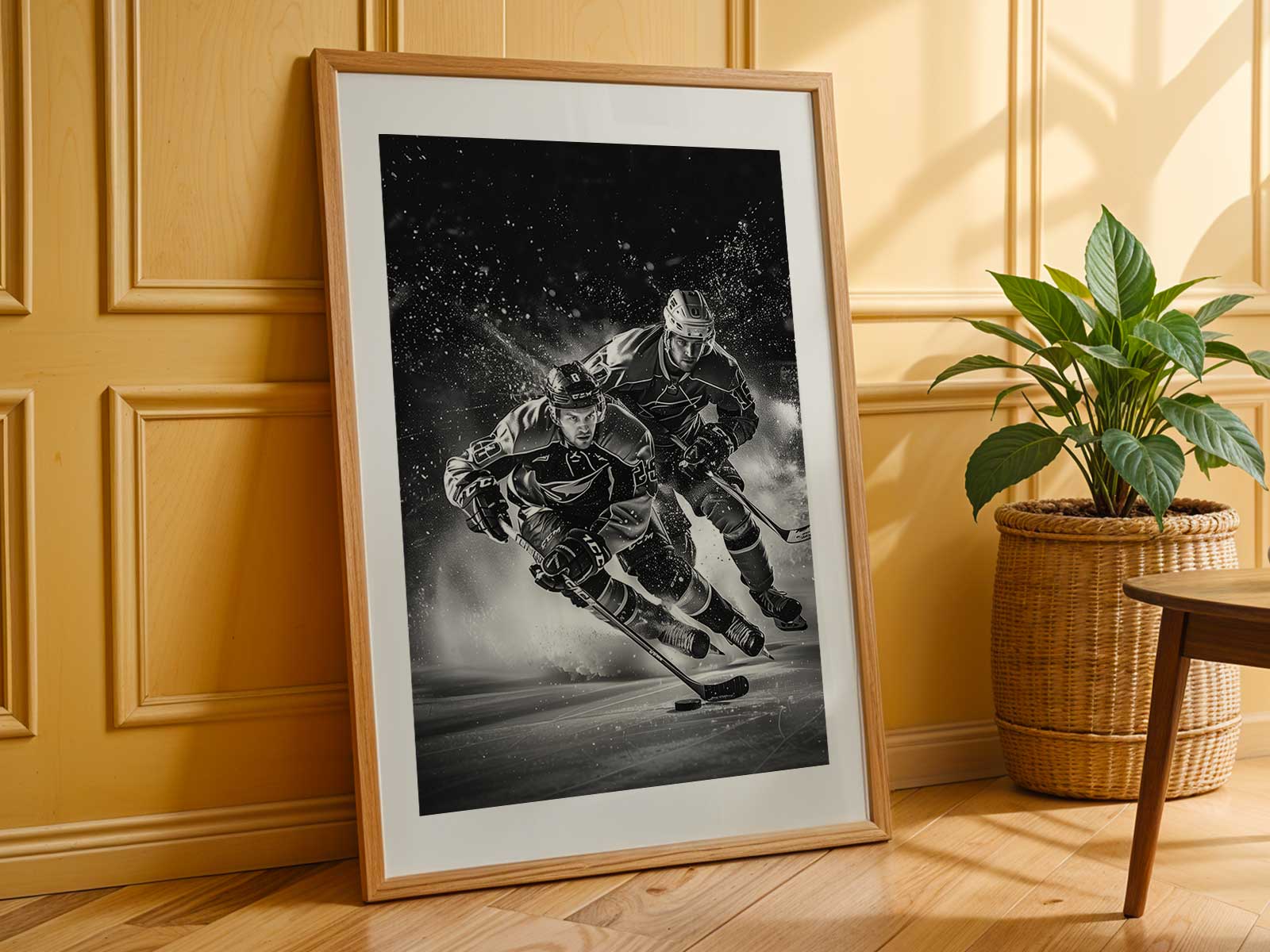
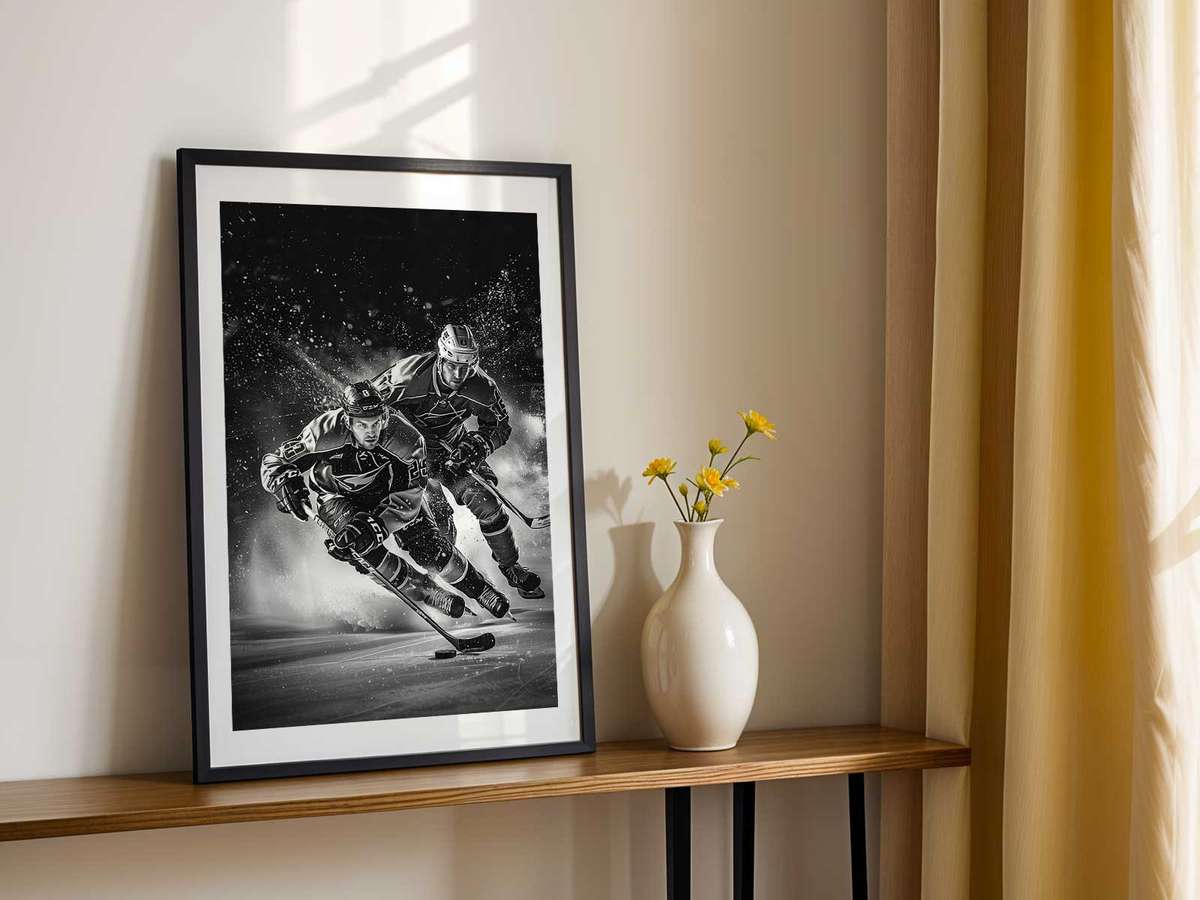
Presentation makes the difference between fan memorabilia and curated interior art. Framing, mounting as a large-scale print, or even using a mural-sized image elevates the photograph into intentional design. Framed prints and high-quality materials protect reflections and color depth so the play of light on ice remains vivid over time. This considered display moves the poster from mere decoration to a designed focal point that defines a space, whether it’s a fan cave, a minimalist office, or a bedroom gallery wall.
Beyond technique and presentation, hockey wall art connects to fan culture and identity. Sports imagery acts as shorthand for affiliation and memory; in a living space it can signal fandom, invite conversation, and provide motivational or nostalgic cues. The physicality of hockey—impact, speed, and concentrated moments—also appeals to design-minded viewers who value movement and contrast as compositional tools. Rink geometry, the clean lines of boards and markings, gives images structural clarity that reads well on a wall and complements architectural elements in a room.
Ultimately, a hockey poster’s success as wall art comes from the marriage of photographic craft and decorative intent. When captured with attention to motion and light, reproduced on quality materials, and placed with an eye to palette and environment, a hockey image does more than decorate: it charges the room with cold intensity, visual momentum, and a clear sense of identity that is both sporty and stylistically deliberate.