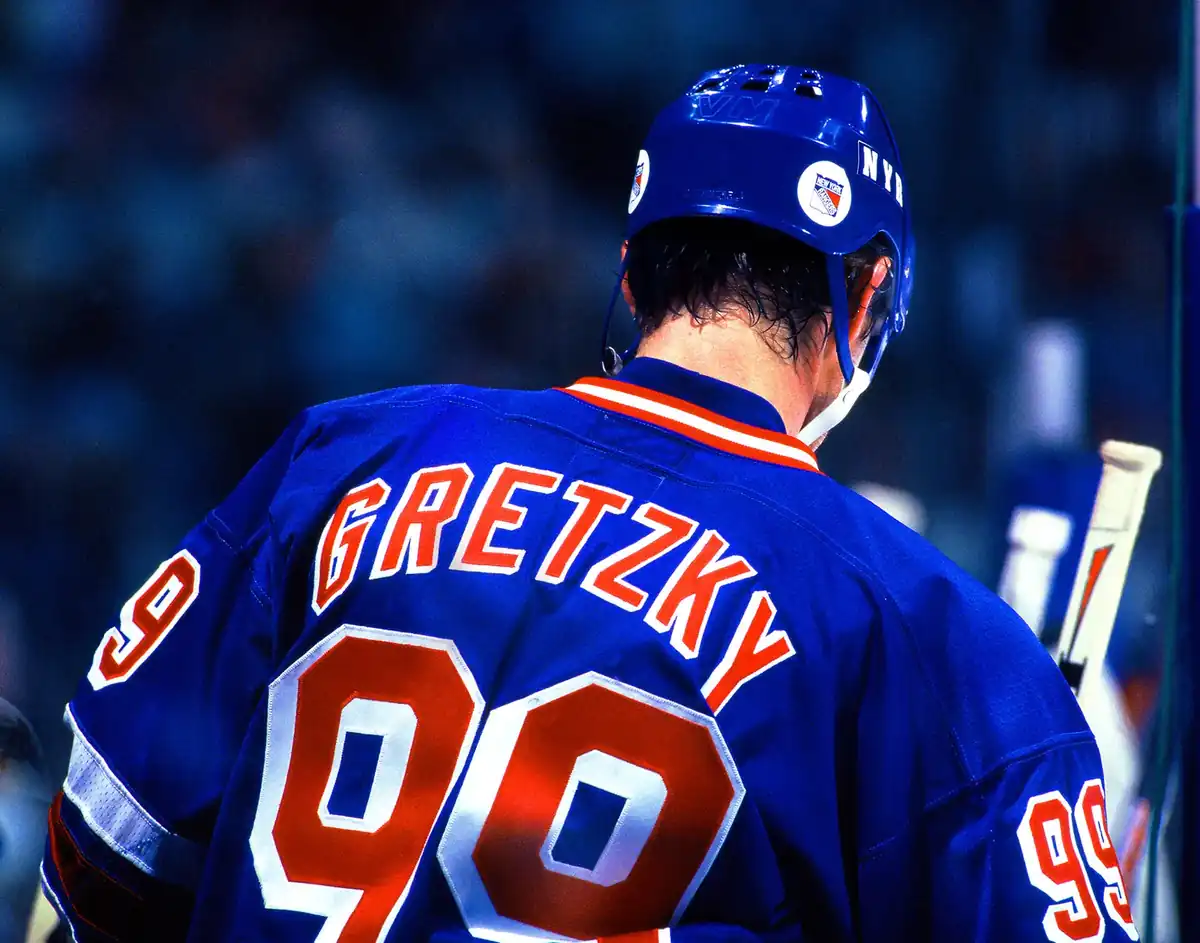
Wayne Gretzky: How a Palmarès Was Built Through Records and Regular‑Season…
Wayne Gretzky’s palmarès is not a list of isolated highlights but a coherent statistical architecture: career records, staggering single-season marks and repeated recognition that redefined offensive excellence. This article unpacks how those elements—regular‑season dominance, signature seasons and championship runs—combined to create a legacy that still structures how we measure elite scoring in hockey.
Quick answer
Gretzky’s palmarès rests on unmatched career totals (2,857 points), record single‑season peaks (215 points; 92 goals; 163 assists) and repeated recognition (10 Art Ross, nine Hart Trophies), plus four Stanley Cups that anchored his competitive credibility.
What this article explains
- Which records form Gretzky’s statistical spine and why they matter.
- How single‑season peaks and sustained excellence interacted.
- Where championships and awards fit into the overall assessment.
THE PALMARES AT A GLANCE
The headline facts are compact and decisive. Gretzky is the NHL's all‑time leader in career points with 2,857, comprised of 894 goals and 1,963 assists. He won the Art Ross Trophy ten times and the Hart Memorial Trophy nine times. Single‑season records include 215 points (1985–86), 163 assists in a season, and 92 goals in a season. He also won four Stanley Cups with the Edmonton Oilers.
THE FIRST RESULTS THAT MATTERED
Early in his NHL career Gretzky established a pattern: rapid production and immediate offensive influence. Rather than a slow accumulation, his early seasons produced the kind of scoring and playmaking that set up later record runs. The sequence of scoring titles that would follow began with a clear breakout into high‑volume point production.
THE YEARS THAT BUILT REAL STATUS
Gretzky’s status was forged in a concentrated era of peak output. He won seven consecutive Art Ross Trophies from 1980–81 through 1986–87, signalling not only one or two great seasons but multi‑year supremacy. Within that stretch his single‑season marks—most famously 92 goals in one season and the 215‑point campaign—created thresholds other players rarely approached.
IMAGE

AWARDS, TITLES, AND RECOGNITION
Gretzky’s trophy case is notable both for quantity and concentration. Ten Art Ross trophies confirm his consistent role as the league’s leading scorer; nine Hart Trophies underline how frequently contemporaries and voters judged him indispensable. The combination of scoring titles and MVP awards reinforces the argument that Gretzky’s value was measured in direct offensive output and its perceived impact on team success.
PLAYOFF WEIGHT AND BIG‑MOMENT RESULTS
Gretzky’s four Stanley Cup championships with the Edmonton Oilers are the essential competitive anchor of his palmarès. Championship trophies translate regular‑season dominance into team success, and four Cups place his record in the conversation of players who paired individual supremacy with the ultimate team prize.
THE PEAK YEARS VERSUS THE LONG RUN
The palmarès balances extraordinary peaks and sustained excellence. Peak seasons—92 goals, 215 points, 163 assists—represent extreme outliers in hockey history. At the same time, Gretzky posted 15 seasons of 100+ points, including a run of 13 consecutive 100‑point campaigns, which demonstrates that his peaks sat on a long plateau of elite production rather than being isolated fireworks.
RECORDS, THRESHOLDS, AND NUMERICAL CLUES
Gretzky’s records operate at two levels. First, career totals: 2,857 points, 1,963 assists and 894 goals create benchmarks that reset expectations for cumulative production. Second, single‑season thresholds (215 points, 163 assists, 92 goals, 51‑game point streak) function as structural outliers—numbers that define eras and force statistical comparisons to change. Together they show both dominance in single years and a higher baseline across a career.
HOW THE RESULTS FIT THE ERA
Context matters: Gretzky’s records were set during an era of high scoring, but their magnitude still exceeds contemporaneous norms. Winning seven consecutive scoring titles and claiming ten Art Ross trophies are achievements that signal dominance relative to peers in the same playing conditions. The persistence of his career totals as league records underlines their resilience across different eras.
WHAT THE PALMARES SAYS ABOUT THE PLAYER
Gretzky’s palmarès says several specific things. It identifies him first as the preeminent offensive architect in NHL history—both a scorer and a creator. It shows an ability to convert peak seasons into long‑term superiority and to translate individual awards into team championships. Finally, it demonstrates a statistical footprint so large that many of his marks remain definitive measures of scoring excellence.
HOW THE RECORD LIVES IN HOCKEY MEMORY
Records shape memory. Gretzky’s career and single‑season records function as reference points for evaluating all subsequent offensive performers. When a player approaches a milestone—be it 100 points in a season or a long point streak—the comparison often invokes Gretzky because his totals recalibrated what was conceivable in hockey. That enduring comparative role is a central part of his palmarès.
Author: Eric M.