How Minnesota Wild Built Its Identity: City, Colors, Eras and Cultural Weight
The Minnesota Wild arrived as an NHL expansion franchise with an unusually clear civic brief: reconnect professional hockey to the state’s landscape, crowd and memory. From the award of the franchise in 1997 to the opening of the Xcel Energy Center and the team’s first puck drop in 2000–01, the Wild used colors, logo and a downtown arena to anchor itself quickly in Minnesota culture. This article traces how those decisions, plus a handful of sporting eras and signings, built a franchise identity that matters across the NHL.
Quick answer
The Minnesota Wild deliberately tied its look and presence to the state’s outdoors and civic life; arena placement, visual identity, and a sequence of roster investments created the franchise’s cultural weight despite an ongoing chase for a Stanley Cup.
What you will learn here
- How the expansion timeline and arena launch anchored the franchise in St. Paul.
- Why the logo and palette matter as cultural shorthand for Minnesota.
- The sporting eras—from early years to the 2010s competitive run—and the players who shaped them.
WHERE THE FRANCHISE BEGINS
The National Hockey League awarded an expansion franchise for Saint Paul on June 25, 1997. The team began play in the 2000–01 NHL season. The arrival was staggered by construction and planning: the Xcel Energy Center opened in September 2000 and the Wild played their first regular-season game on October 6, 2000 (a 4–3 road loss to the Anaheim Ducks). Those concrete dates frame the start of the Wild as both a deliberate expansion and a downtown-arena project designed to reconnect Minnesota’s professional hockey to its urban core.
THE FIRST IDENTITY OF THE TEAM (LOGO, COLORS, MEANING)
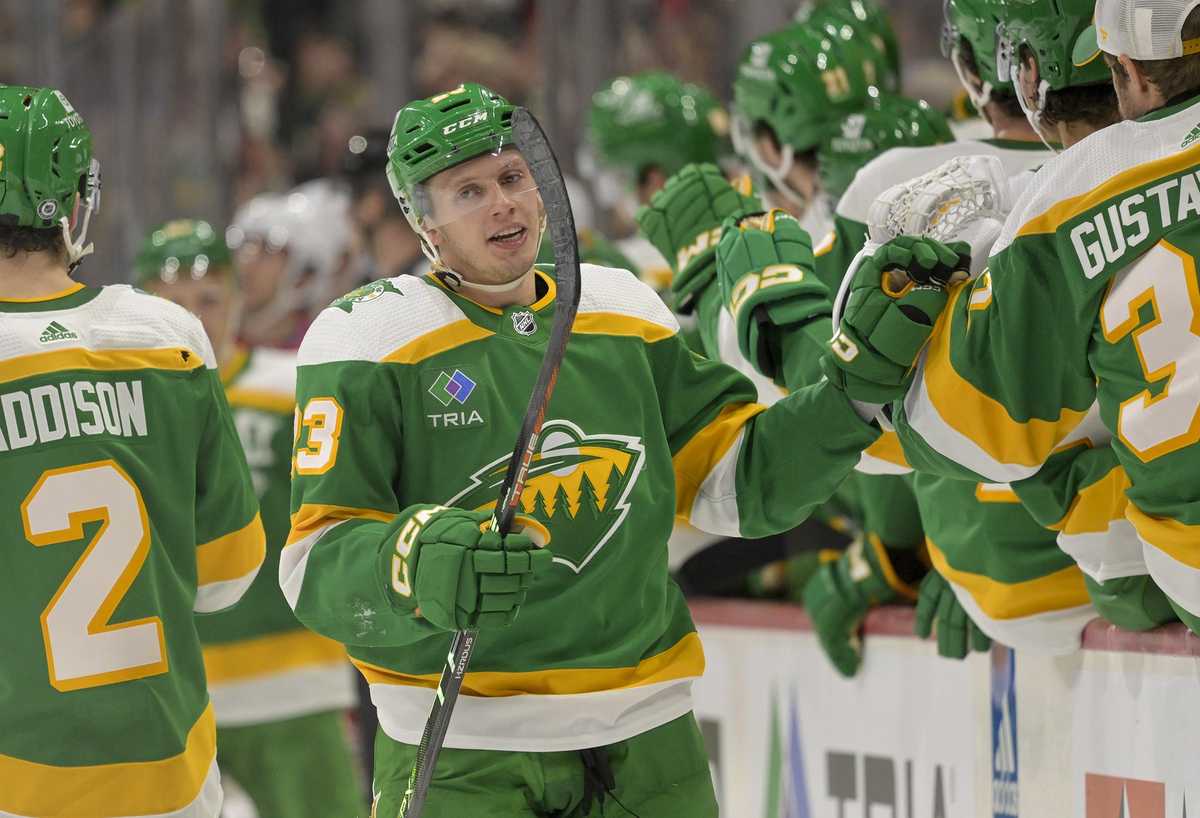
From the beginning the Wild’s visual program tied hockey to Minnesota’s landscape. The primary logo is a stylized animal-head silhouette that contains a river, trees, a sunset and a star—visual shorthand for wilderness, night and place. The official palette—Forest Green, Iron Range Red, Harvest Gold (or Minnesota Wheat) and cream/white—reinforced that link to outdoors, industry and regional colorways. Rather than adopt a purely animal mascot or a city seal, the design integrated landscape elements into a badge meant to read as both emblem and story.
ARENA AND URBAN CONNECTION
Location was part of identity. The Xcel Energy Center, opening in September 2000 in downtown St. Paul, was the Wild’s physical and civic home. Attendance figures show an early, robust local embrace: in their inaugural regular season the franchise set an NHL expansion-team regular-season attendance record with 751,472 fans across 41 home dates. The team also sold out the first 409 games in franchise history across preseason, regular season and playoffs—an indication that the civic partnership between team and arena was immediate and sustained.
THE ERA THAT GAVE IT REAL SHAPE
The Wild’s identity didn’t mature in a single season; it was formed through sequential sporting eras. The opening years (2000s) built the fanbase and established the franchise in the league. Later, roster continuity and long-term leaders in the mid-2000s and 2010s moved the team from novelty toward sustained competitiveness. Notable moments that shaped the franchise arc include early playoff appearances in the 2000s and a run of more consistent postseason presence in the 2013–2018 window.
PEOPLE WHO DEFINED THE FRANCHISE
Certain players became shorthand for phases of the Wild’s evolution. Marian Gaborik—selected early in the team’s history—served as the franchise’s first bona fide offensive star and helped establish the Wild on the scoreboard in the early 2000s. Mikko Koivu emerged as a long-time captain and locker-room leader in the mid-2000s, representing stability and internal culture. A separate, pivotal moment in roster construction came in July 2012 when the team signed Zach Parise and Ryan Suter; those signings marked a clear organizational decision to invest at a higher level and ushered in a more sustained competitive era through the mid-2010s.
GREAT YEARS, HARD YEARS, AND REBUILDS
The Wild’s competitive history is mixed: periods of playoff consistency alternate with rebuilding stretches. Early success included playoff appearances in the 2000s. The 2013–2018 period—anchored in part by the 2012 signings—represents the franchise’s most sustained run of postseason relevance, while other stretches required reset and retooling. Across these cycles the franchise has not yet won the Stanley Cup, which remains a clear absent milestone in its narrative.
RIVALRIES, FAN MEMORY, AND CULTURAL WEIGHT
Beyond wins and losses, the Wild established cultural importance by combining visual identity, strong attendance and civic ties. The downtown arena and early sellouts show an intensity of local support that elevated the Wild’s presence within Minnesota’s deep hockey culture. The logo and palette gave fans an immediate, place-based banner to rally behind—an identity built as much from landscape and memory as from on-ice results.
ARENA NAMING AND RECENT DEVELOPMENTS
Longstanding arena naming rights with Xcel Energy anchored the team to a corporate-local identity. In 2025 a new naming-rights agreement was announced: the arena would be renamed Grand Casino Arena effective September 3, 2025, under a 14-year deal with the Mille Lacs Band of Ojibwe. The change is a contemporary example of how civic relationships continue to shape the franchise’s public framing and community partnerships.
HOW THE TEAM IS VIEWED TODAY
As of recent summaries and the team’s 25-year retrospectives, the Wild is seen as a franchise that quickly knitted itself into Minnesota life and then pursued competitive legitimacy through strategic signings and steady leadership. It is respected for its strong local attendance history and for visual branding that uniquely signals Minnesota. At the same time, the absence of a Stanley Cup keeps the narrative of the franchise open—identity has been established, championship validation remains outstanding.
WHAT THE HISTORY REVEALS ABOUT THE NHL
The Wild’s story exemplifies how modern NHL expansion can succeed when branding, arena location and community engagement align. A team can win popular loyalty quickly through place-based identity and by making the arena a civic center. The Wild also shows that roster-building choices—when combined with strong local support—can produce stretches of competitiveness without guaranteeing ultimate trophies; it is a reminder that cultural weight in hockey is not solely measured by championships.
WHY THIS FRANCHISE STILL MATTERS
Minnesota Wild hockey matters because it demonstrates a pragmatic model of franchise-building: create a clear visual identity tied to place, secure an urban arena that draws sustained attendance, and pair those with targeted roster investments to produce eras of competitiveness. The Wild’s history is still an unfinished statement in the NHL—one where civic embrace and smart branding have already secured a prominent place within North American hockey culture.
Author: William L.